Projects for paintings
April-May 1987
If the work of Jacques Halbert immediately evokes the image of a motif, the cherry alone cannot summarise his practice as a whole. Emerging from a collection of popular imagery, it constitutes the starting point of a singular mythology in which painting intersects with attitudes and performance.
In a series begun in 1985, Projects for a Painting, Jacques Halbert glues a postcard onto the canvas: a reproduction of a masterpiece from art history, a landscape, or a sunset. In Projects for a Painting, the landscape depicted on the postcard is extended by the artist, who introduces into the foreground painted fruits and vegetables rendered in the classical style of still life. These painted fruits form a mental image and become the silent spectators of an imaginary museum, in the sense evoked by André Malraux. Beyond this play of mise en abyme, Jacques Halbert introduces another element: he uses the canvas as a palette, leaving visible traces of mixing, colour tests, and unfinished brushstrokes. Thus, the surface of the painting becomes a meeting point between reproduction (the postcard), painting, and palette. Confronted with these postcards — reproducible fragments of famous artworks or trivial images — the gaze shifts into an extended pictorial space.
In the foreground, the fruits and vegetables are painted with such care that they appear illuminated by the light present in the postcard itself, almost backlit. This subtle yet decisive pictorial gesture extends the illusion contained in the postcard while creating coherence and connection.
If this series began in New York City, Jacques Halbert added a new element to Projects for a Painting when he moved to Anna Maria Island in 1989. The canvas stretcher becomes a lemon, strawberry, eggplant, or potato. This hybridisation between support and subject, between form and content, introduces a new dimension to the work: painting no longer merely represents a fruit — it becomes the fruit itself. The canvas, usually neutral, becomes an active component of the pictorial device. By choosing these forms, Jacques Halbert transforms the canvas into an autonomous object, both painting and sculpture. Fruits painted on a fruit that has itself become a support create a system of echoes between image and materiality, blurring the boundaries between representation and embodiment, where the motif overflows the canvas.
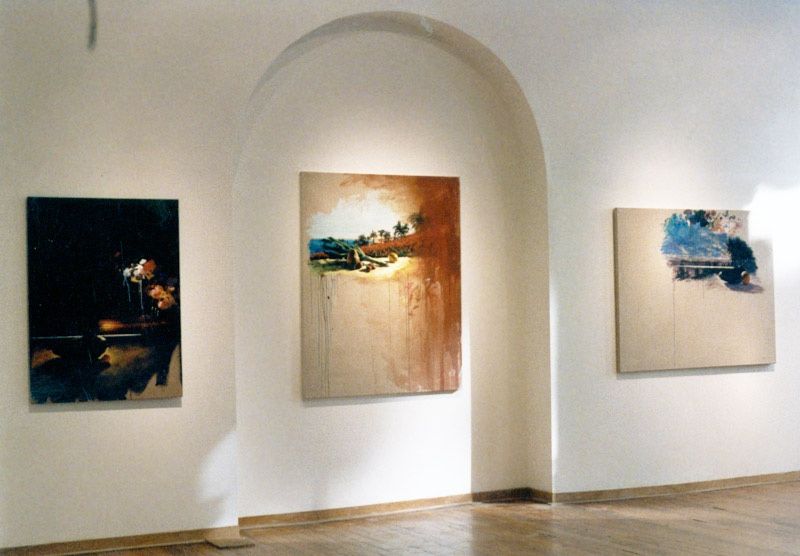
Installation view at the Emily Harvey Gallery
Private collections for the works
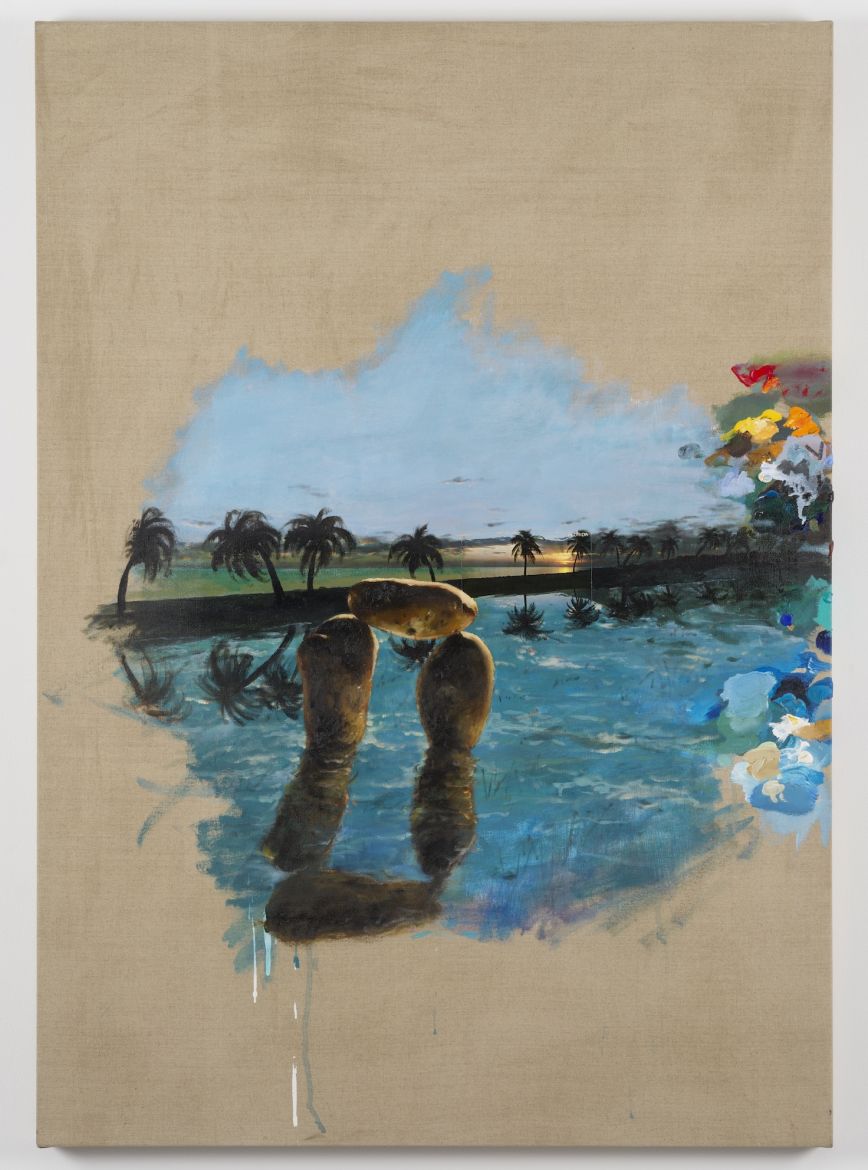
Carnac, 1988
Oil and postcard on linen canvas
48 × 33.9 in
Photograph by François Lauginie
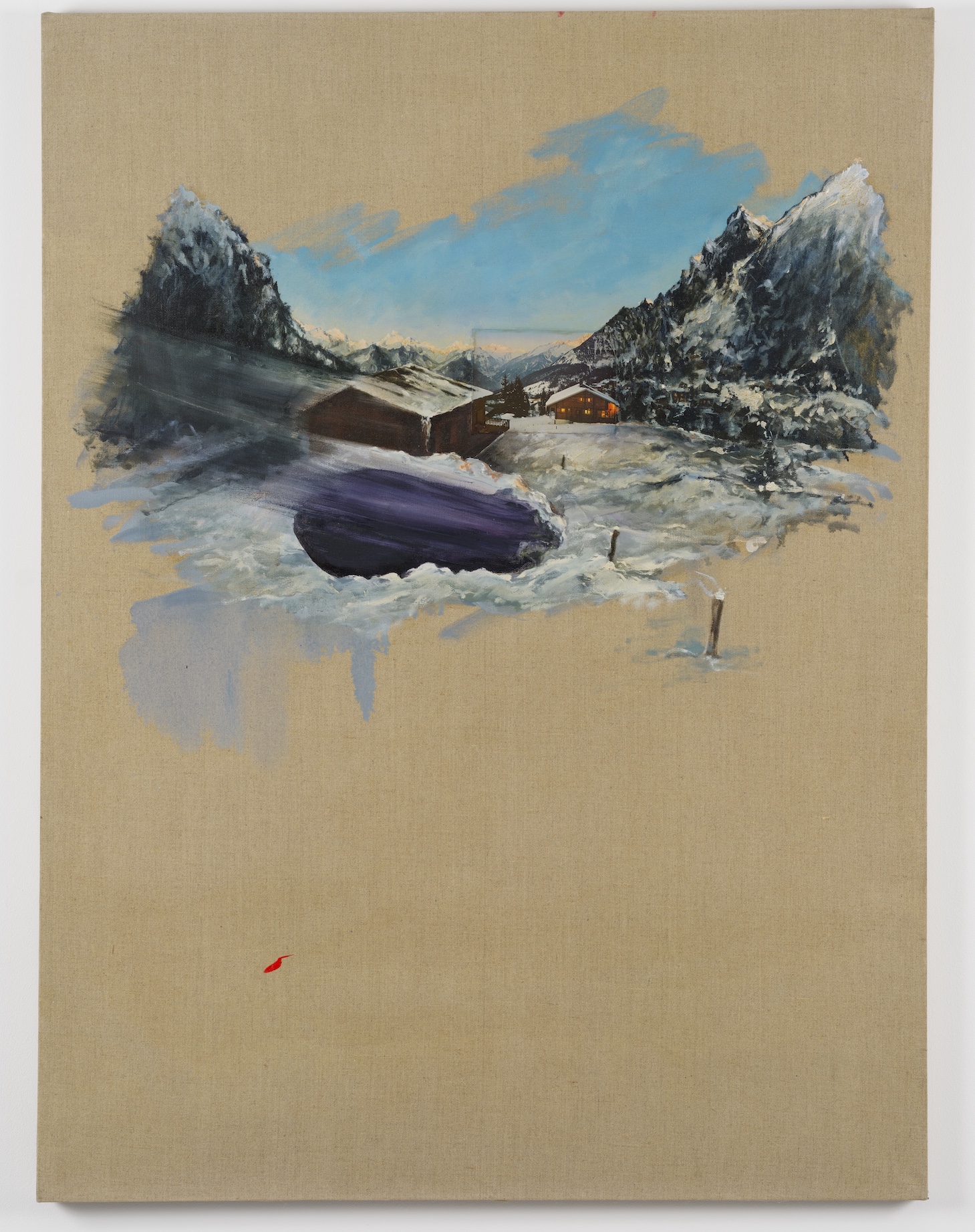
Projet pour une peinture, 1988
Oil and postcard on linen canvas
48 × 33.9 in
Photograph by François Lauginie
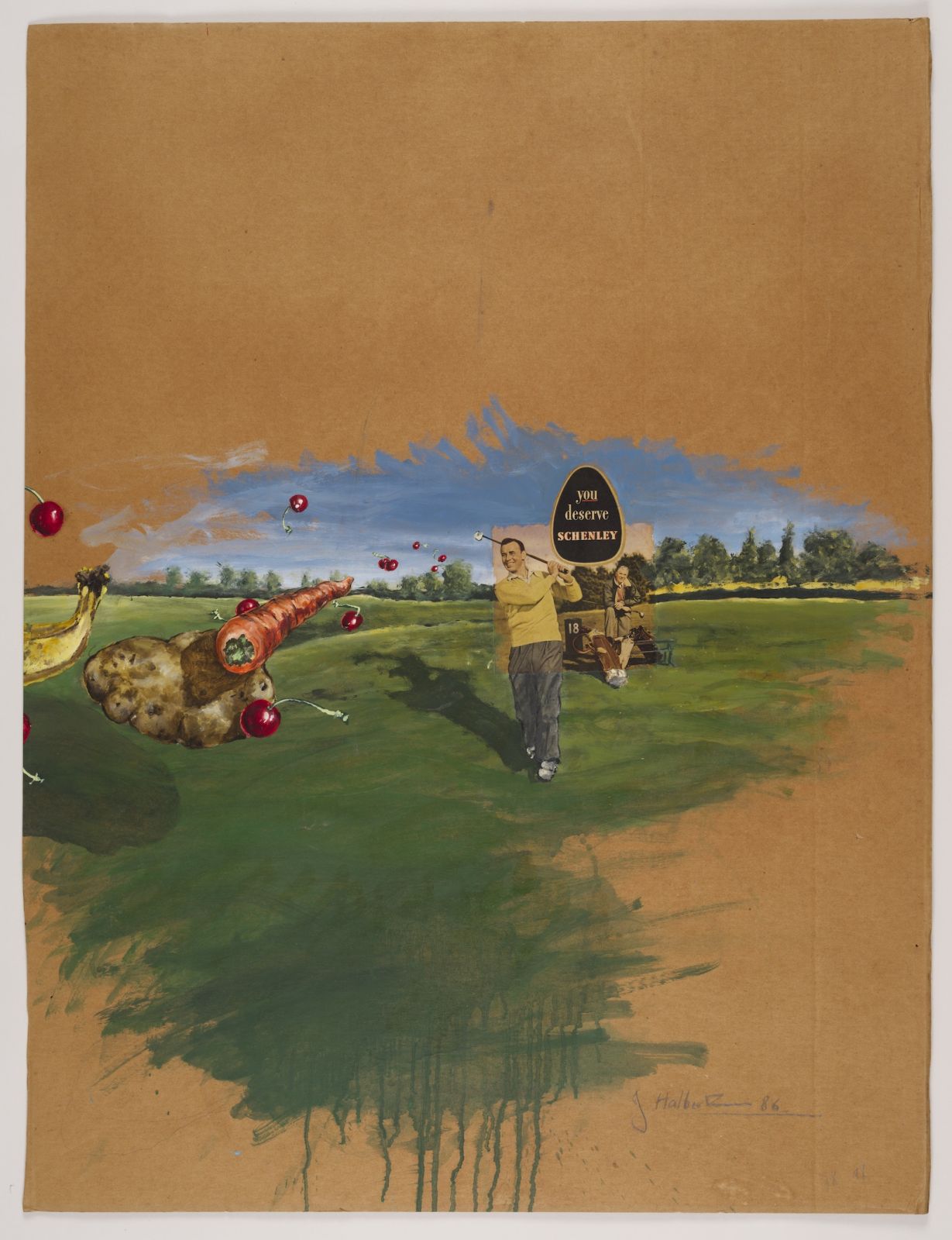
You deserve Shenley, Joueur de golf, 1986
Acrylic and oil on postcard and cardboard
34.6 × 26.2 in
Photograph by François Lauginie
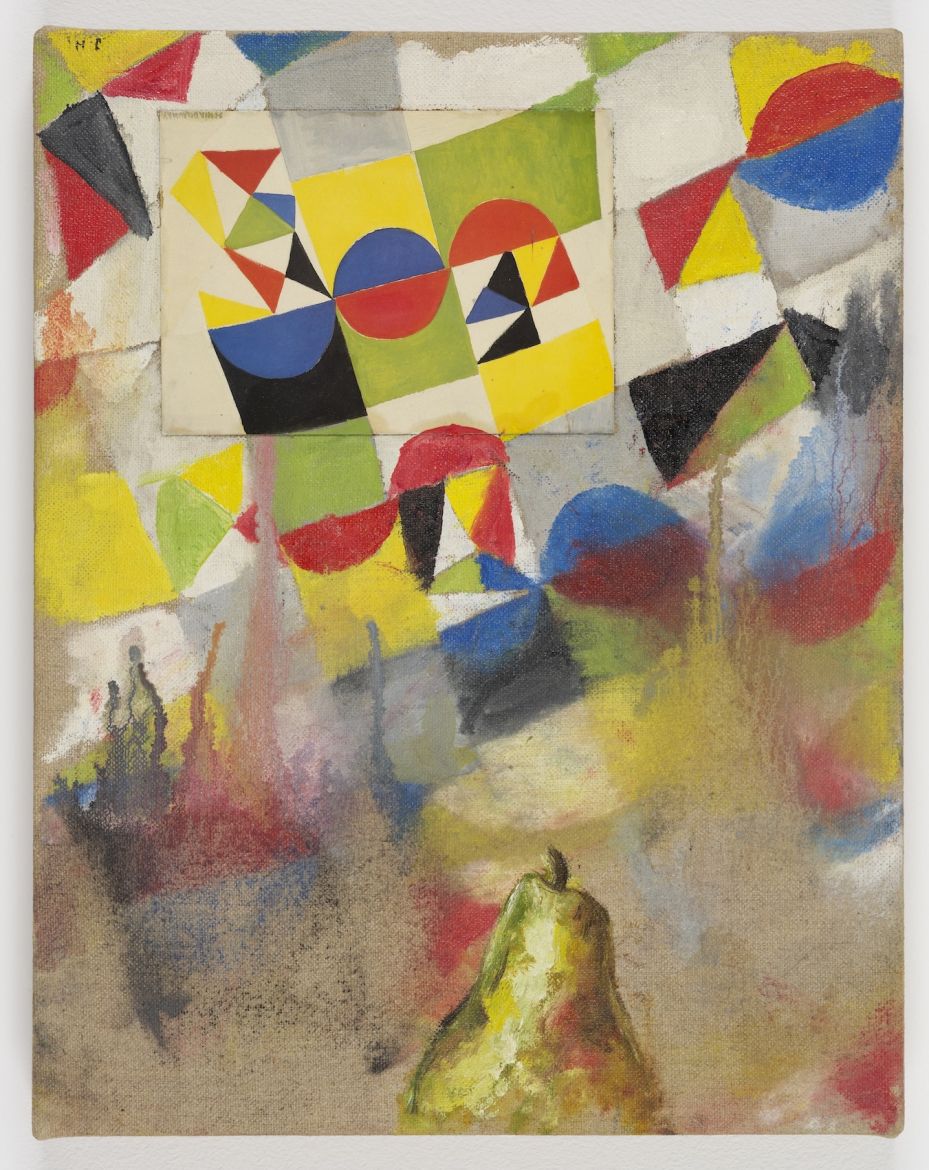
Projet pour une peinture, 1988
Postcard and oil on linen canvas
11.8 × 9.1 in
Photograph by François Lauginie
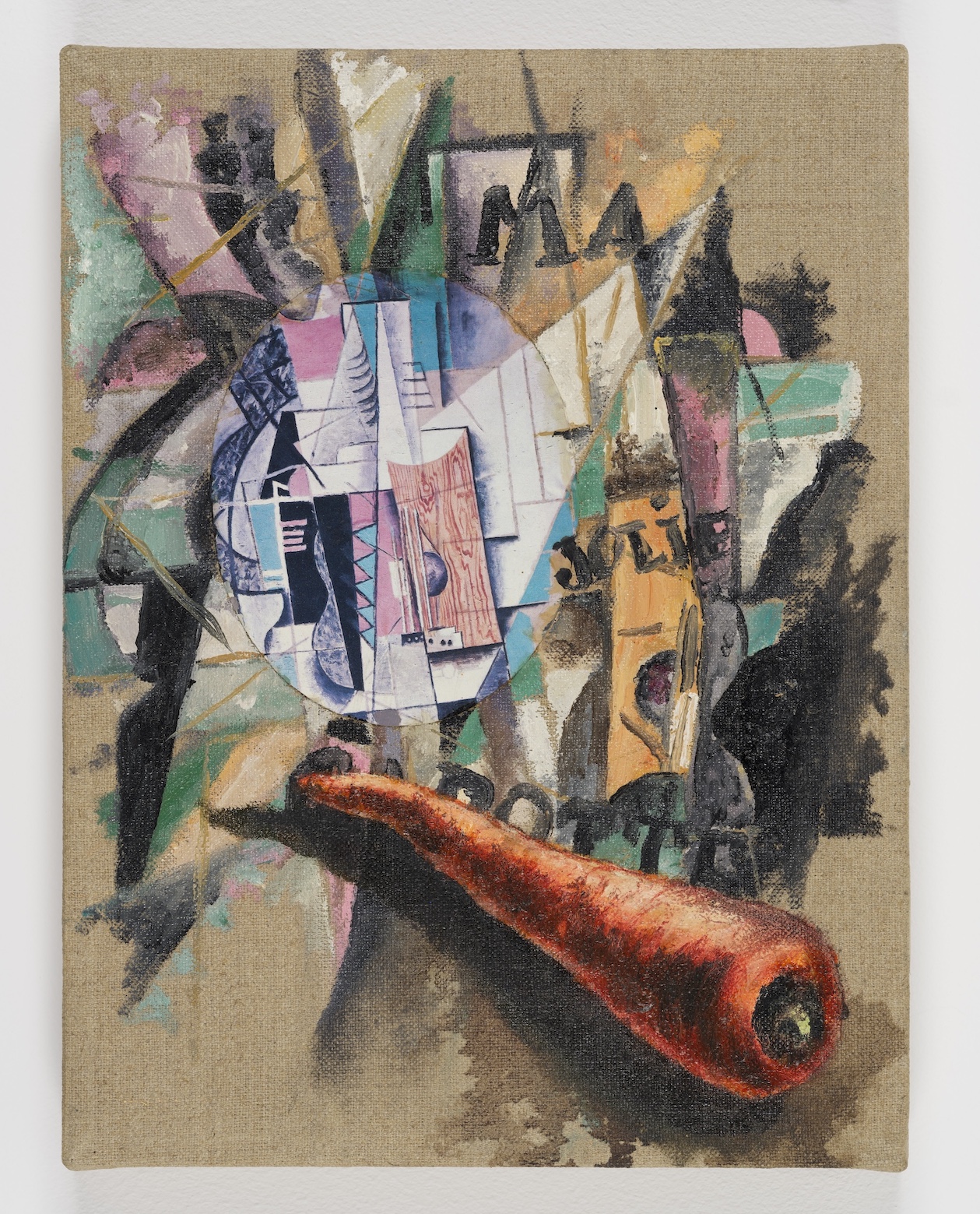
Projet pour une peinture, 1988
Postcard and oil on linen canvas
11.8 × 9.1 in
Photograph by François Lauginie
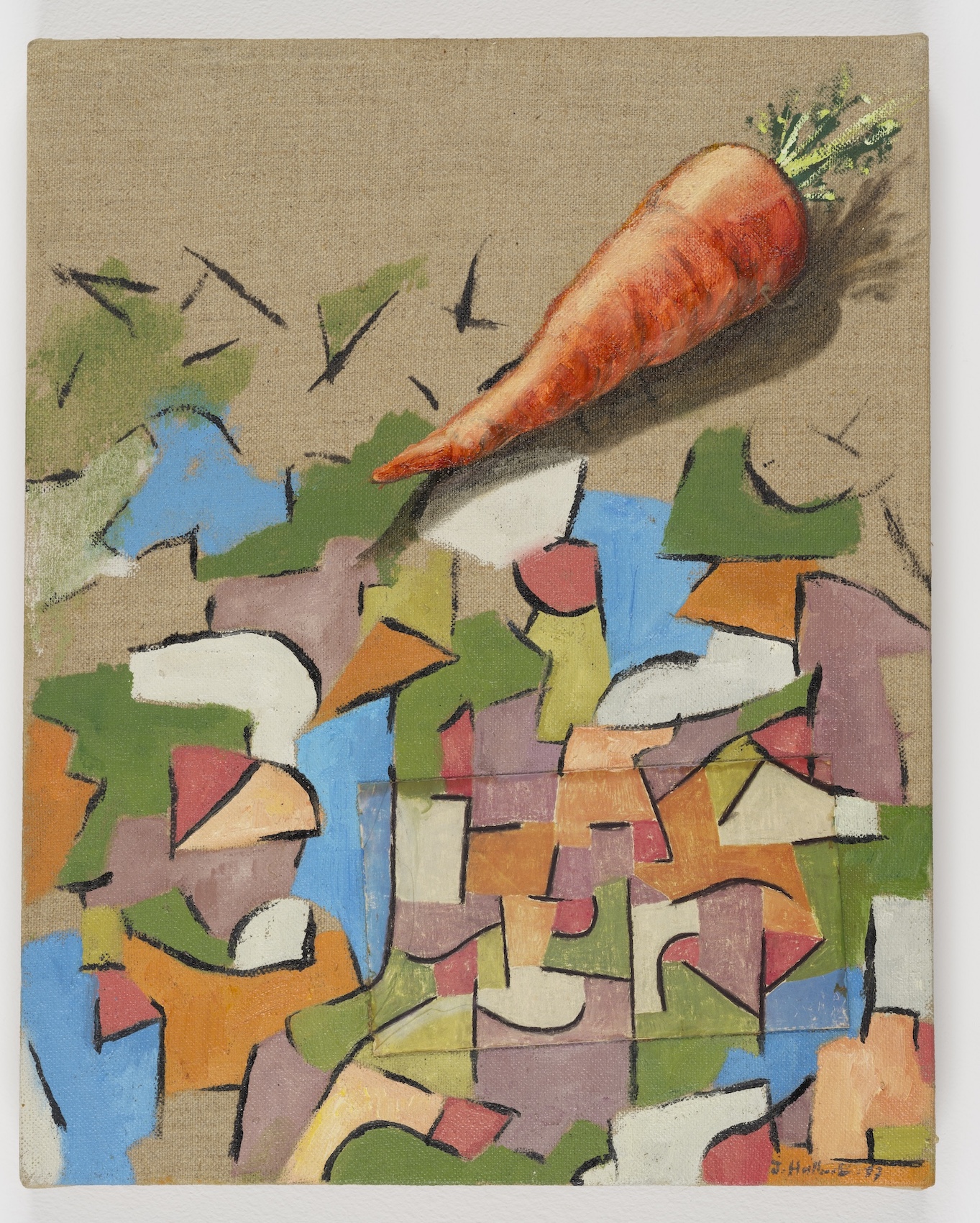
Projet pour une peinture, 1988
Postcard and oil on linen canvas
11.8 × 9.1 in
Photograph by François Lauginie
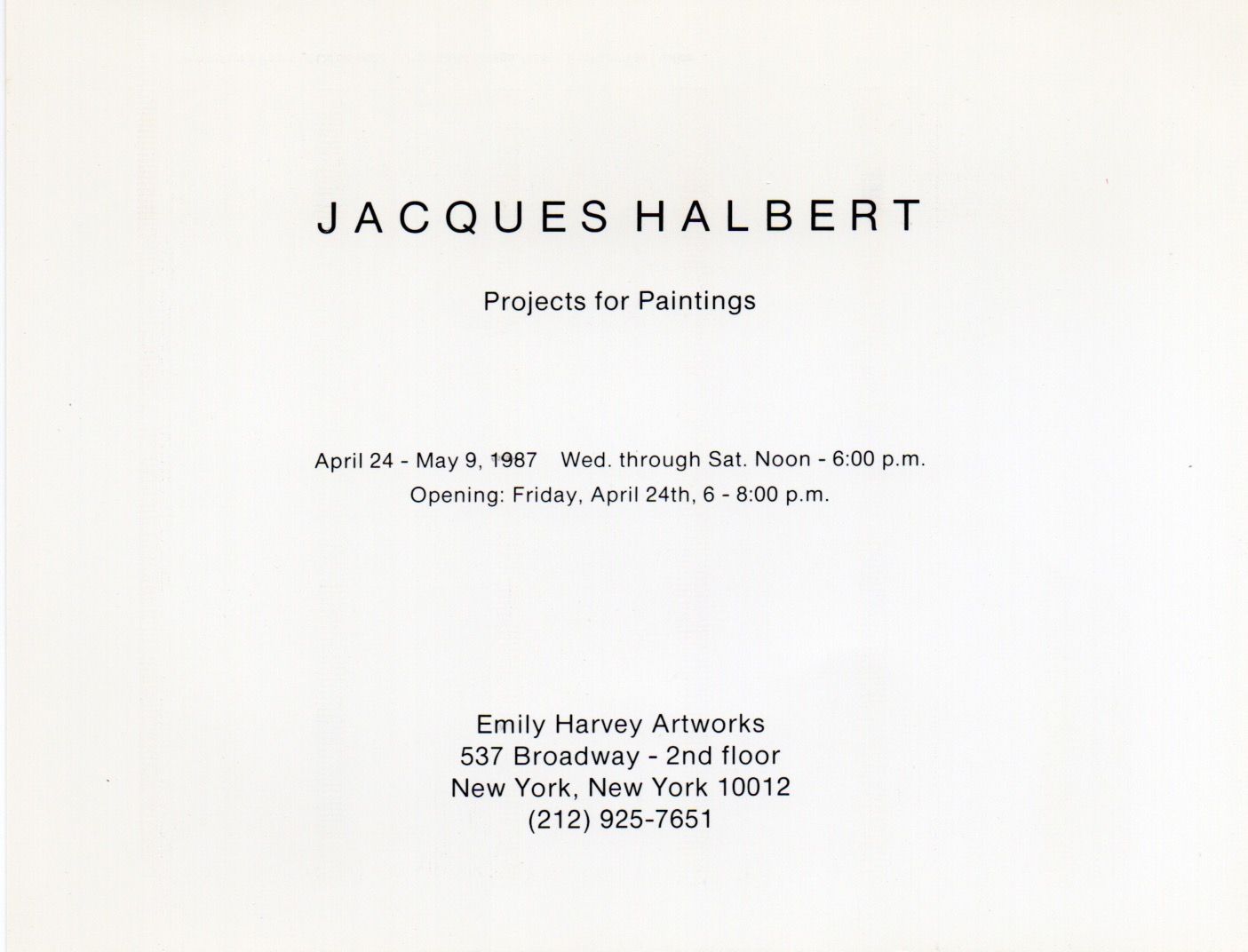
Carton d'invitation
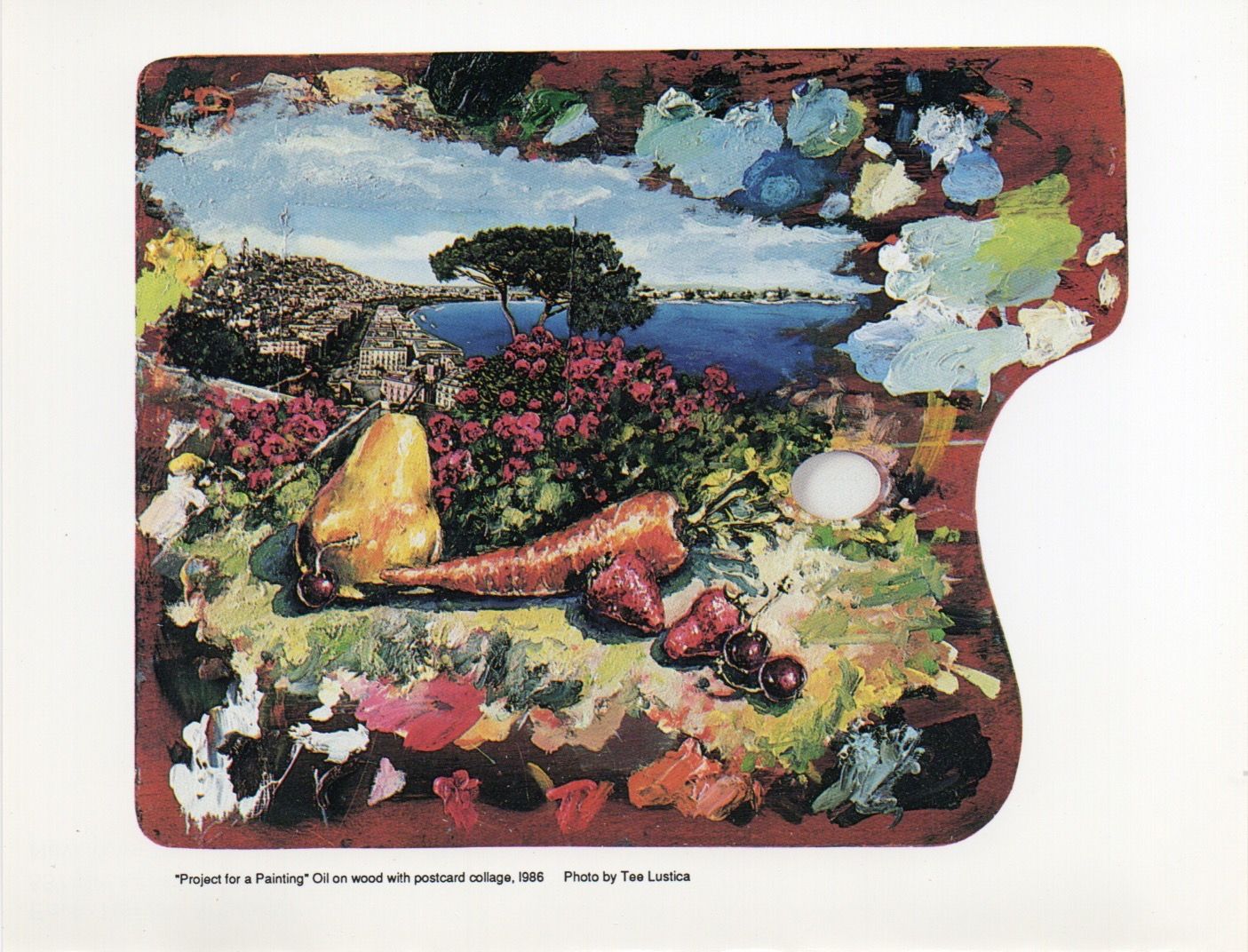
Carton d'invitation
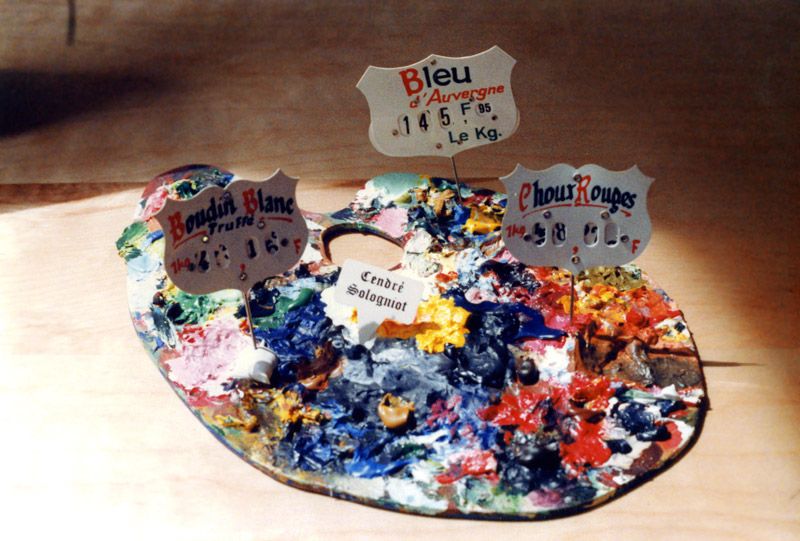
Palette, 1987
Peinture et étiquettes à fromage sur palette
Collection Emily Harvey Foundation
Emily Harvey
Emily Harvey (1941–2004) was an American gallerist involved in the New York experimental art scene and closely associated with the Fluxus movement. Founder of the Emily Harvey Gallery in SoHo in 1982, she supported for more than twenty years artistic practices that were often non-commercial - performance, mail art, video, and poetry - working with artists such as Nam June Paik and Carolee Schneemann. Her space functioned as both an exhibition venue and a place of living and exchange. After her death, her commitment continued through the Emily Harvey Foundation, which notably develops artist residencies in Venice.