Cerises
Curated by Alain Julien-Laferrière
2020
The subject may not be so essential after all, that is perhaps why I will be able to paint cherries all my life. Jacques Halbert
The Monochrome Put to the Test of Pornography
In 1975, at the age of twenty, Jacques Halbert wrote a foundational text for his artistic practice : How to Paint a Cherry. In it, he describes step by step the process of making a cherry painting, before mischievously concluding : “If you have followed these instructions to the letter, you now have before your eyes a magnificent cherry painted by yourself. Therefore, you are an artist.”
This text is foundational in two ways : first, because Jacques Halbert would indeed go on to paint this cherry tirelessly throughout his life; and second, because he conceived painting as a tool capable of fundamentally transforming the traditional relationship people maintain with the work of art.
The subject of the “cherry” is banal - even embarrassing when placed within the context of the 1970s art world, at a time when Minimal Art and Conceptual Art reigned supreme. Yet everyone loves cherries. They herald summer and childhood festivities; they are glossy, juicy, sweet, and red. “Cherry” is also a woman’s name; its forms are suggestive, and its color recalls patent leather. Confronting the cherry with the most sophisticated form of painting produced by modern art — namely the monochrome — would become, for Jacques Halbert, the missing link between art and life.
From that point onward, Jacques Halbert relentlessly subjected the monochrome to strain, destabilization, and fragility through this systematic procedure of surgical precision. He developed this figurative motif through regular rhythms and random compositions alike, pursuing for more than forty-five years a minimal body of work that invites viewers into a profound redefinition of painting.
At first glance innocent, the cherry carries a latent violence underscored by its crimson red color — the color of danger. Like an indelible drop of blood, or a lipstick stain on an immaculate surface, it is the forbidden gesture that unsettles the purity of the monochrome, strips it of its mystery, and desacralizes painting.
This duality of the cherry is expressed by Jacques Halbert himself: “The subject may not be so essential after all; that is perhaps why I will be able to paint cherries all my life.” Scattered across the monochrome like mines over a wasteland, the cherries become the prolegomena to a radical conception of contemporary painting.
Jacques Halbert’s work is marked by the ambivalence of language and of the world itself. His move to the United States only intensified this ambiguity. While in France the motif carries erotic connotations in addition to being a feminine first name, in the United States the word “cherry” refers not only to the fruit but also, very specifically, to female sexuality. The chaste monochrome becomes the victim of pornographic assaults consisting of “painting cherries everywhere, all the time, and thinking of nothing else.” The cherry stem, always associated with the fruit, further complicates and amplifies the pornographic dimension of the work, as in He Loves Cherries (1977), where the model’s gender — clearly stated in the title — is nonetheless called into question by its representation.
Read more
Good Taste
His inclination for staging his own persona immediately won over the New York artists associated with Fluxus and Eat Art, yet the density of his personal mythology makes it difficult to associate him with any single artistic movement.
Successively the owner of the Art Café in New York City (1985), which became a meeting place for the artistic avant-garde — including Ben Vautier, Jeff Koons, Daniel Spoerri, Andy Warhol, and François Morellet — and later of the Magnifik Gallery in Brooklyn, where he exhibited artists such as Nicolas L., Olivier Mosset, Carolee Schneemann, and Alison Knowles, Jacques Halbert has continually sought to dismantle and deconstruct the dominant notion of the artist as an arbiter of good taste.
Free and liberated from convention, his work parodies and critiques the bourgeois conception of art according to which the artist is the guarantor of a definition of Beauty. He himself describes this neo-Dada posture as “a manifesto of good taste.”
Just a Bowl of Cherries
Jacques Halbert has developed a prolific, vibrant, and festive body of work that questions the value of art, its relevance, and its importance. By simply confronting art with life, his work immerses the viewer in a journey toward permanent creation.
In Fashion Passion, a film made during the New York Fashion Show amid the creative effervescence of the 1980s New York underground scene, the body replaces the monochrome and becomes the support for painting, creating a confusion between eroticism, village fête, and gender identity.
Questioning the hidden mechanisms of art and life, with a seriousness never devoid of humor, allows him to evoke both the limits of the human condition and the role of the artist within the creative process.
One might be tempted to conclude, as in the song Life Is Just a Bowl of Cherries: “Don’t take it serious / it’s too mysterious.”
Text by Marie-Caroline Chaudruc, director of the Château de Montsoreau – Musée d'Art Contemporain.
Jacques Halbert, Cherries - Conceived by Alain Julien-Laferrière as deliberately non-retrospective, the monographic exhibition Cherries by Jacques Halbert at the Château de Montsoreau – Musée d'Art Contemporain offers visitors an immersion into the work of an extraordinary figure in contemporary art, marked by the artist’s interventions in public space and his confrontations with the monochrome.
From the archives, drawings, and sketches in the first room to the in situ and all-over intervention in the final room, the exhibition unfolds Jacques Halbert’s complex and free-ranging body of work, one that breaks with the codes of modern painting. It reveals the tireless repetition of the motif, its shifts and variations, while clarifying its role within Jacques Halbert’s investigations and artistic practice.
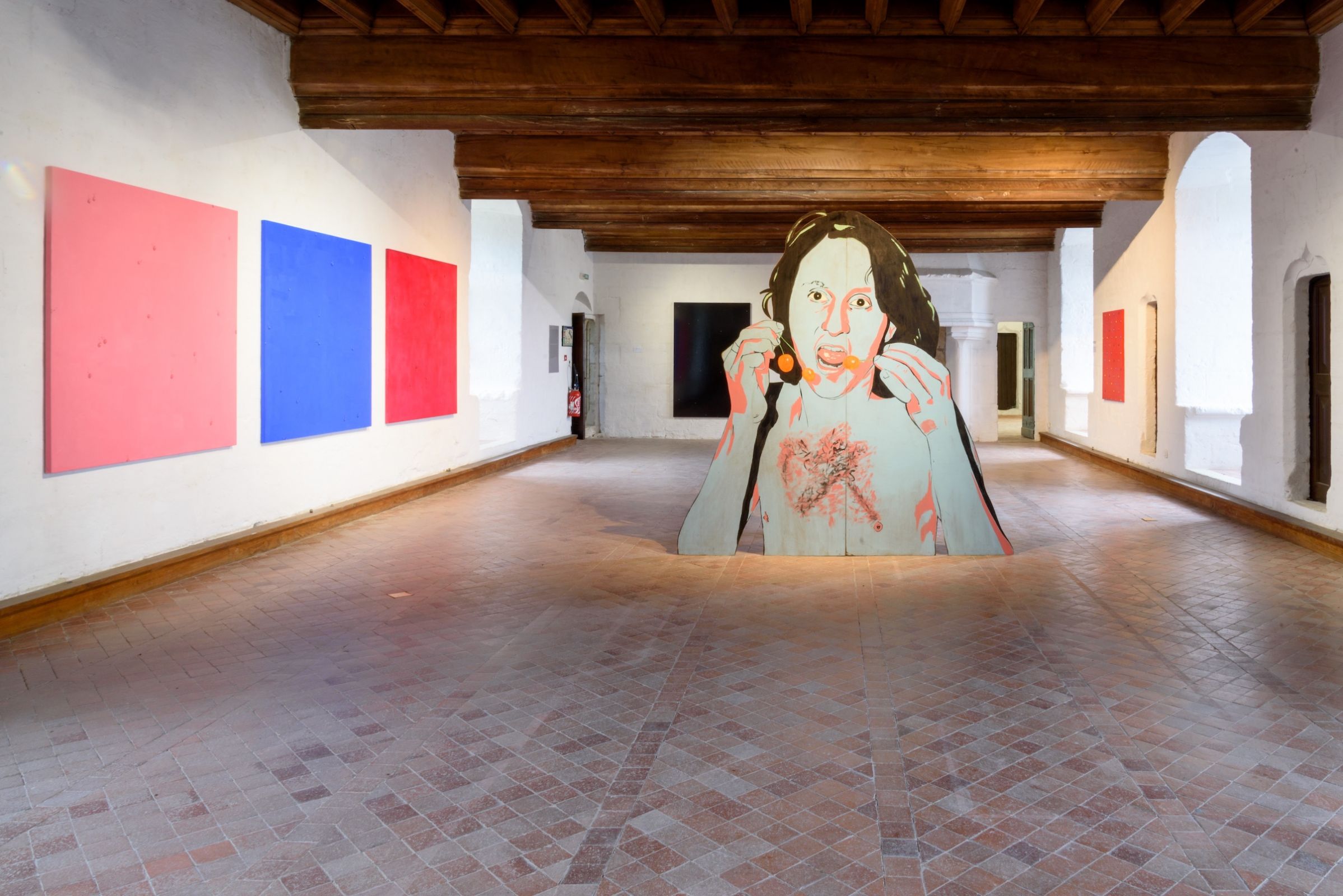
Center
Portrait of Philippe Gasnier eating cherries, 1977
Acrylic and lacquer on cut wood panel
106.3 × 104.3 in
On the left wall
Came à yeux, 2014
Oil on canvas, 59.1 × 59.1 in each
At the back of the room
How to Fuck a Monochrome, 2018
Lacquer on canvas
74.8 × 55.1 in
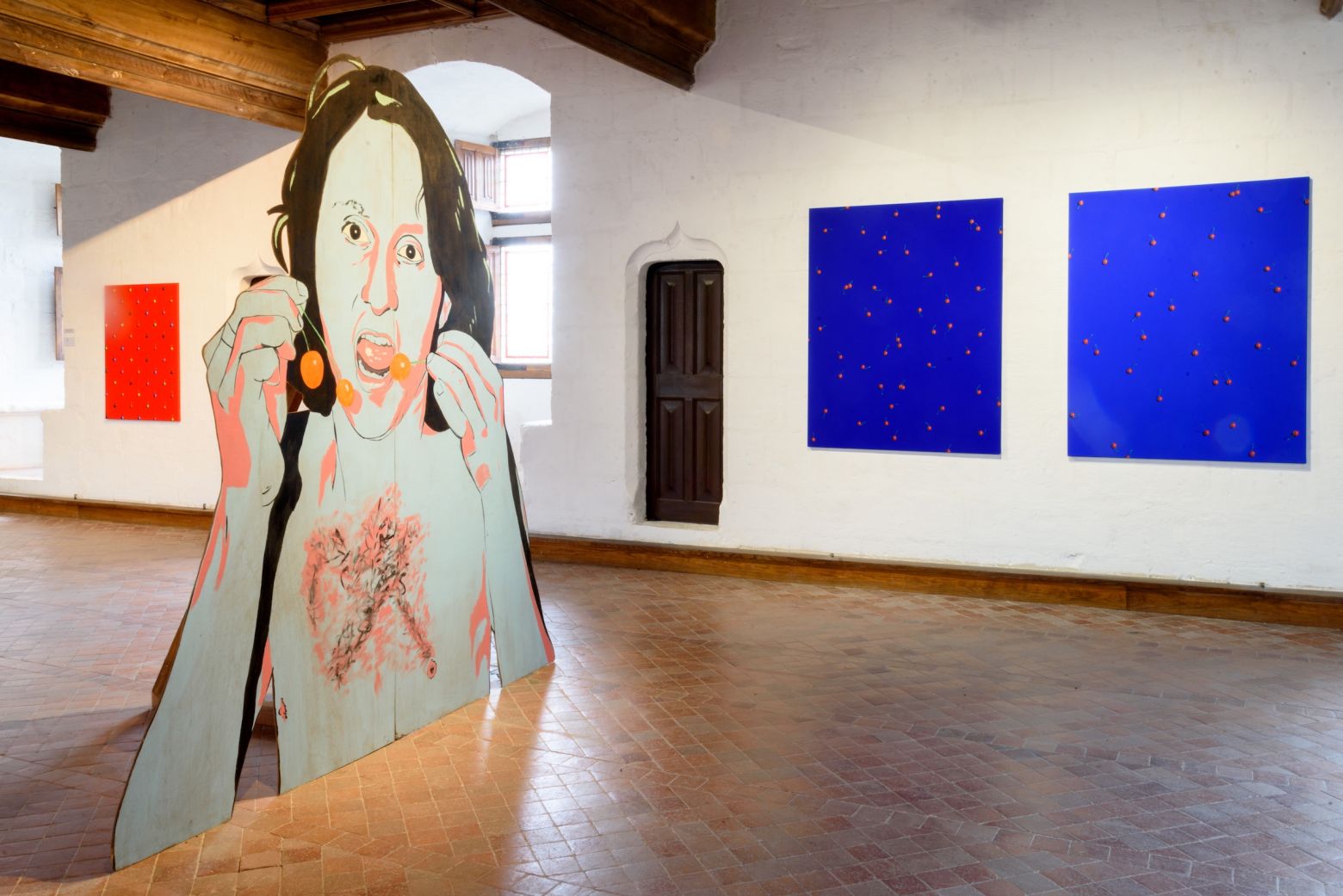
Portrait de Philippe Gasnier mangeant des cerises, 1977
Acrylic and lacquer on cut wood panel
106.3 × 104.3 in
Photograph by Arnaud Durieux
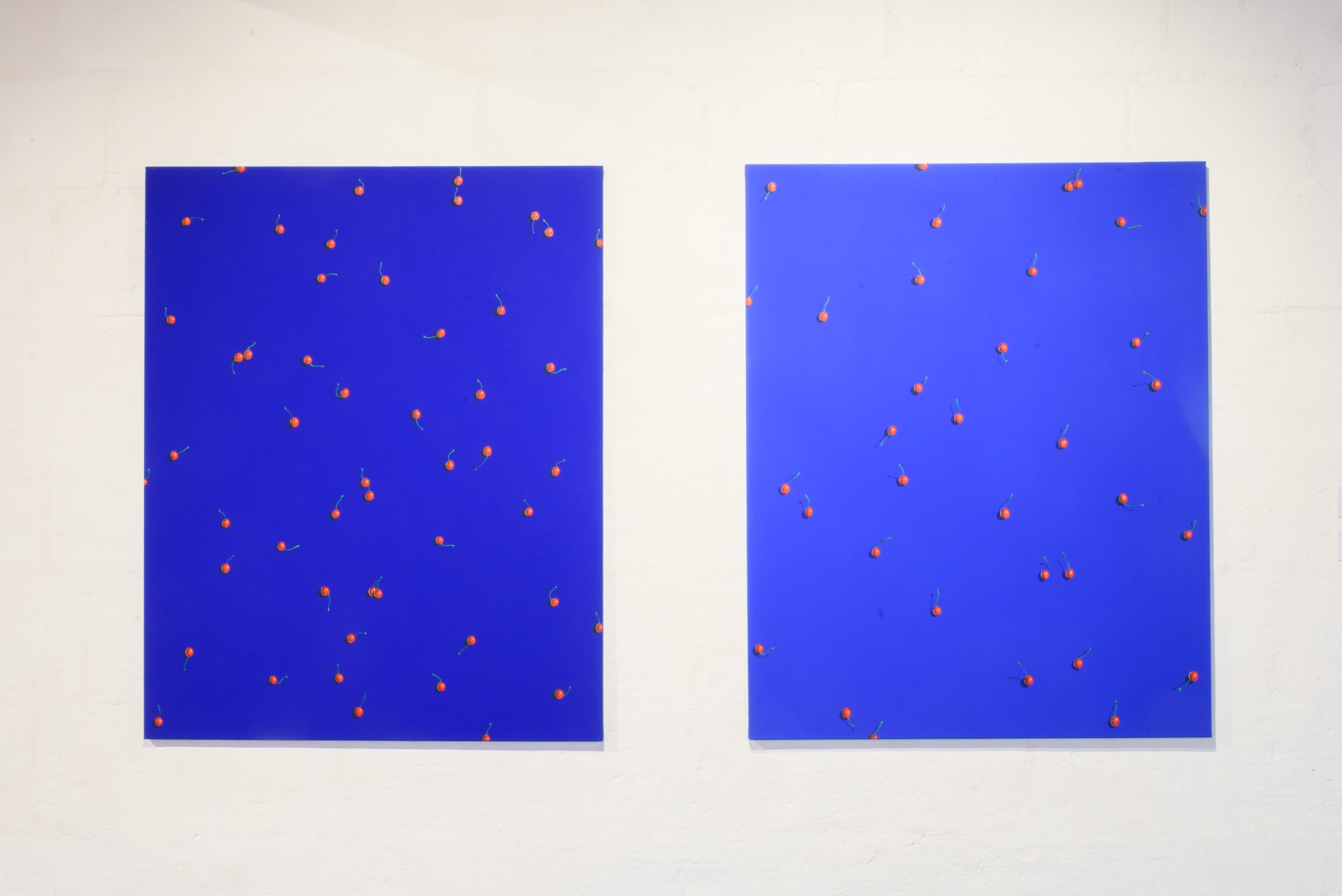
58 cerises, 2009, acrylic on canvas, 58.86 × 47.24 inches
53 cerises, 2009, acrylic on canvas, 58.86 × 47.24 inches
Photograph by Arnaud Durieux
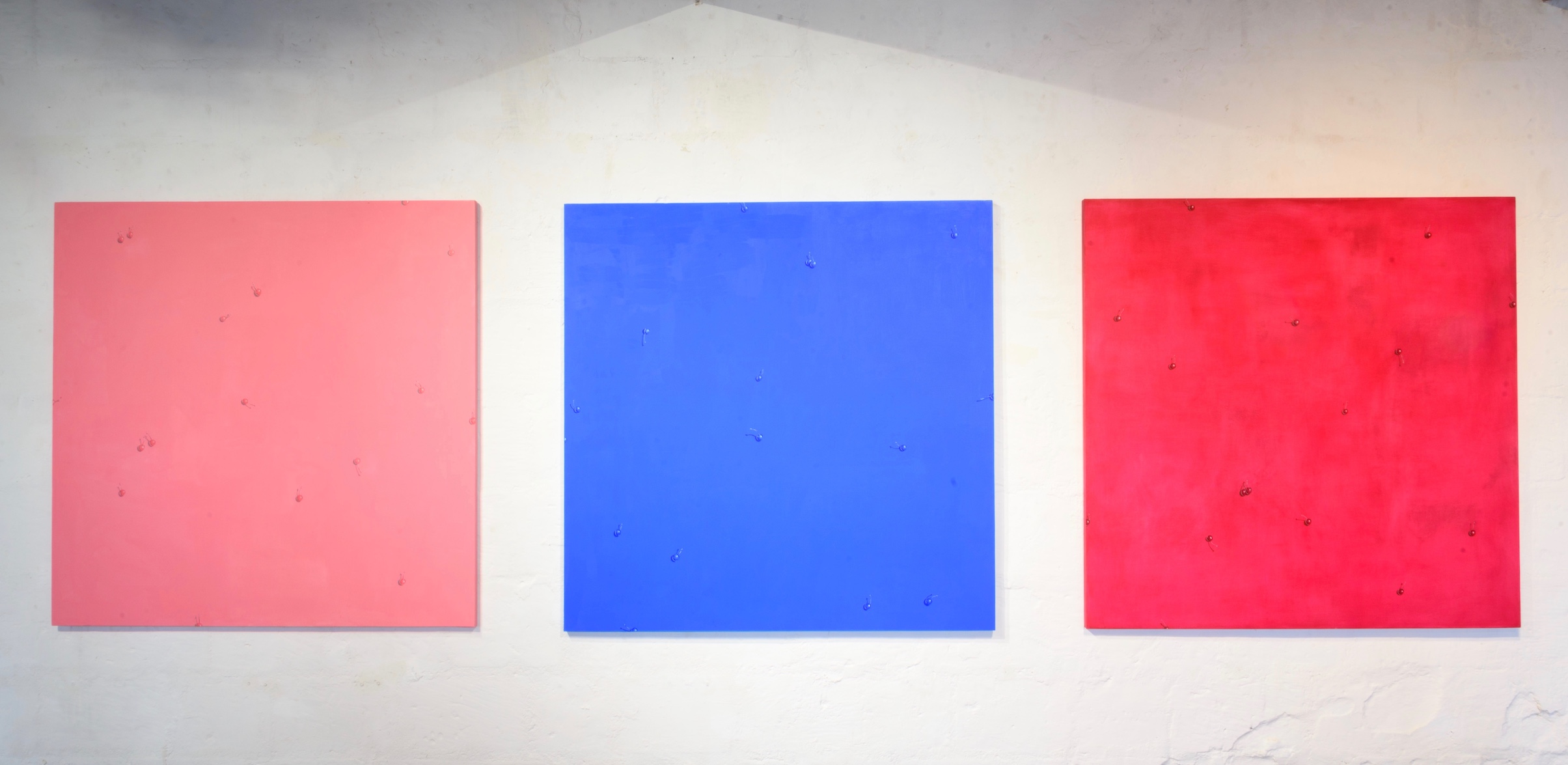
Came à yeux, 2014, oil on canvas, 59.06 × 59.06 inches (each)
Photograph by Arnaud Durieux
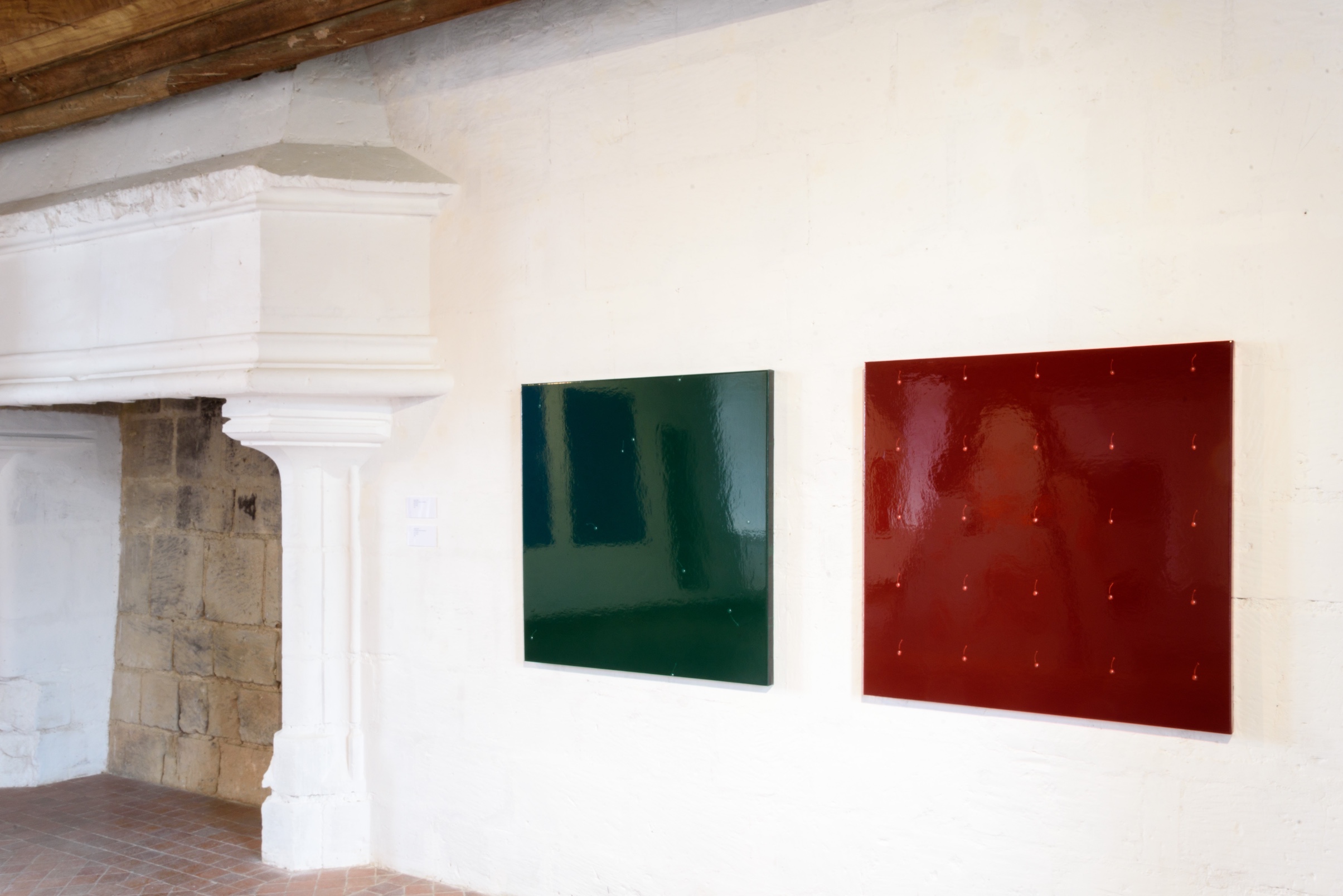
How to fuck a monochrome, 2018, lacquer on canvas, 39.37 × 39.37 inches (each)
Photograph by Arnaud Durieux
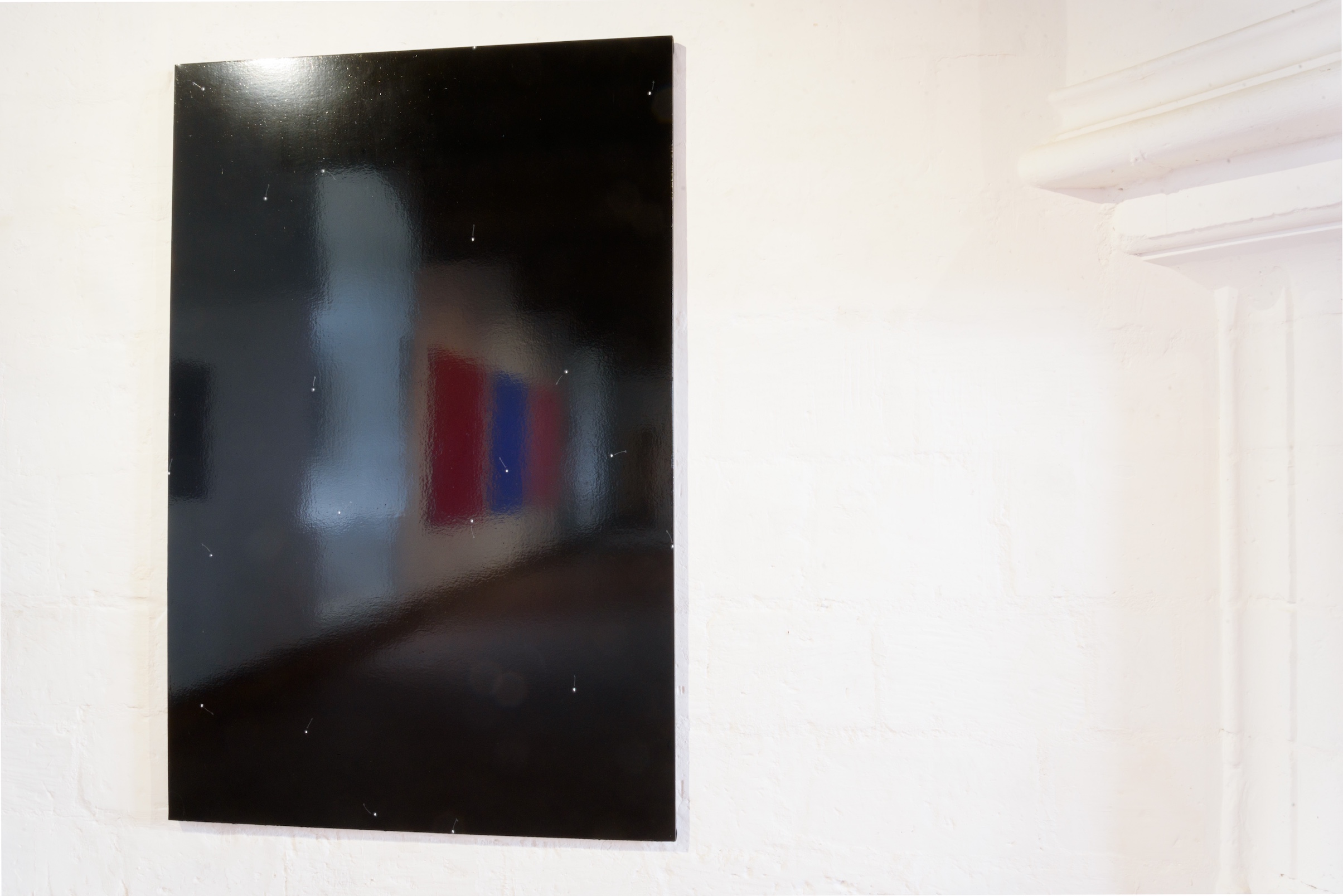
How to fuck a monochrome, 2018, lacquer on canvas, 74.80 × 55.12 inches
Photograph by François Lauginie
Wall painting
Acrylic
Photographs by Arnaud Durieux
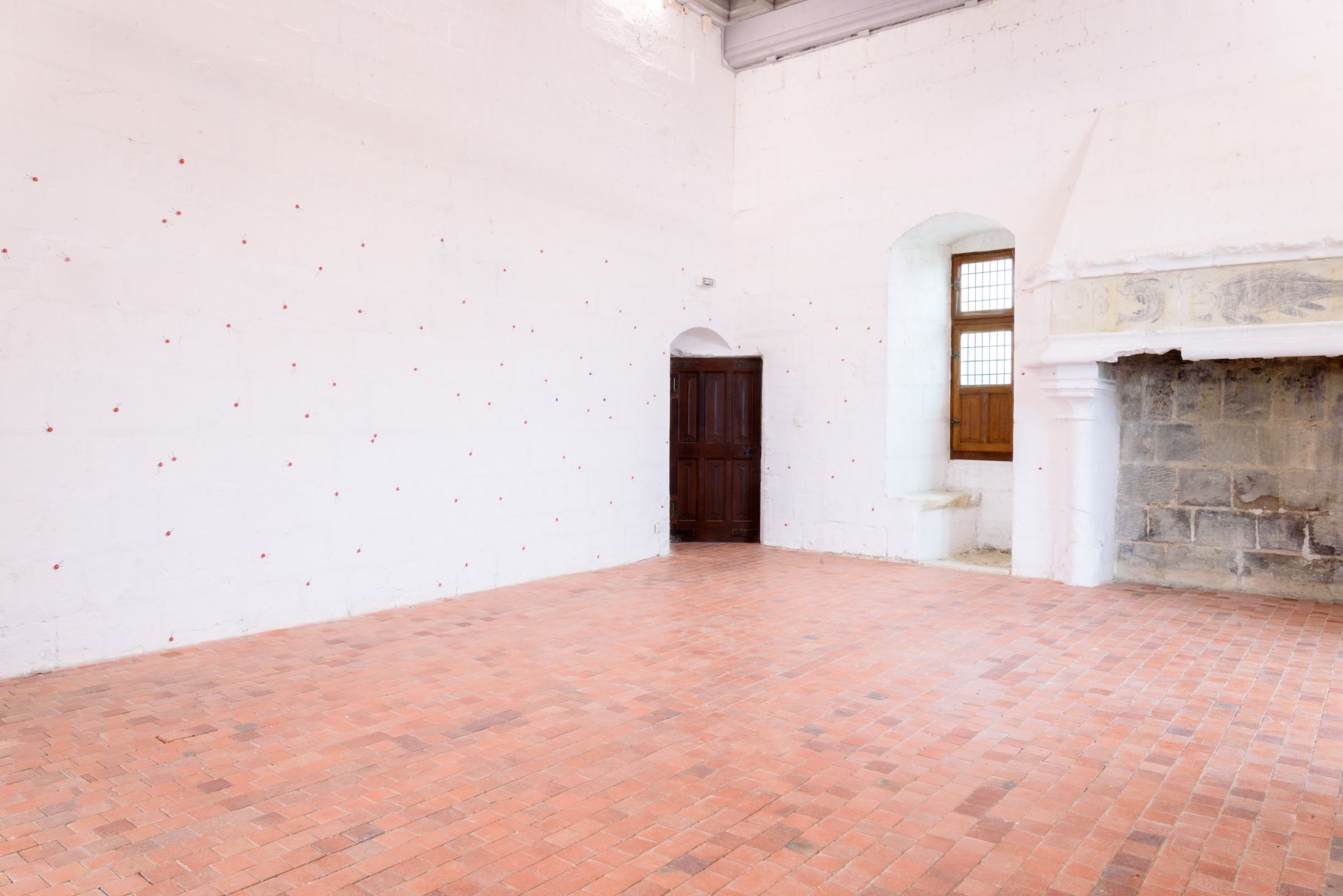
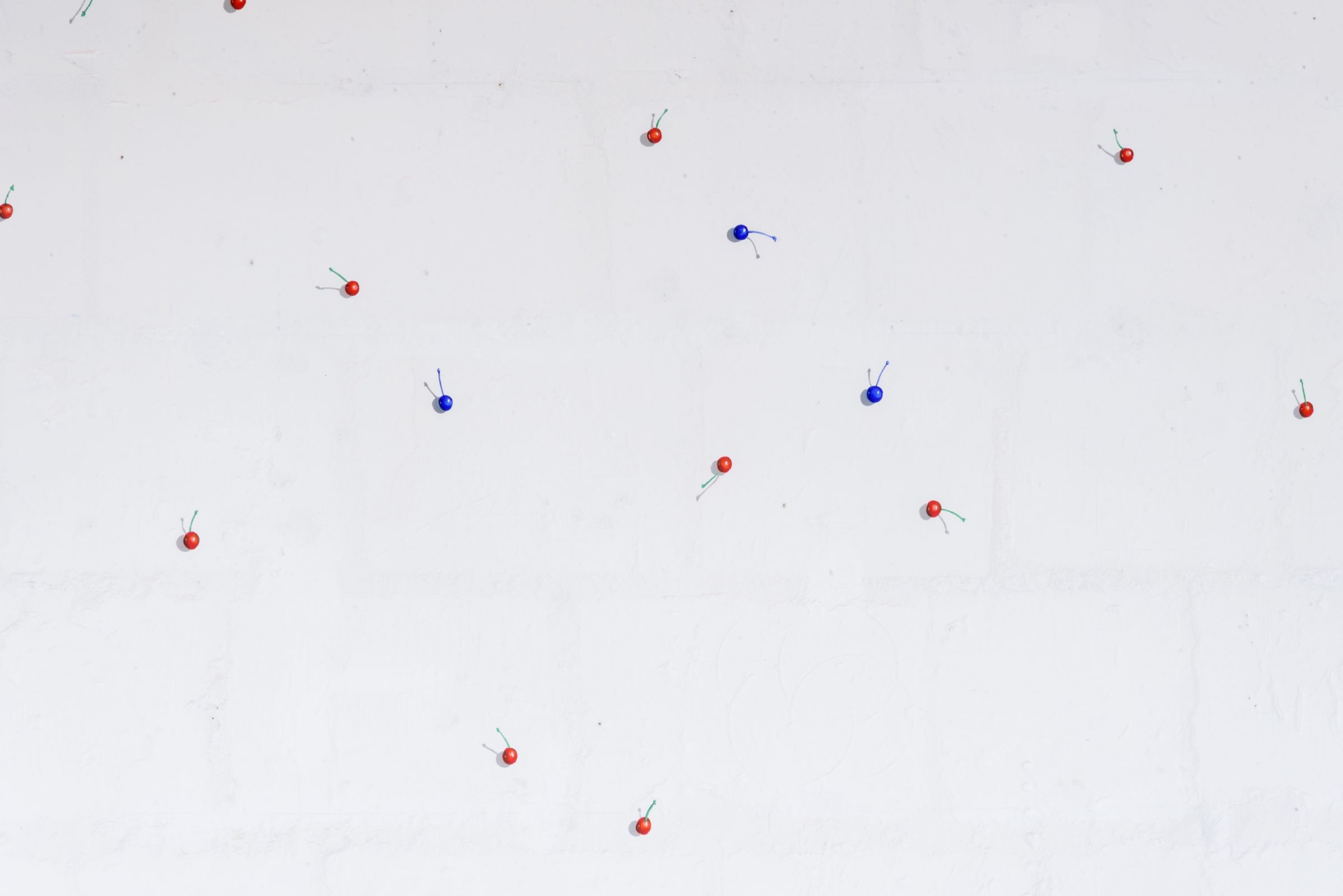
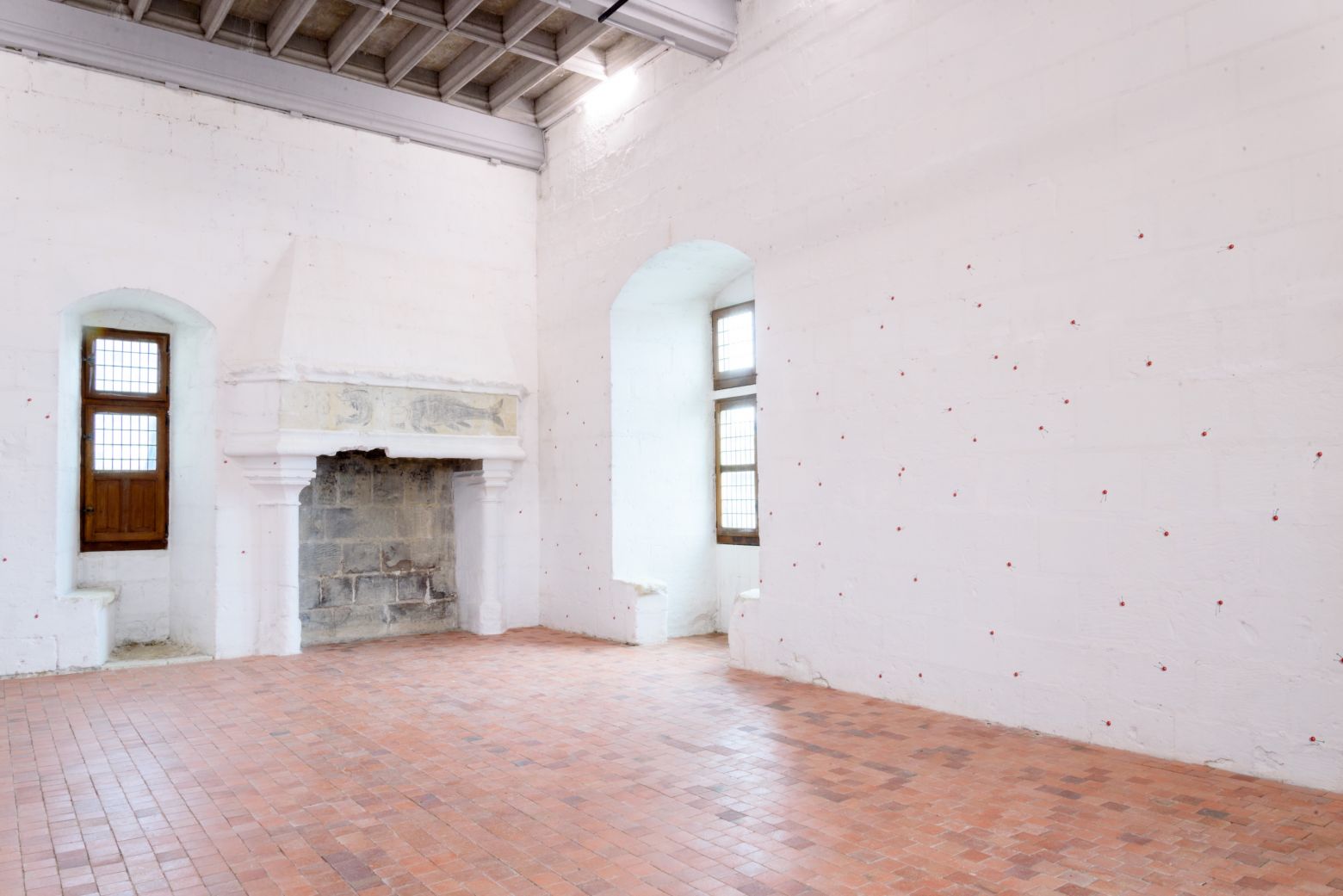
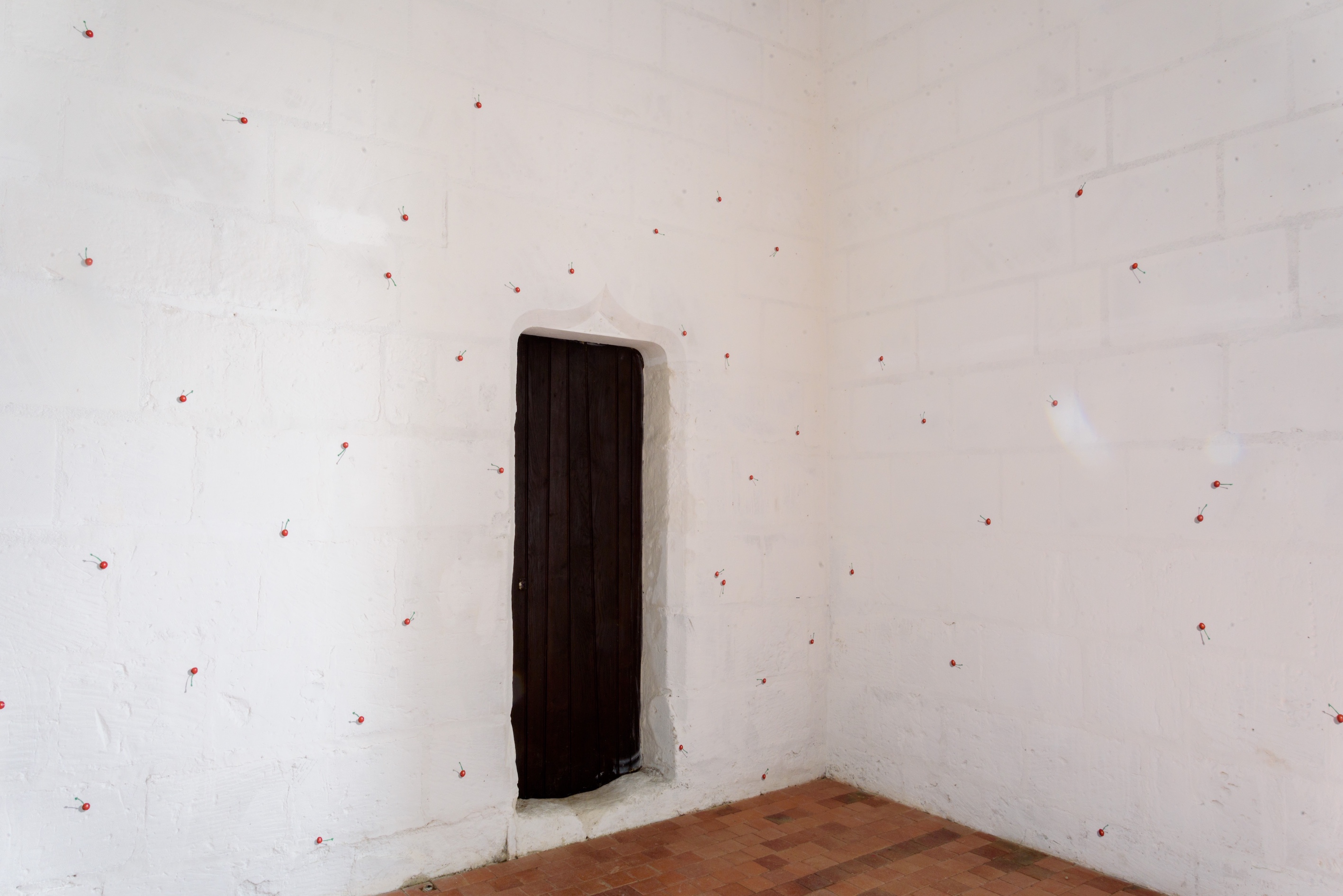
Center
Display cases containing works and archival materials by the artist
On the walls
Series of paintings on paper, 1976
Acrylic
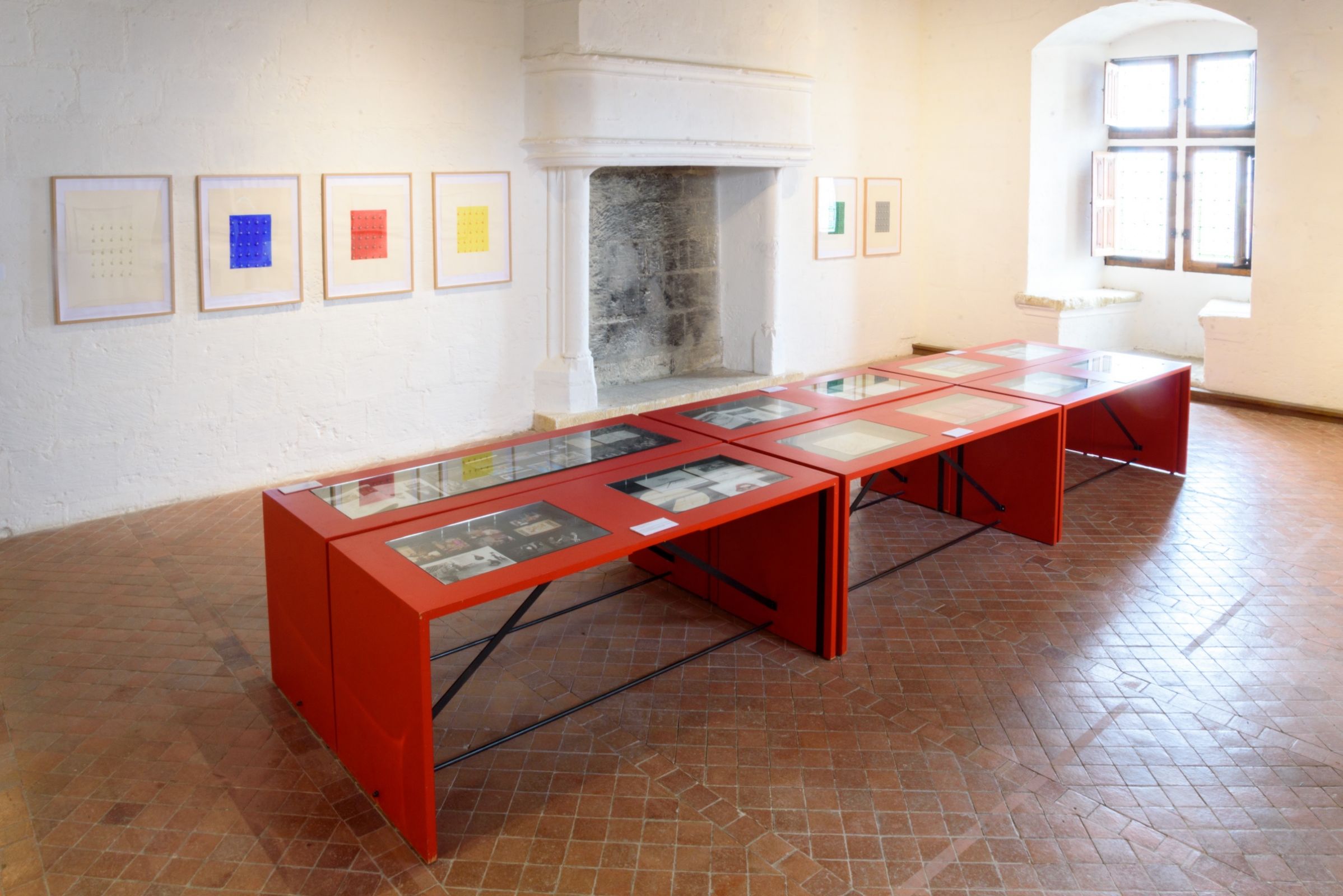
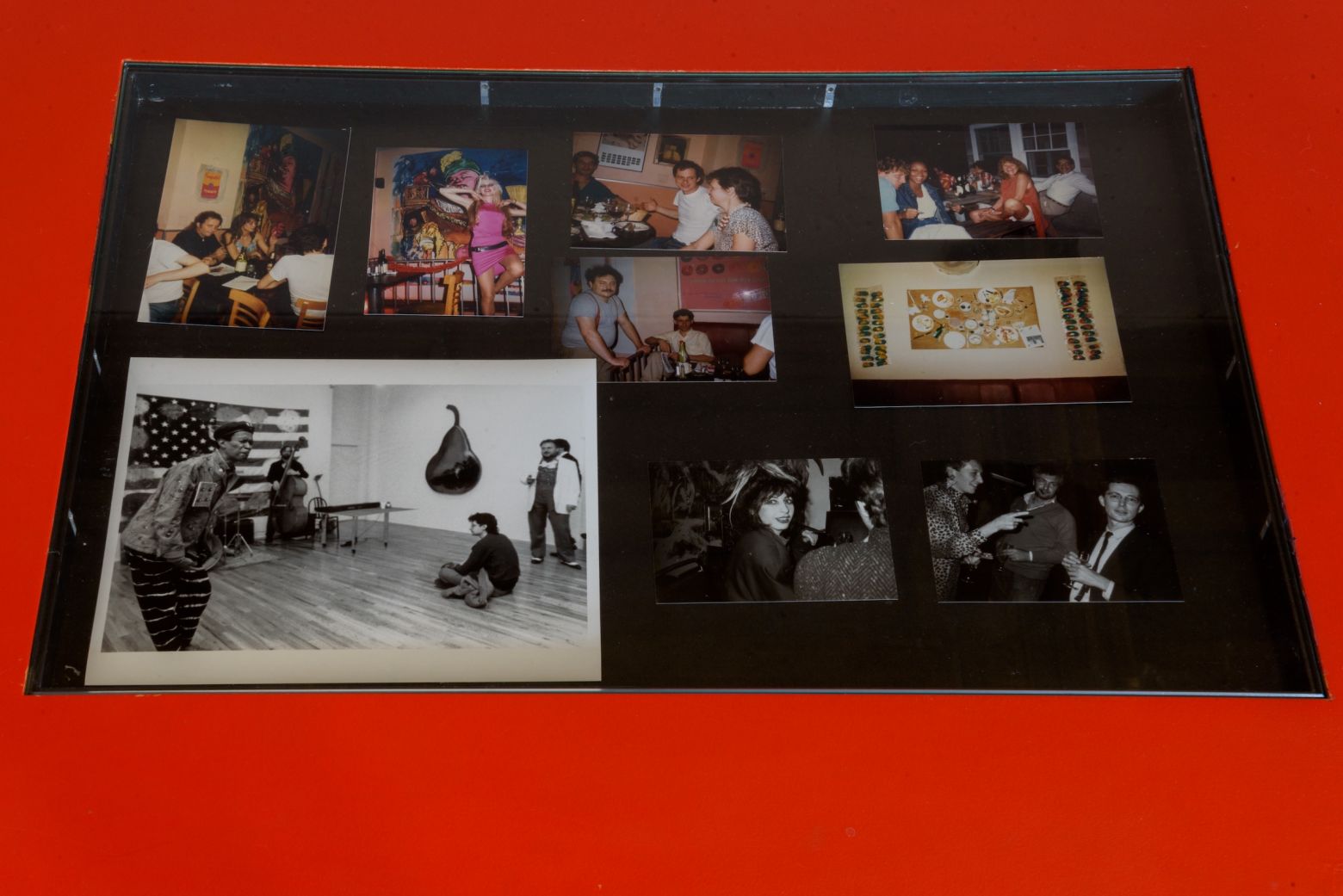
Photographs from the 1980s, New York
The Art Café, Don Cherry, Alan Jones, Dorothée Selz, Éric Fabre, Phoebe Legere, Nicola L, …
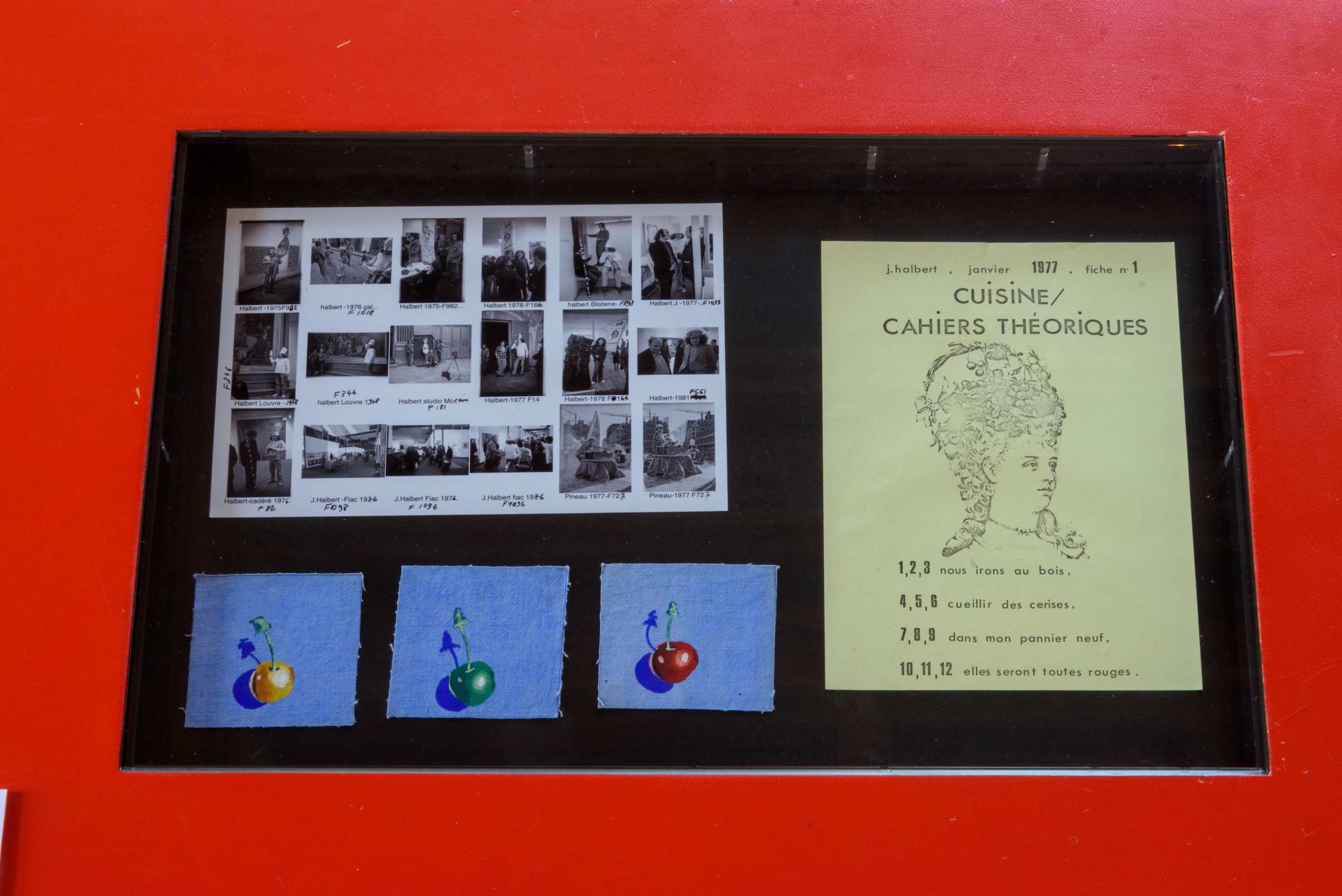
Three painted squares created in 1975
Contact sheet, 1975–1978
Cuisine/Cahiers théoriques, 1977
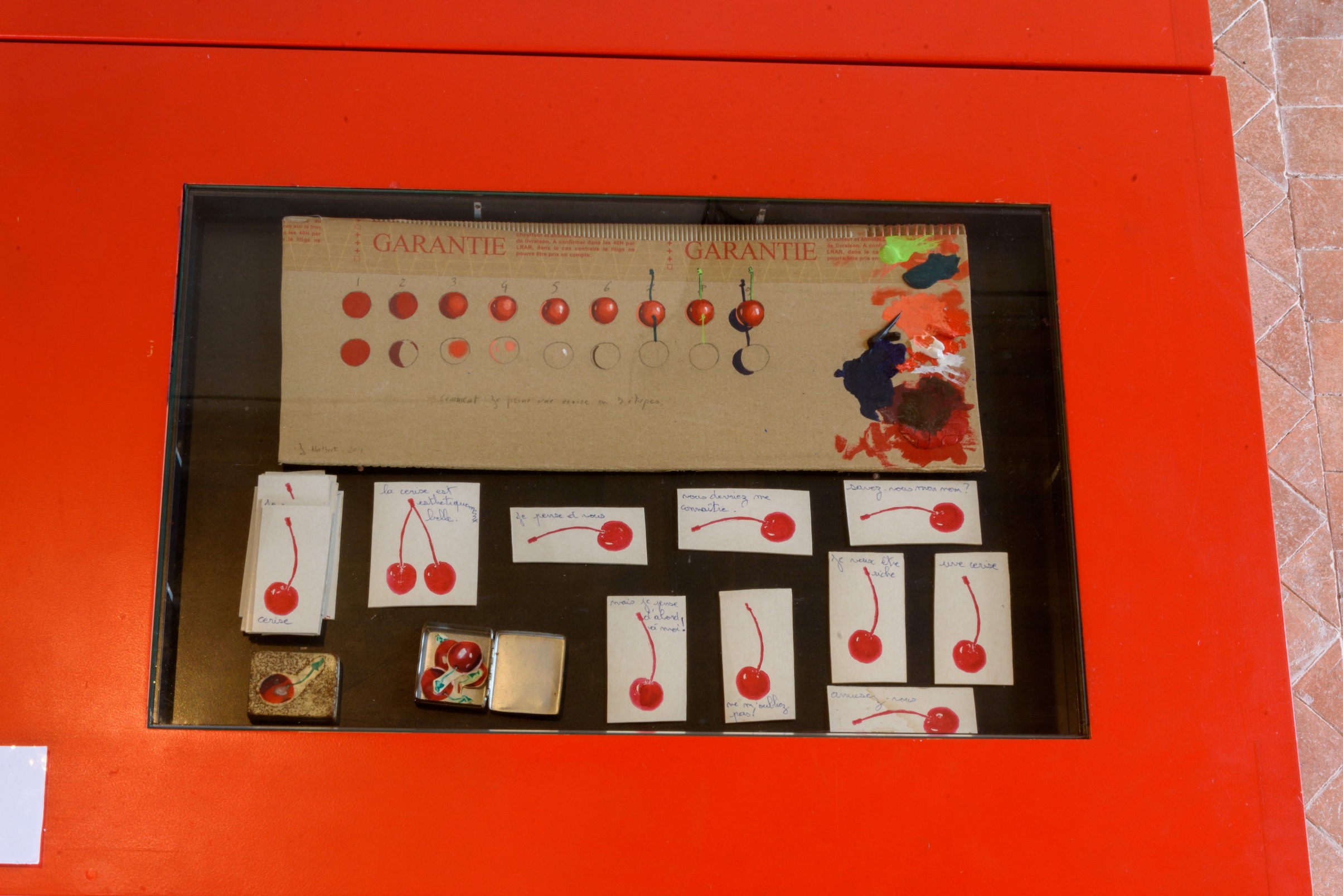
Comment peindre une cerise, 2014
Tampons, 1975
Stickers, 1975
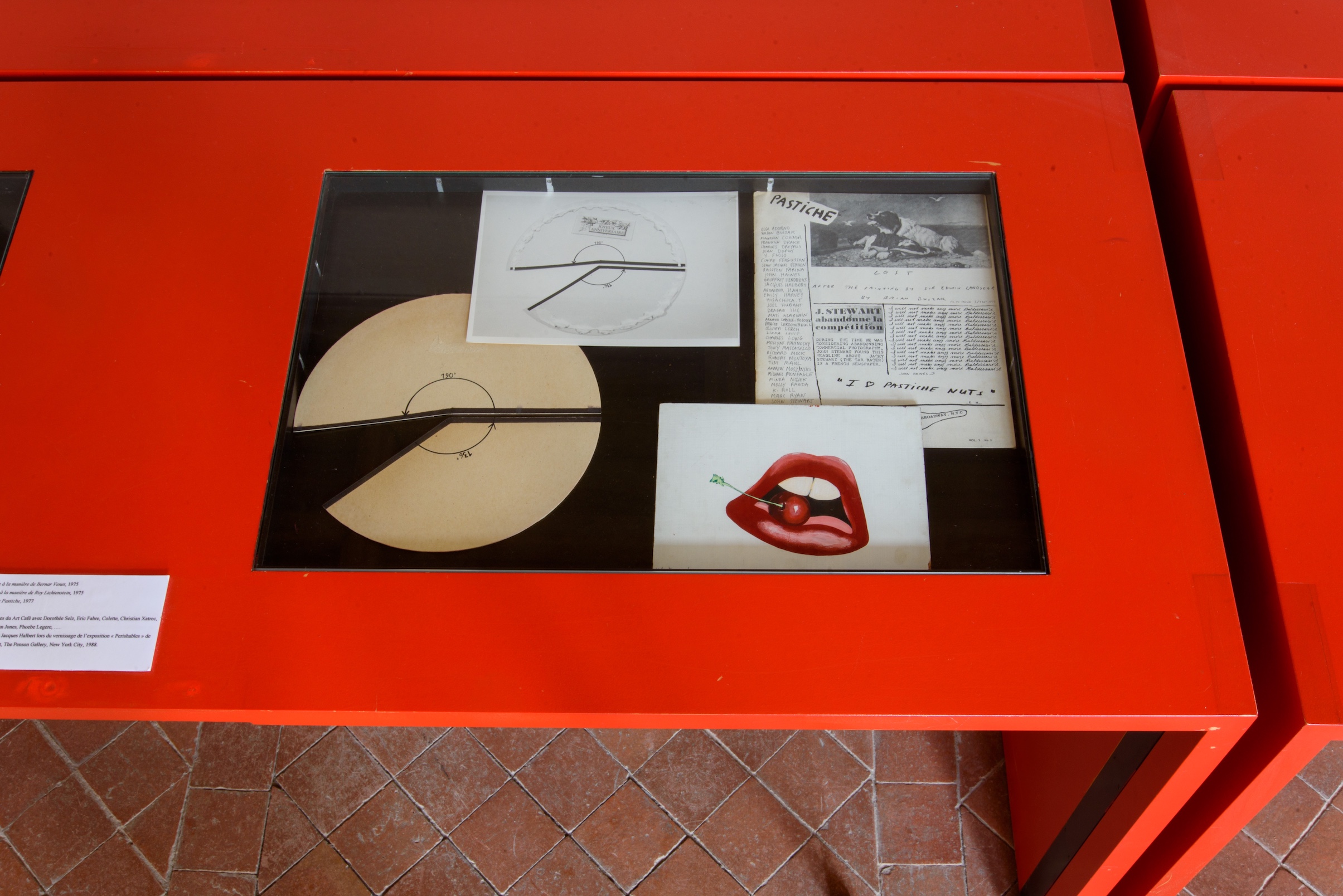
Various works from the series In the Manner of… Bernard Venet and Roy Lichtenstein, 1975
Catalogue of the exhibition Pastiche, Grommet Studio, 1982
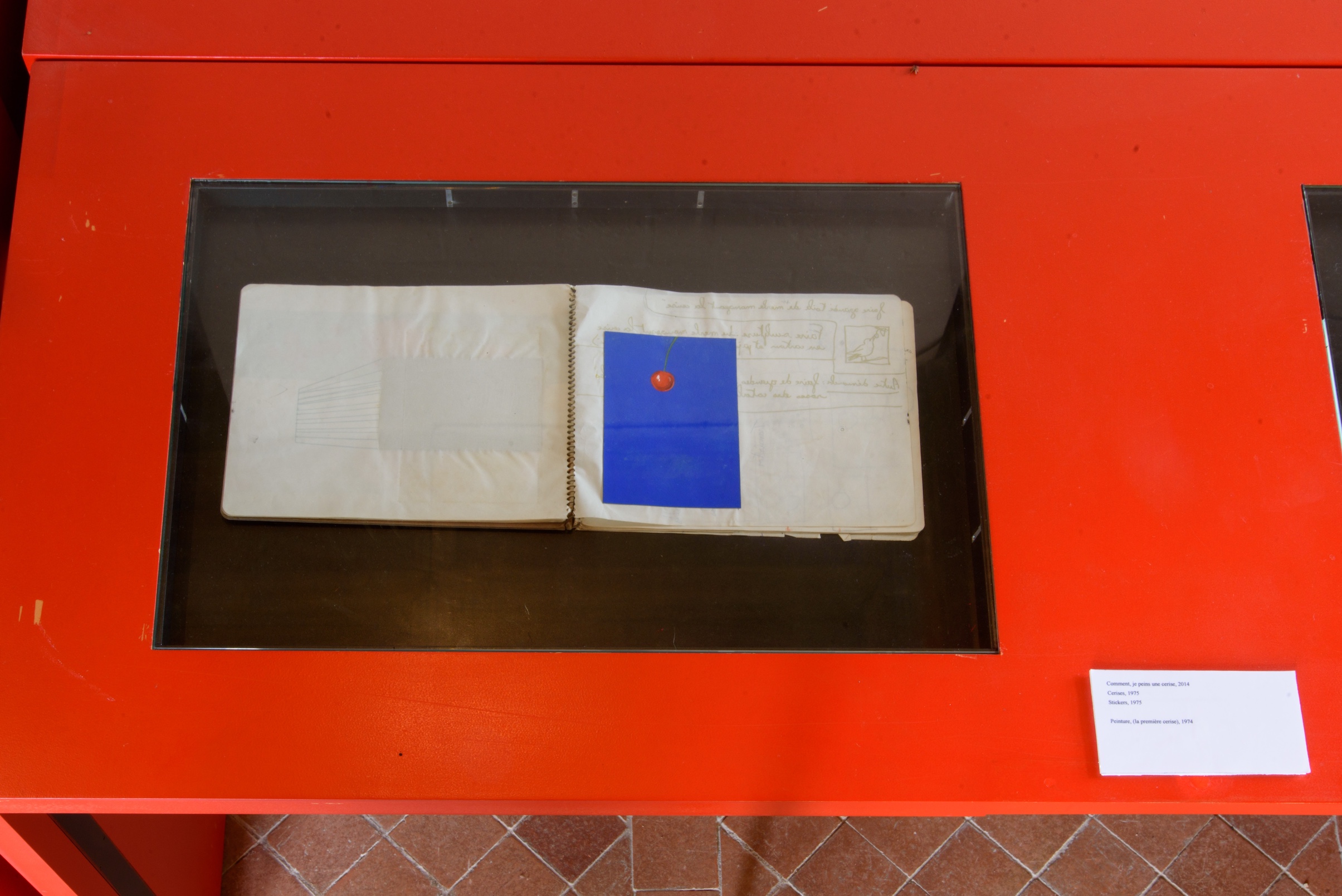
First Cherry, 1974
In a preparatory research notebook, several proposals are sketched out for interventions on hypothetical architectural structures. It is within these studies that the cherry motif appears for the first time. Among the various ideas considered for the fence, this is the project ultimately chosen by the artist.
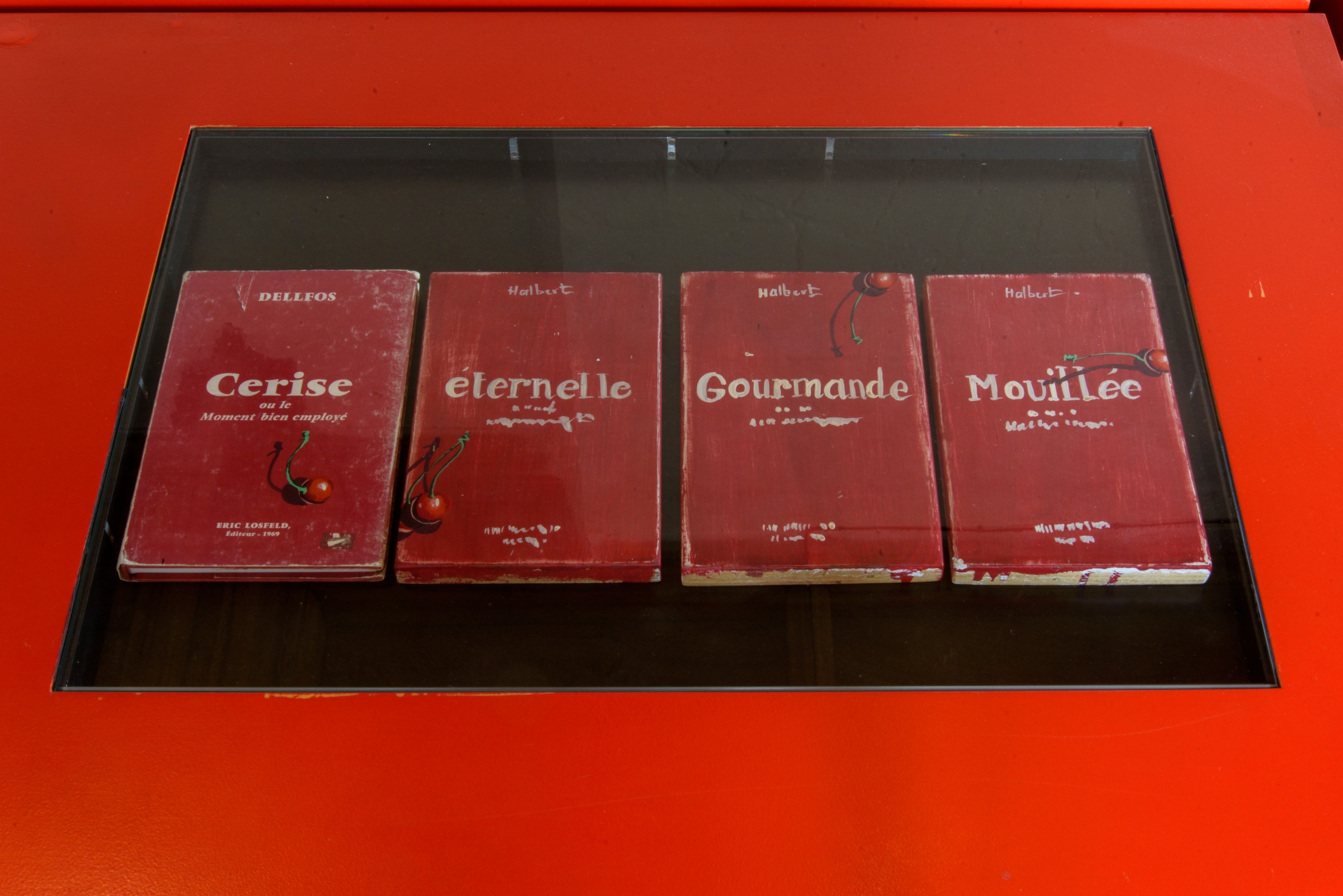
Cerise éternelle, gourmande, mouillée, 2004
Acrylic on book and on wood panels
8.27 × 23.62 inches
Edition
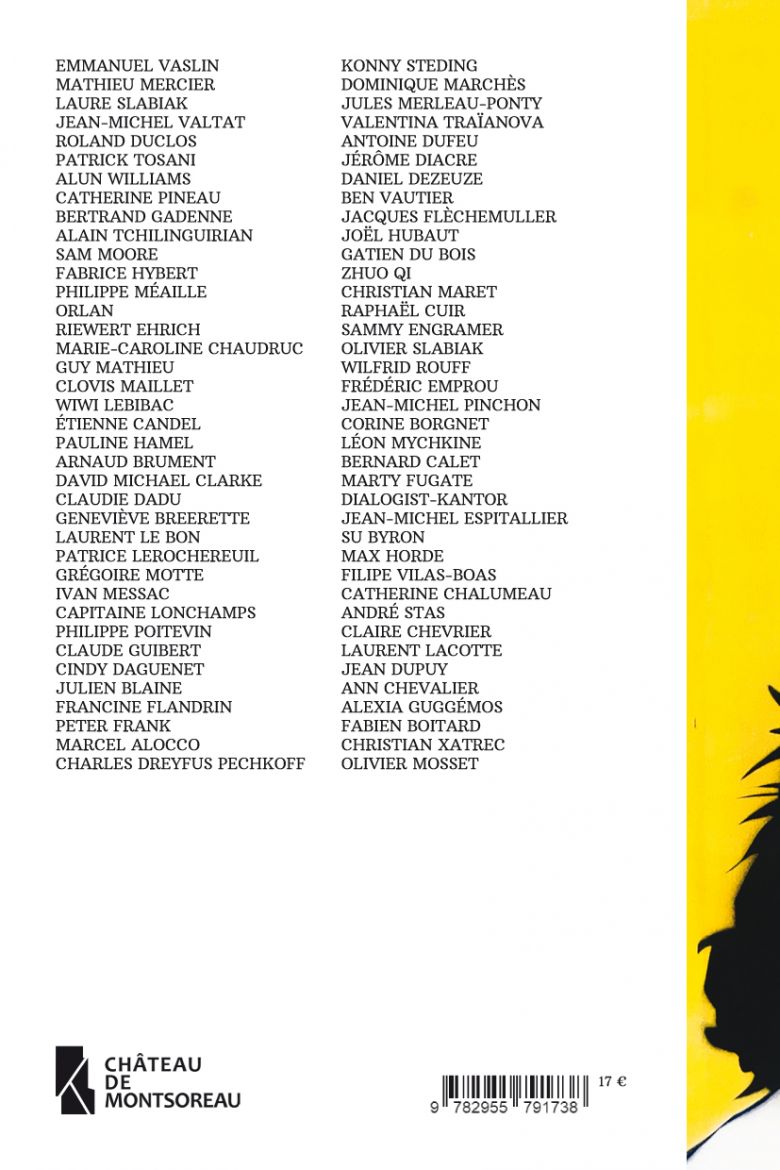

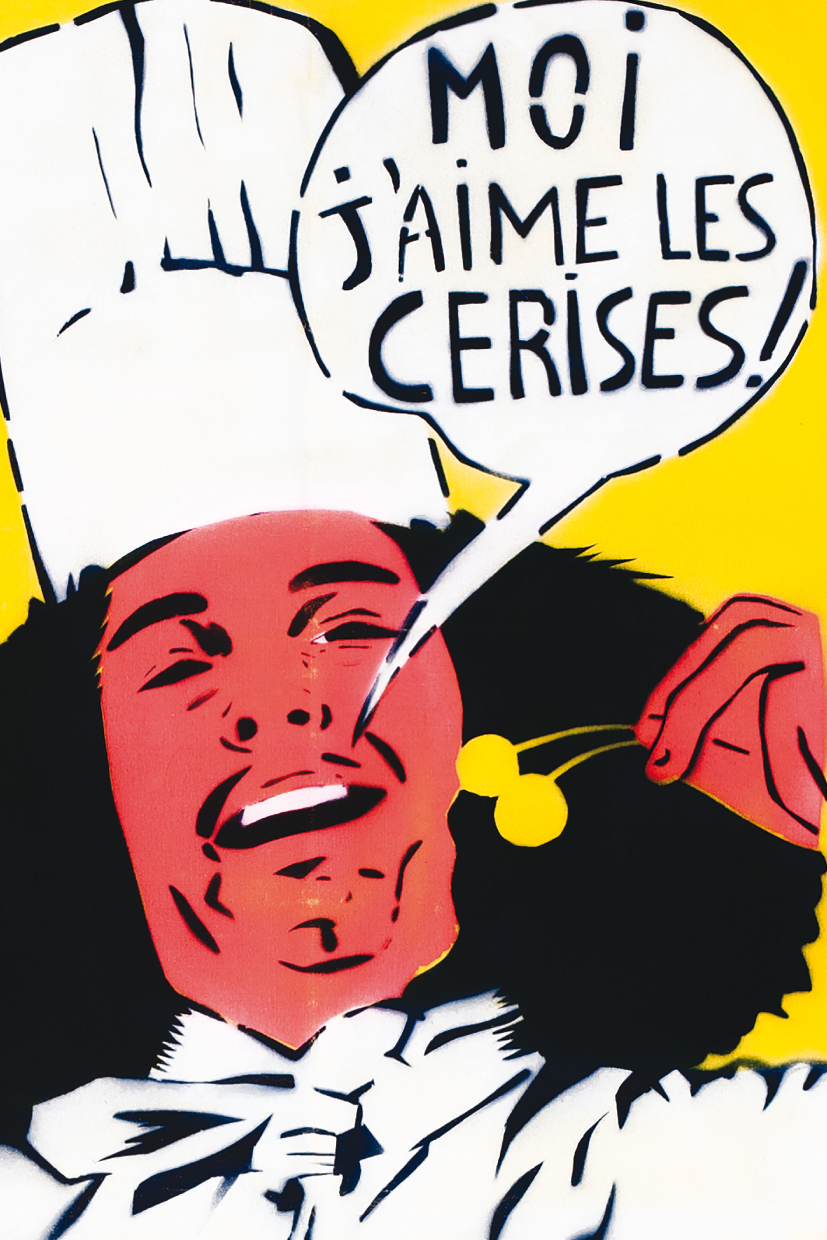
A negative self-portrait of Jacques Halbert, a collection of texts written by various figures — artists, filmmakers, philosophers, and art critics — arguing against his work. An attempt at self-definition through the negative gaze of his contemporaries.
Texts by Emmanuel Vaslin, Mathieu Mercier, Laure Slabiak, Jean-Michel Valtat, Roland Duclos, Patrick Tosani, Alun Williams, Catherine Pineau, Bertrand Gadenne, Alain Tchillinguirian, Sam Moore, Fabrice Hyber, Philippe Méaille, Orlan, Riewert Ehrich, Marie-Caroline Chaudruc, Guy Mathieu, Clovis Maillet, Wiwi Lebibac, Étienne Candel, Pauline Hamel, Arnaud Brument, David Michael Clarke, Claudie Dadu, Geneviève Bréerette, Lauren Lebon, Patrice Lerochereuil, Grégoire Motte, Ivan Messac, Capitaine Lonchamps, Philippe Poitevin, Claude Guibert, Cindy Daguenet, Julien Blaine, Francine Flandrin, Peter Frank, Marcel Alocco, Charles Dreyfus Pechkoff, Konny Steding, Dominique Marchès, Jules Merleau-Ponty, Valentina Traianova, Antoine Dufeu, Jérôme Diacre, Daniel Dezeuze, Ben Vautier, Jacques Flechemuller, Joël Hubaut, Gatien Du Bois, Zhuo Qi, Christian Maret, Raphaël Cuir, Sammy Engramer, Olivier Slabiak, Wilfrid Rouff, Frédéric Emprou, Jean-Michel Pinchon, Corine Borgnet, Léon Mychkine, Bernard Calet, Marty Fugate, Dialogist-Kantor, Jean-Michel Espitallier, Su Byron, Max Horde, Filipe Vilas-Boas, Catherine Chalumeau, André Stas, Claire Chevrier, Laurent Lacotte, Jean Dupuy, Ann Chevalier, Alexia Guggemos, Fabien Boitard, Christian Xatrec, Olivier Mosset.
Graphic design: Dieudonné Cartier
Publication produced in the context of the exhibition Jacques Halbert. Cherries (10.07–13.11.2020).
Published in February 2021. French edition. 14 × 21 cm. 186 pages (black & white).
1,000 copies. ISBN: 978-2-9557917-3-8 / EAN: 9782955791738
Published by the Château de Montsoreau – Musée d'Art Contemporain.