L'attrape-tripes
Chalon-sur-Saône
1980
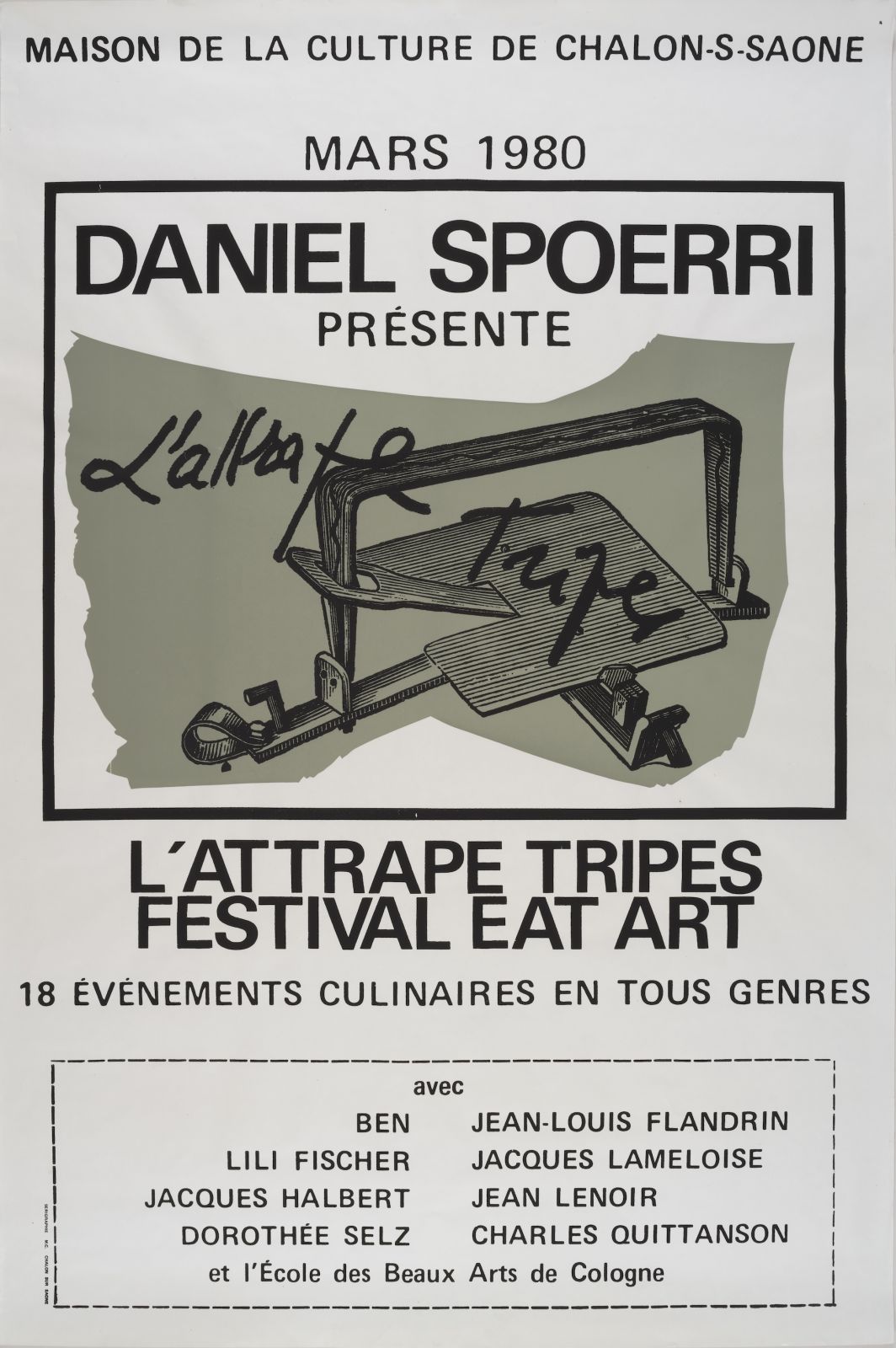
Programme des repas du 4 au 27 mars 1980
L’attrapes-tripes
“J’ai conçu, produit et digéré un stratagème”, Molière
Tuesday, March 4: Regional Cuisine by Charles Quittanson
Wednesday, March 5: Three-Star Cuisine by Jacques Lameloise
Thursday, March 6: Dinner of the Namesakes by Daniel Spoerri
Friday, March 7: The Bets Are Closed by Dana Cebulla, Ursula Majer and Friederike Schmelzer (Cologne)
Saturday, March 8: Funeral Feast, or Gentle Death by Dorothée Selz
Sunday, March 9 and Monday, March 10: Fasting
Tuesday, March 11: Plastic Food by Thomas Fischer and Jürgen Raap (Cologne)
Wednesday, March 12: Evening of Herbs by Lili Fischer
Thursday, March 13: Historical Cuisine by Jean-Louis Flandrin
Friday, March 14: The Valentine’s Day Dinner by Mona-Beisegel (Cologne)
Saturday, March 15, Sunday, March 16 and Monday, March 17: Fasting
Tuesday, March 18: Rich and Poor by Daniel Spoerri and Corinna Liesner (Cologne)
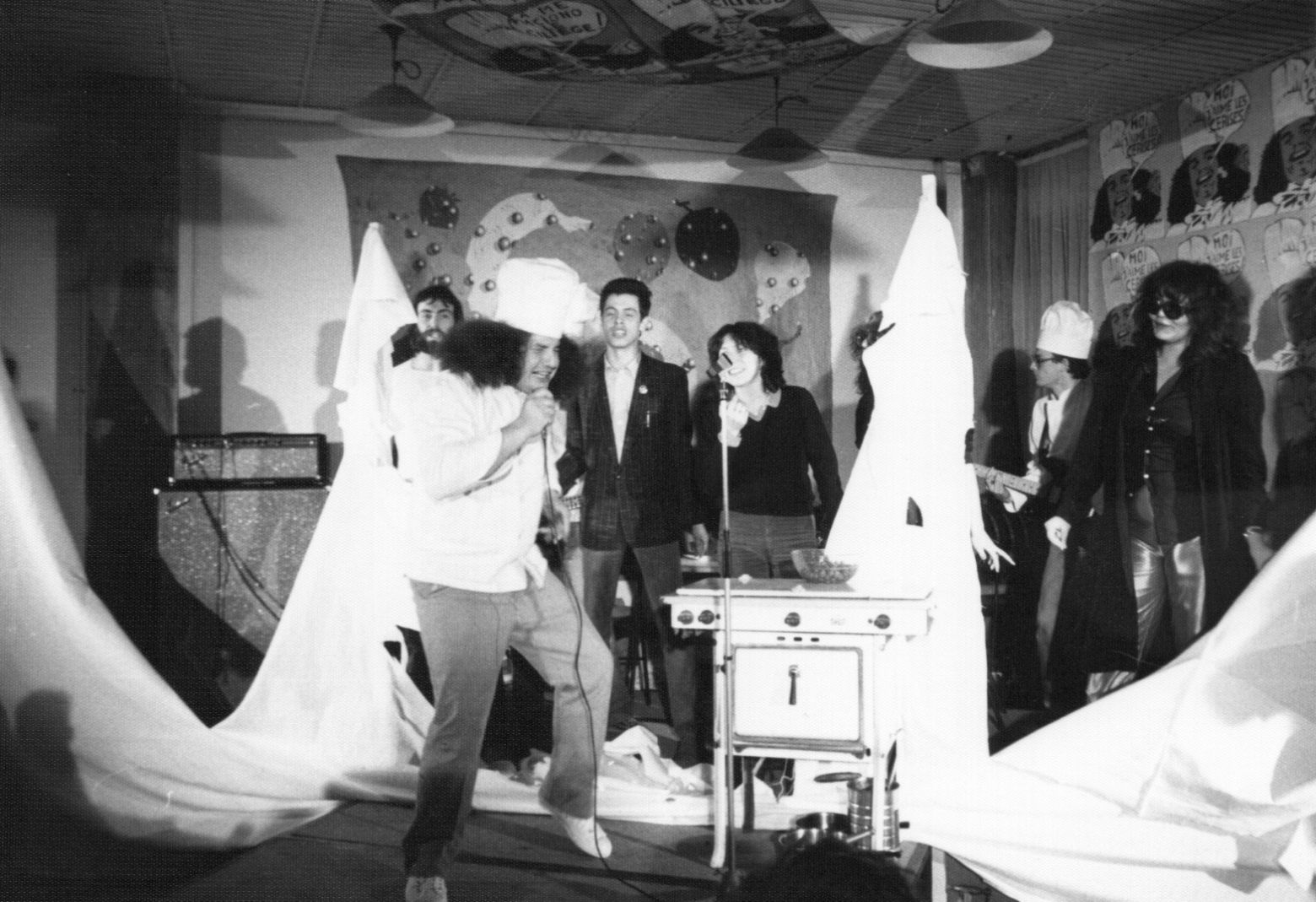
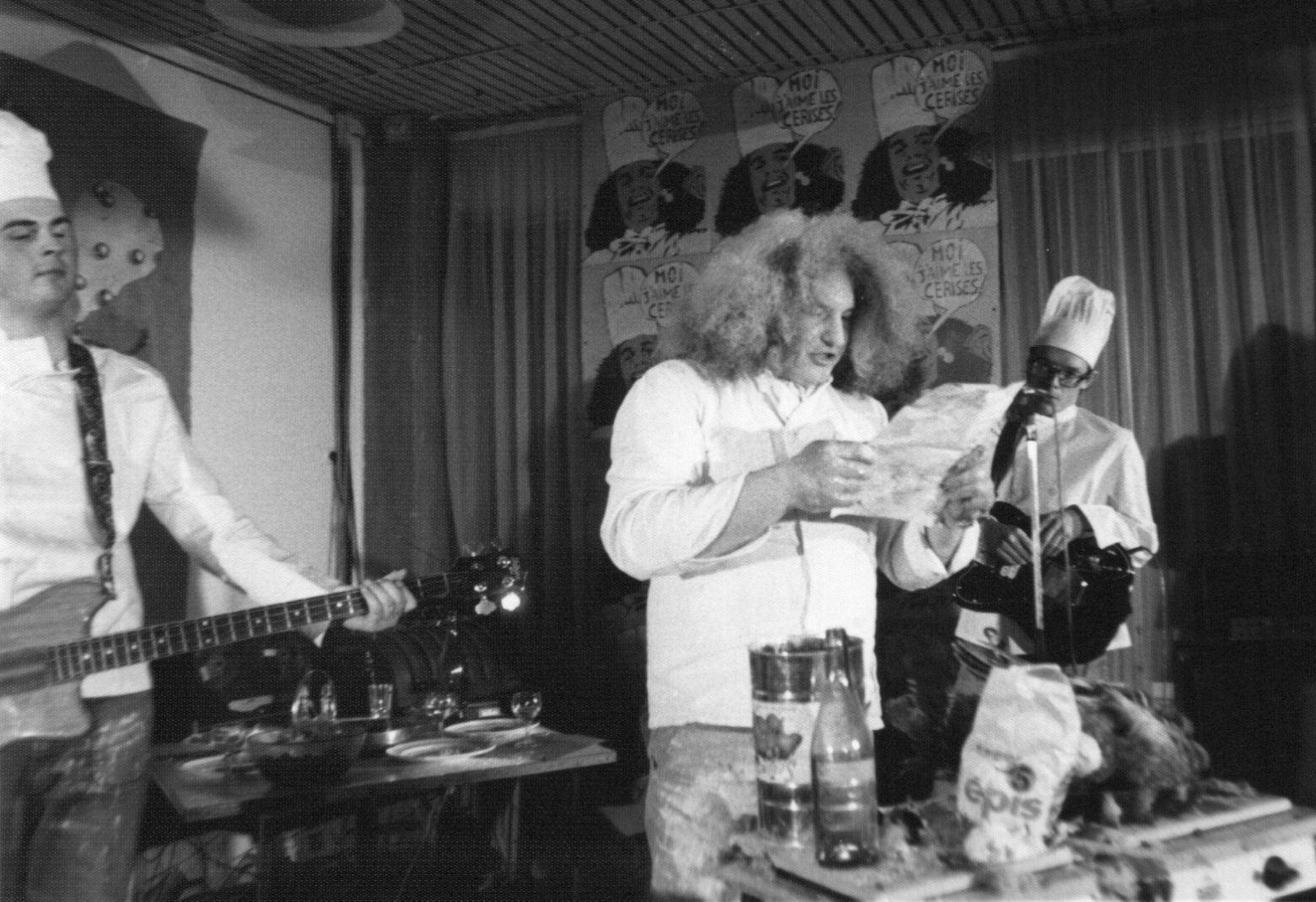
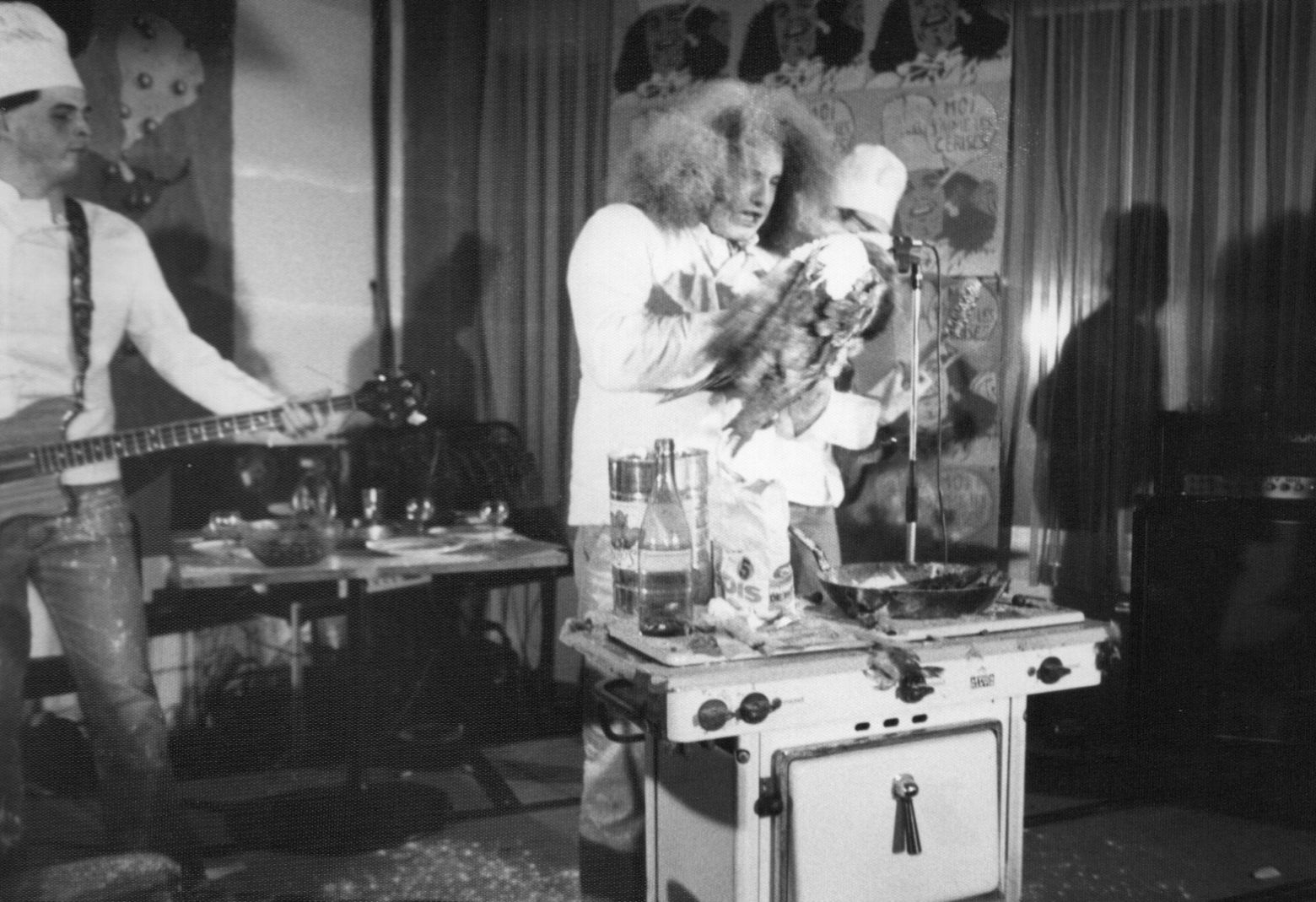
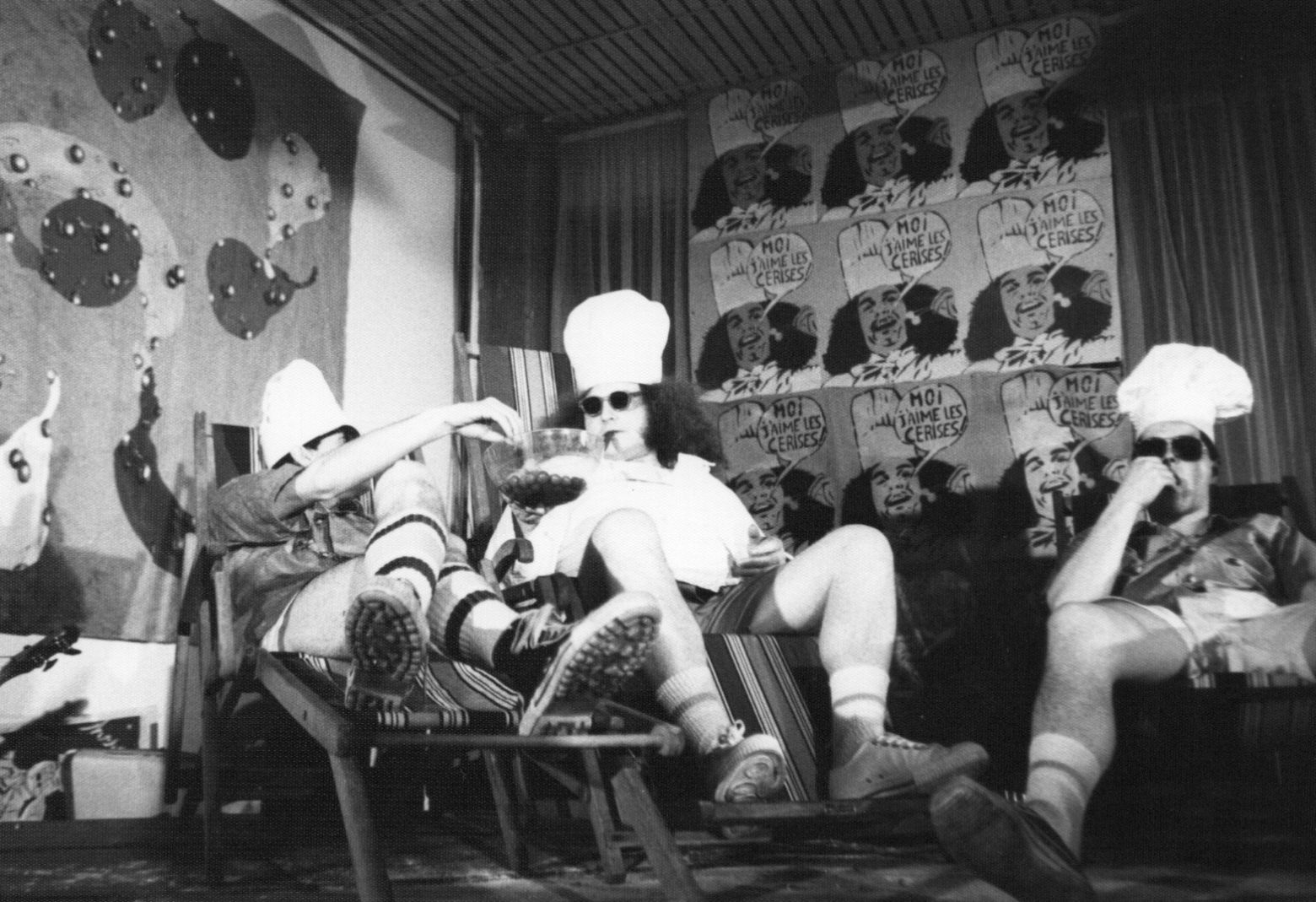
Wednesday, March 19: Cherry, I Love You by Jacques Halbert, with music by Les Frères Lumière
Thursday, March 20: Oenological Evening
Friday, March 21: Maghrebi Cuisine
Saturday, March 22: Fluxus Meal by BEN
Sunday, March 23: Children’s Tea Party
Tuesday, March 25: The Long Pig Dinner, or Edible Human Forms by Manfred Lohmar (Cologne)
Wednesday, March 26: Prison Meal by Daniel Spoerri
Thursday, March 27: Astrological Meal by Daniel Spoerri
Wednesday, March 19 at 8:00 p.m
Cherry, je t’aime
By Jacques Halbert, with a musical setting by Les Frères Lumière
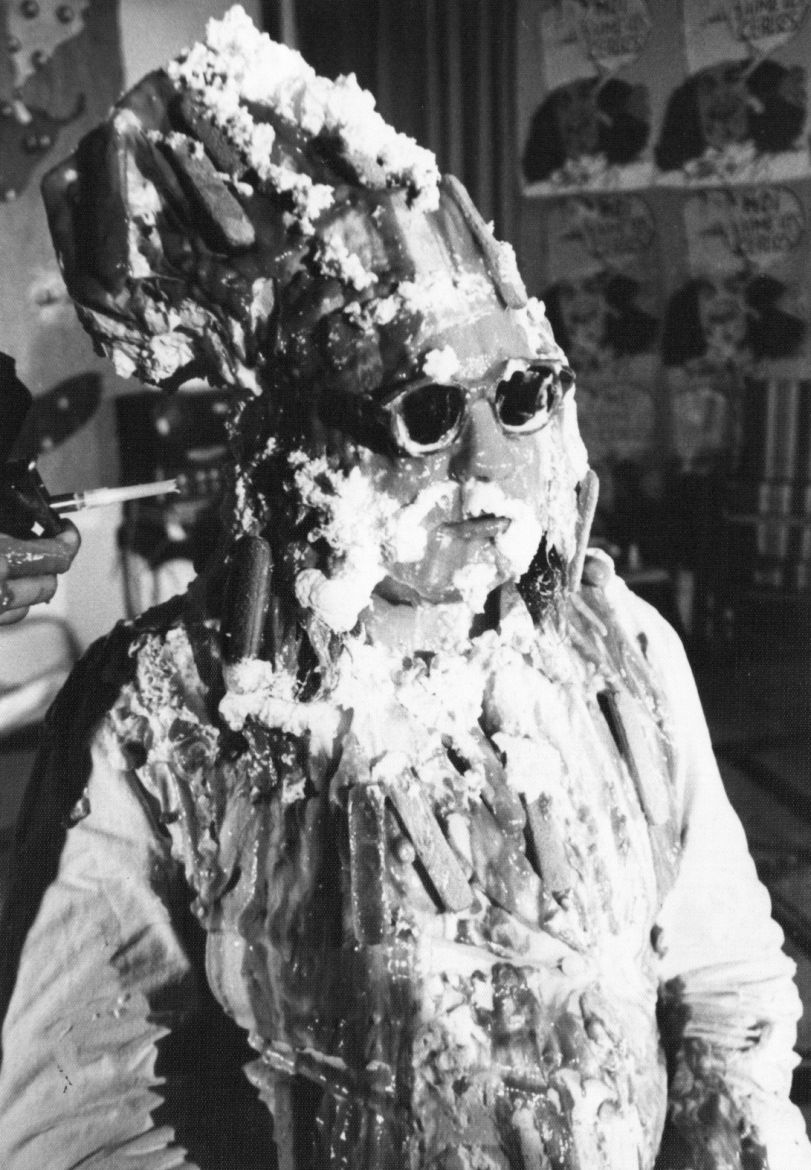
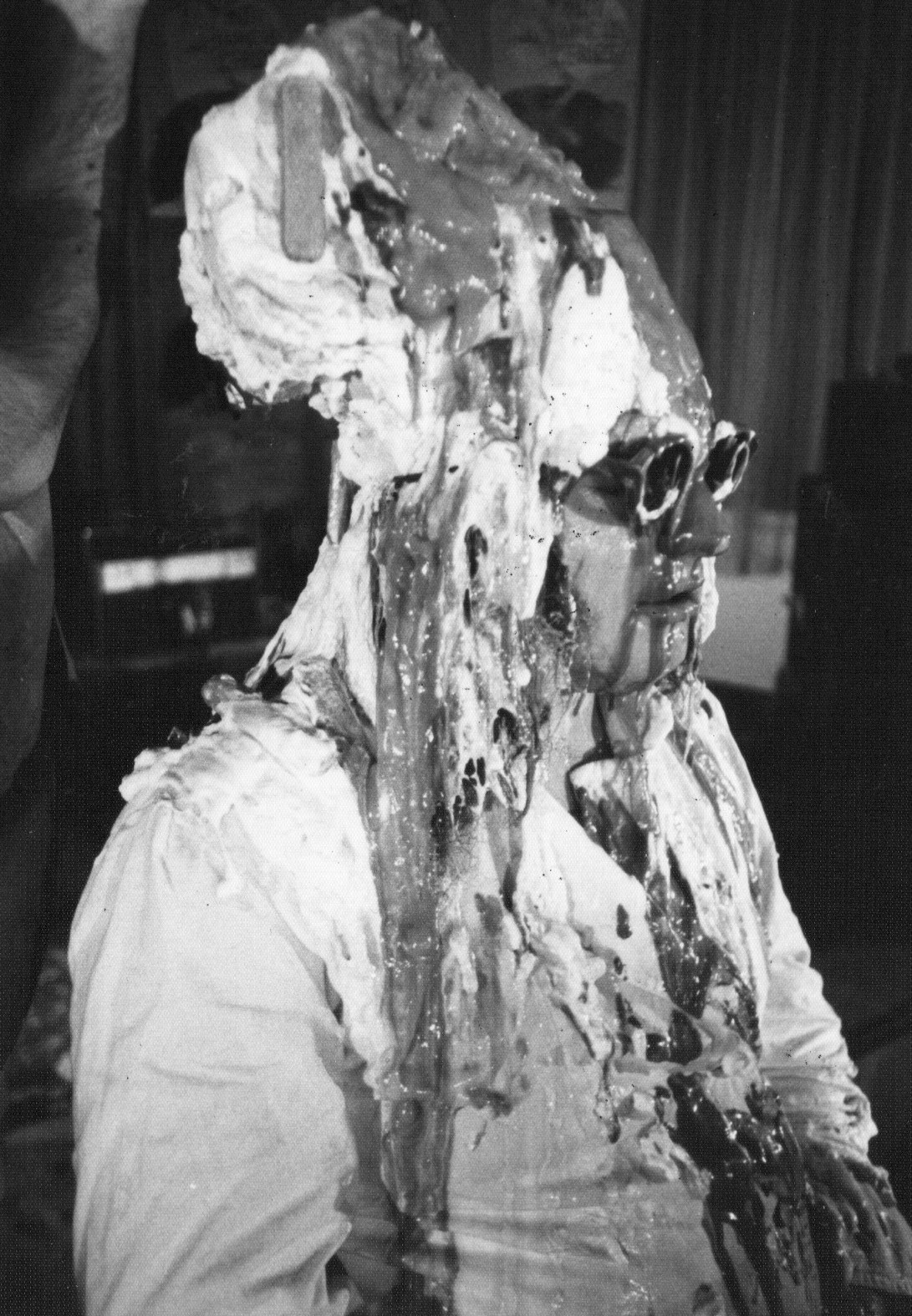
Performance
Le pâtissier pâtissé
Le pâtissier pâtissé, 1979 by Jacques Halbert stages an inversion that is as simple as it is radical: the artist, having become a pastry chef, transforms himself into a cake. Seated on a chair and covered with cream, chocolate, and biscuits, he offers his own body for the audience to taste.
The performance enacts a shift from production to consumption, from author to object. By quite literally presenting himself to be eaten, the artist subverts the conventions of 1970s performance art and offers a version that is both burlesque and critical. The body is neither martyred nor heroicized; instead, it is transformed into a soft, perishable, and shareable material.
In this performance, the artist becomes a product—displayed, decorated, and ultimately consumed. Le pâtissier pâtissé thus offers a simultaneously joyful and ambiguous image of the artist’s condition: that of a body given over to others, absorbed by their gaze and desire until it disappears in the very act of encounter.
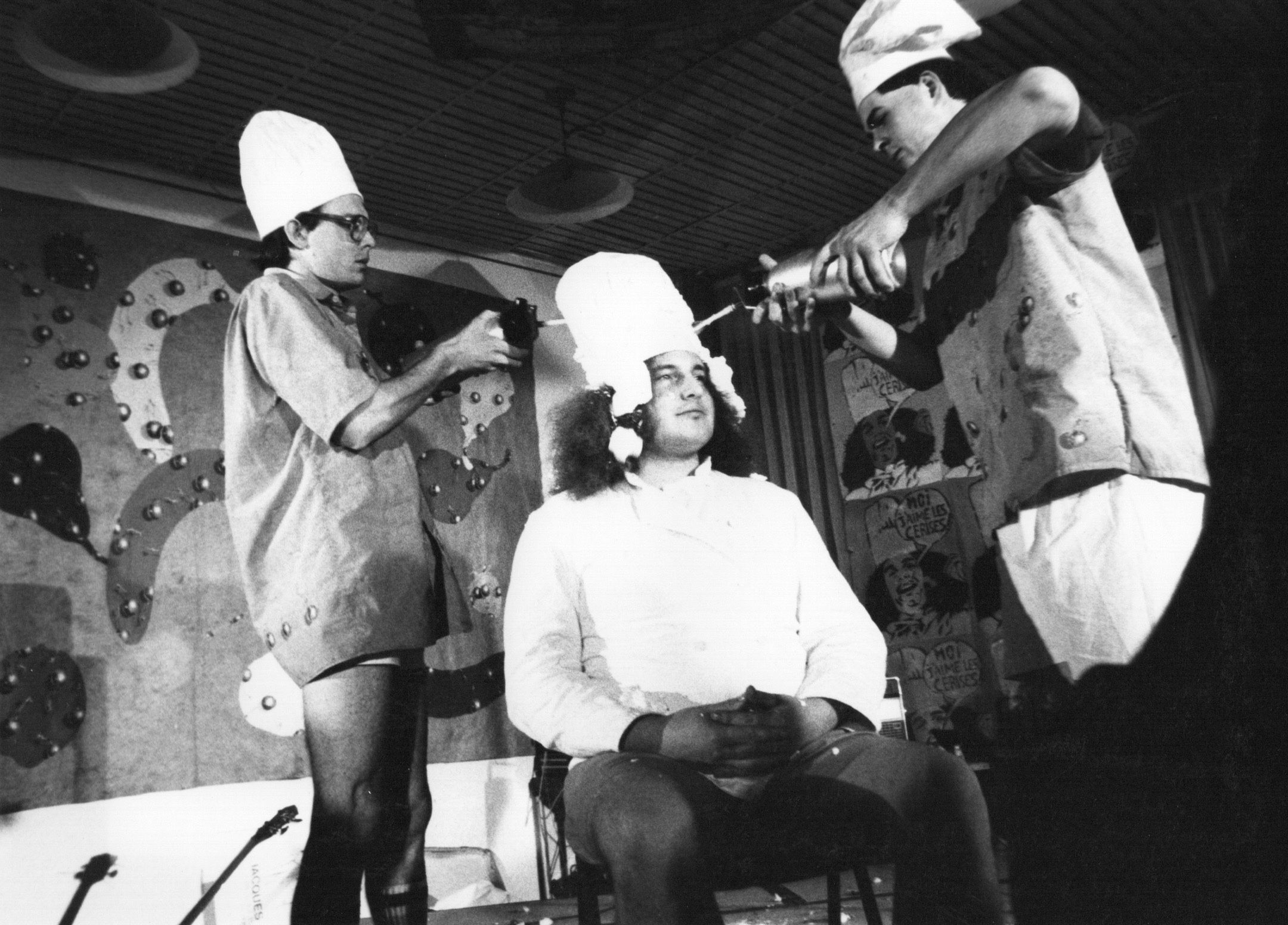
Rock ’n’ Roll, Recipe, Duck with Morello Cherries, and Dessert