Cerises en tous genres
December 1975
Jacques Halbert entered the École Nationale Supérieure d’Art in Bourges in 1973, after completing his training at the Brassart School in Tours. Having already been painting for several years, he had exhibited his work even before enrolling at the school, participating in various exhibitions in Anjou and Touraine, notably at the gallery of Jacques Davidson (Alexander Calder’s son-in-law) in Tours. At that time, his painting was strongly influenced by the School of Paris and by artists such as Nicolas de Staël.
His arrival in Bourges marked a decisive turning point. Confronted with a generation of students deeply engaged with the most recent developments in contemporary art, Halbert became aware of the gap between his abstract painting and the emerging artistic directions of the period. This realization led him to almost completely suspend his painting practice for more than a year. During this time, he turned his attention to other forms of visual inquiry, devoting himself in particular to the collection of popular imagery. Both intuitive and analytical, this activity proved to be a crucial moment in his development, paving the way for a redefinition of his artistic concerns and a gradual transformation of his relationship to images.
It was during this period that the cherry motif first appeared in his work. Its earliest manifestations did not occur on traditional supports but emerged in public space, painted on a construction fence in Bourges. This simple yet unexpected gesture marked a subtle but significant shift. The cherries subsequently migrated onto canvas. At that stage, however, these first cherries did not represent a conscious or programmatic decision destined to structure his future œuvre. Rather, they appeared as signs of an ongoing search, an unexpected field of exploration even for the artist himself. Through their formal simplicity, diffuse symbolic resonance, and potential for repetition, they opened up a space for experimentation that would continue to expand in the years to come, long before their importance was fully recognized.
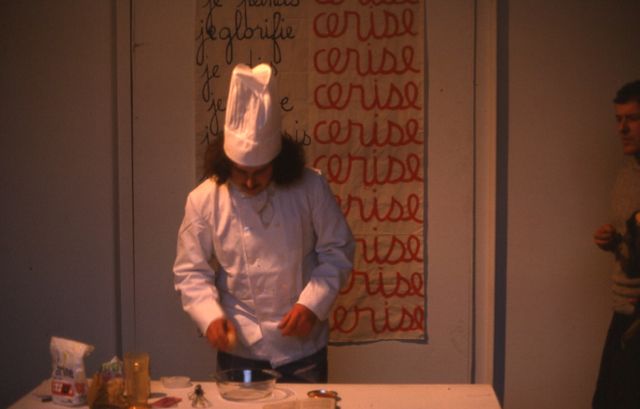
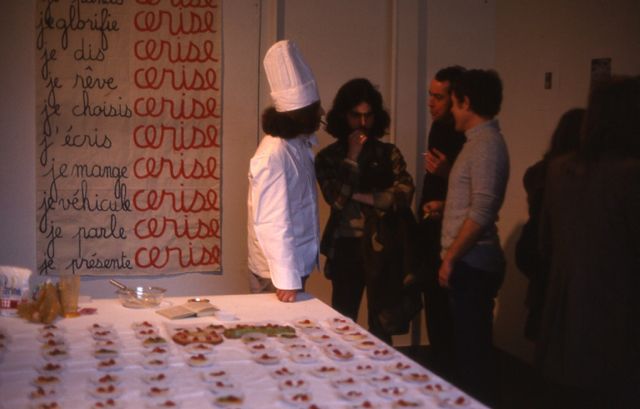
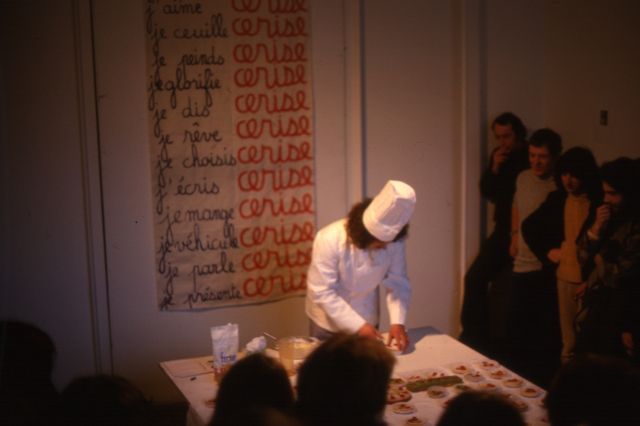
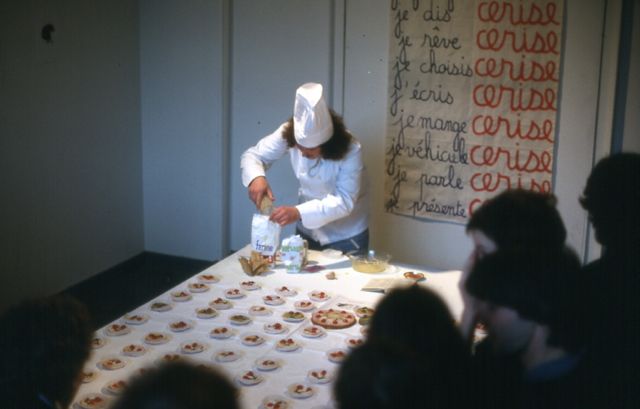
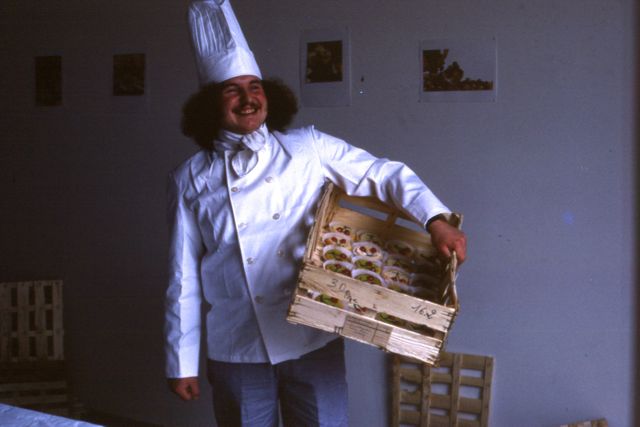
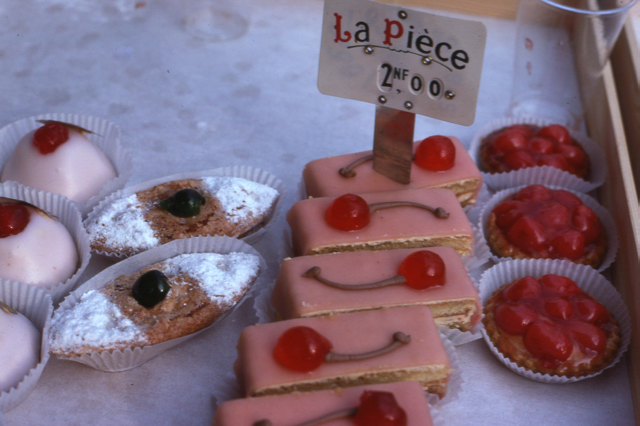
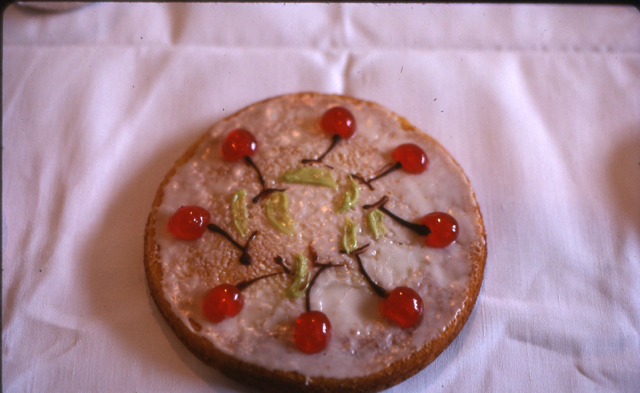
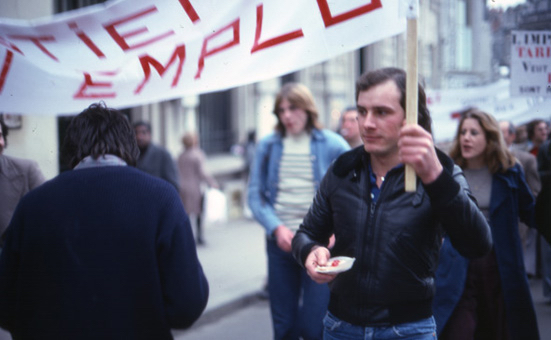
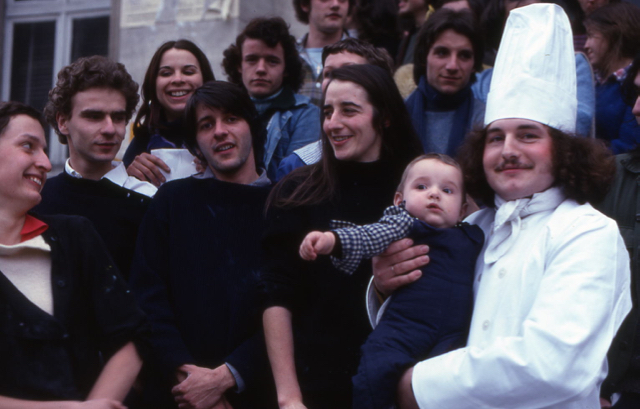
At the end of 1975, Jacques Halbert organized his first exhibition at the École Nationale Supérieure d’Art in Bourges. The event also marked his first foray into performance. For the opening, dressed as a chef, he prepared cherry tartlets in front of the audience. Through this gesture, he shifted the cherry motif from the realm of painting into the realm of action, incorporating the culinary register into his artistic practice. This intervention inaugurated a performative dimension that would also become a lasting and significant aspect of his work.
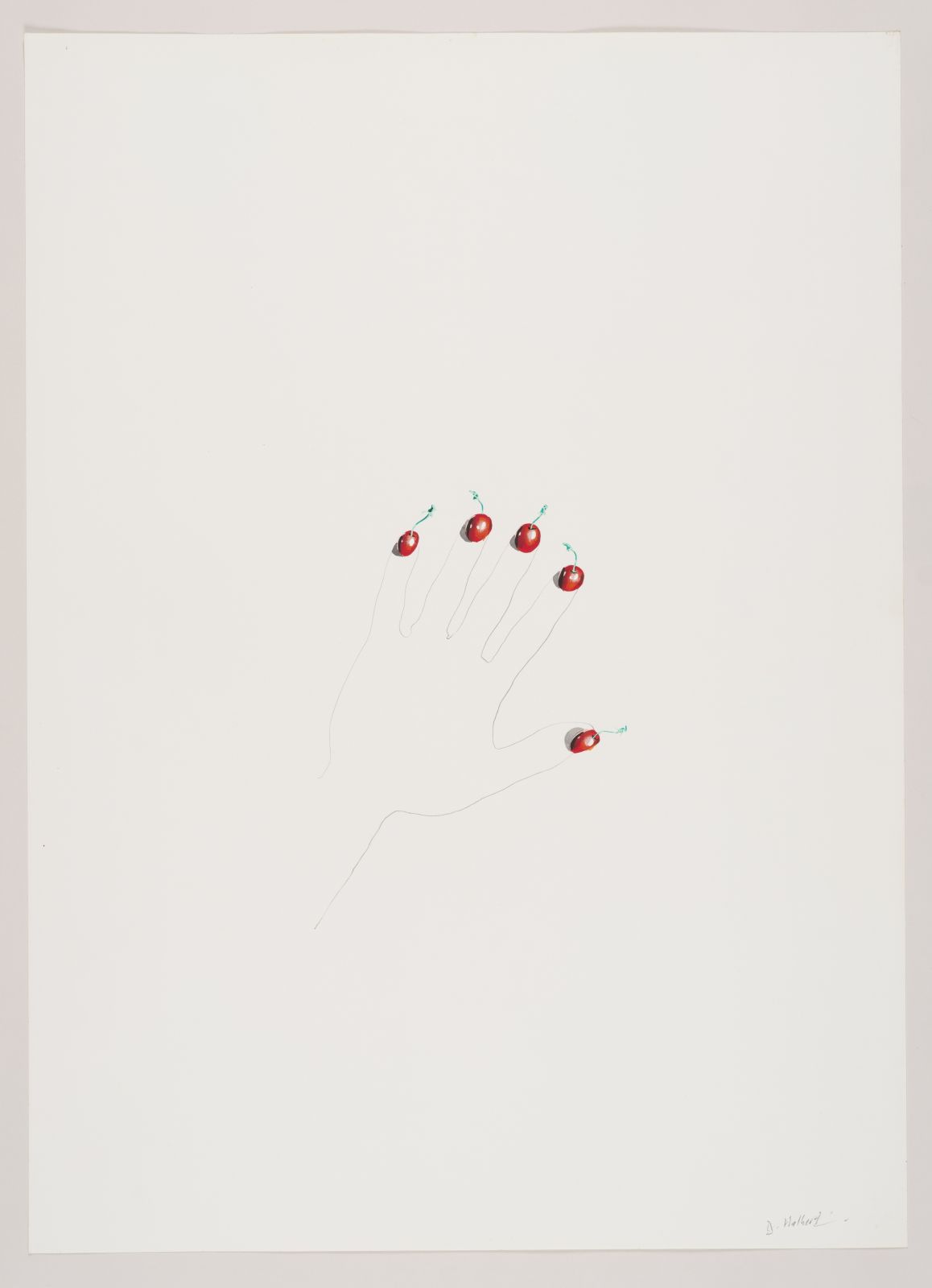
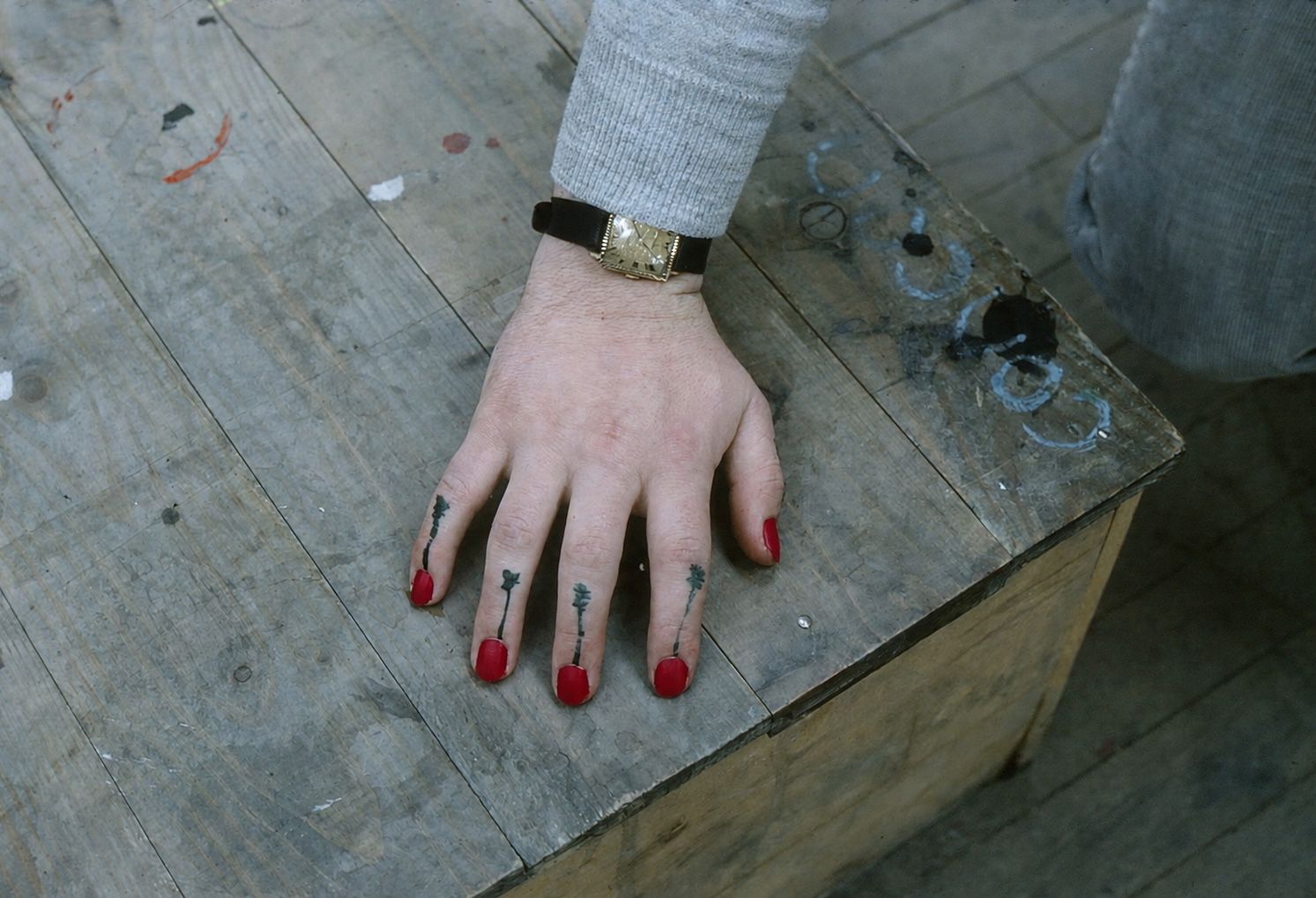
Main, 1975
Acrylique et graphite sur papier
74,5 x 52 cm
Photographie François Lauginie
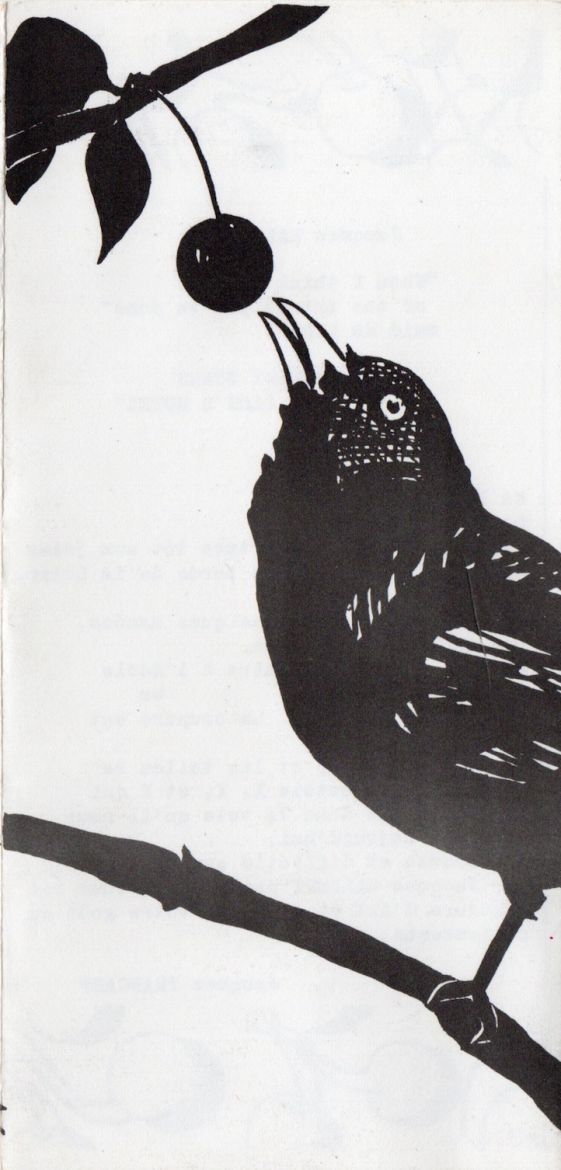
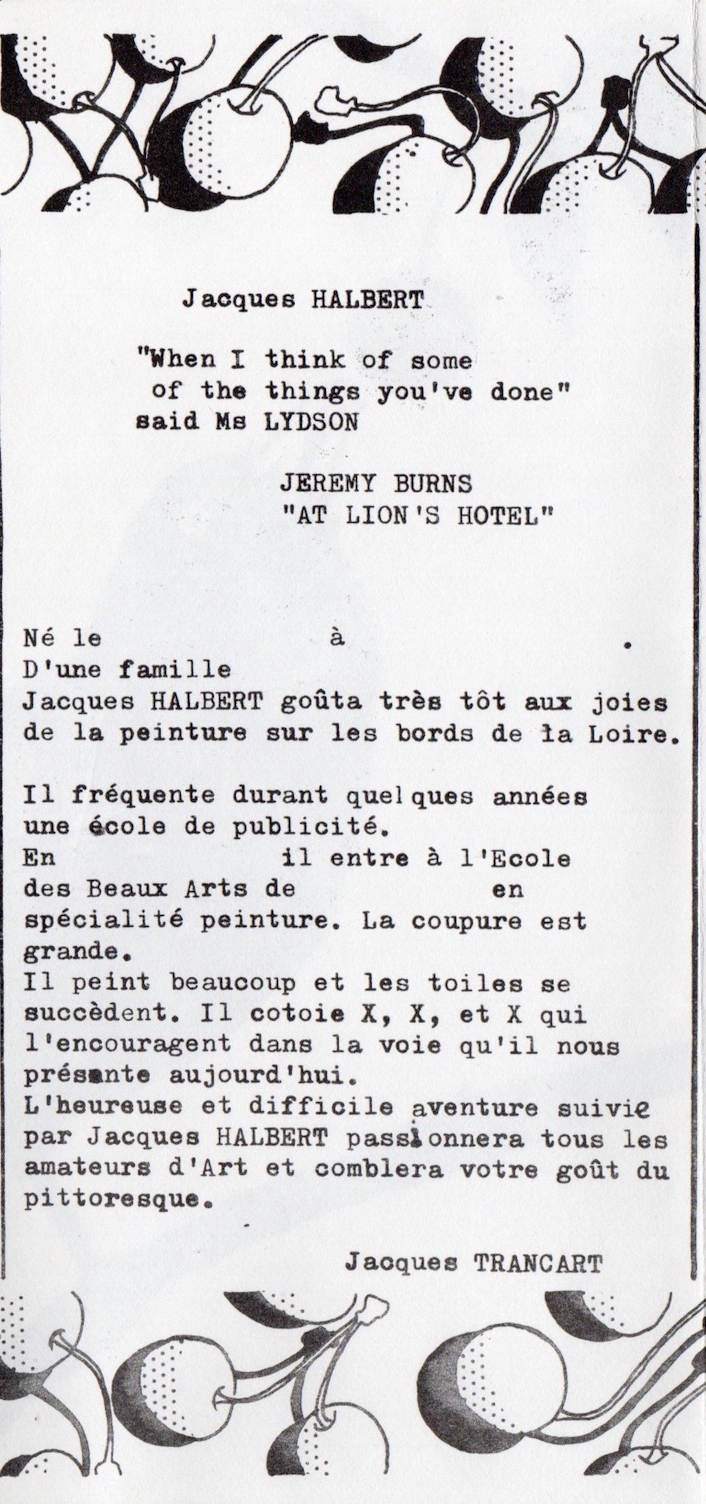
How to paint a cherry, 1975
Manifeste, 21 x 42 cm
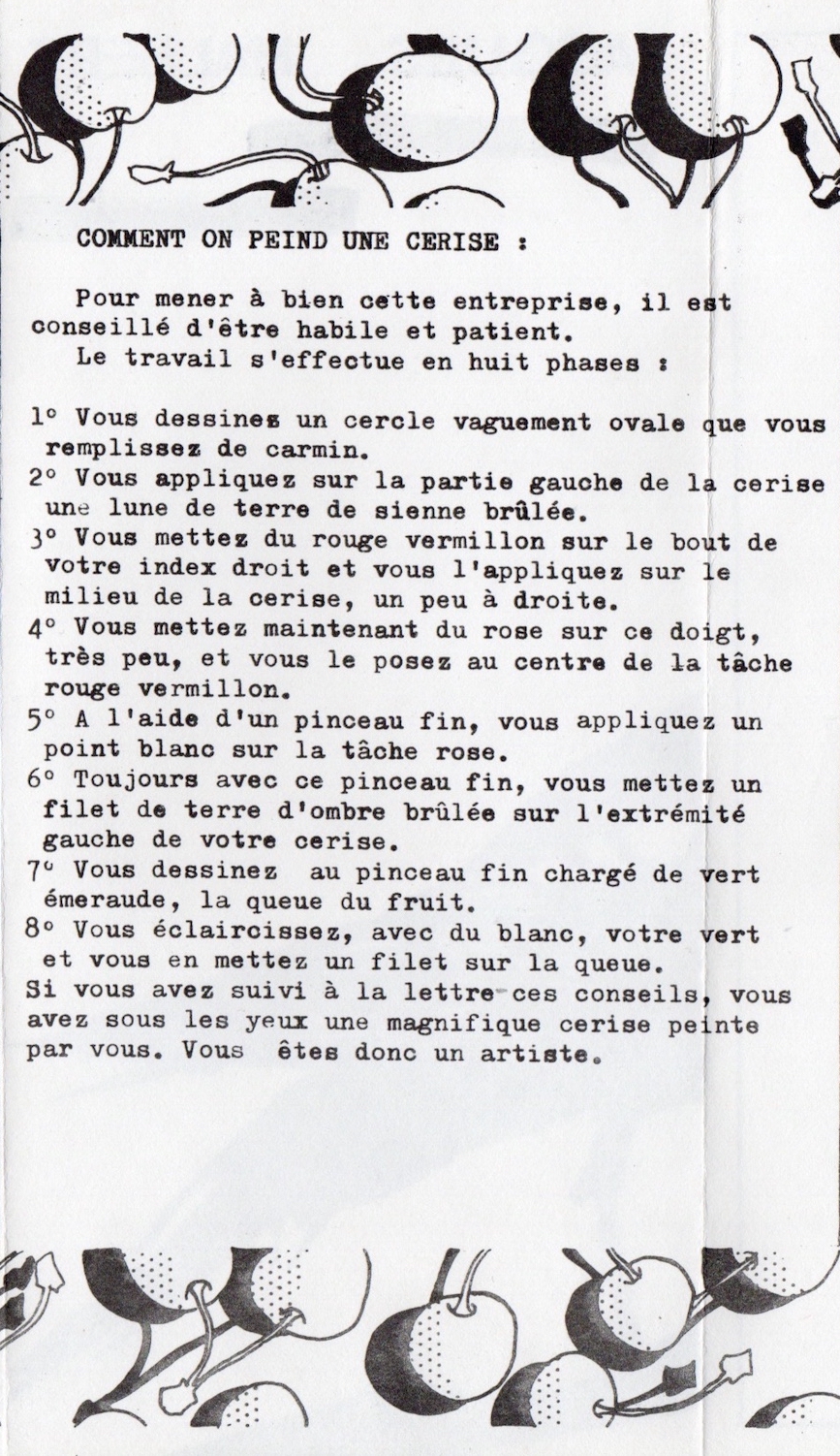
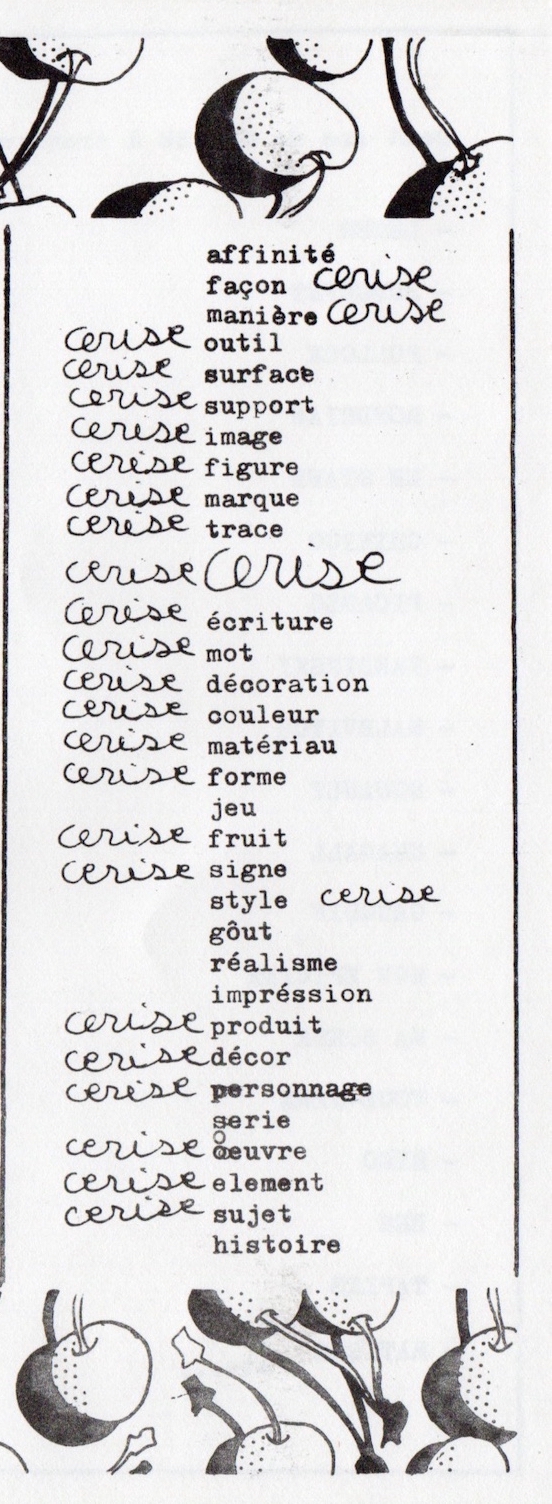
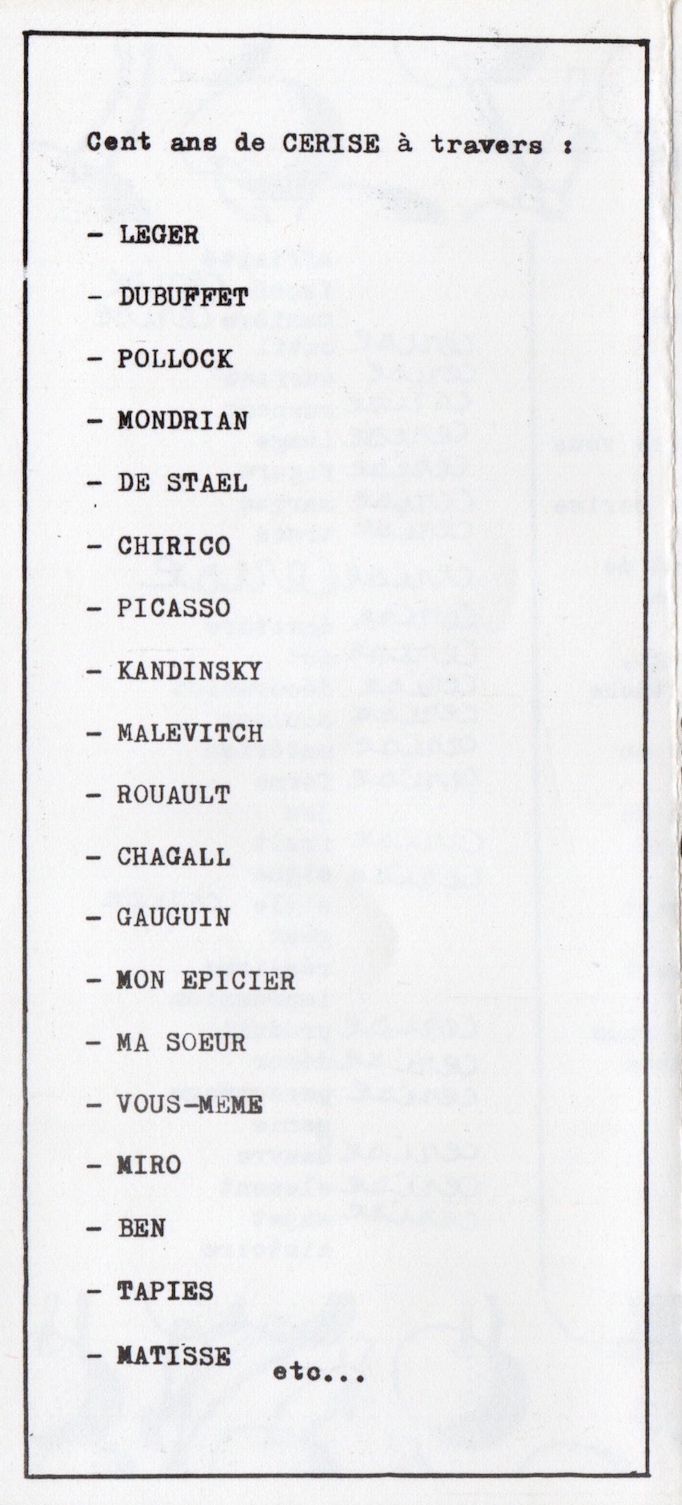
Paintings, 1975
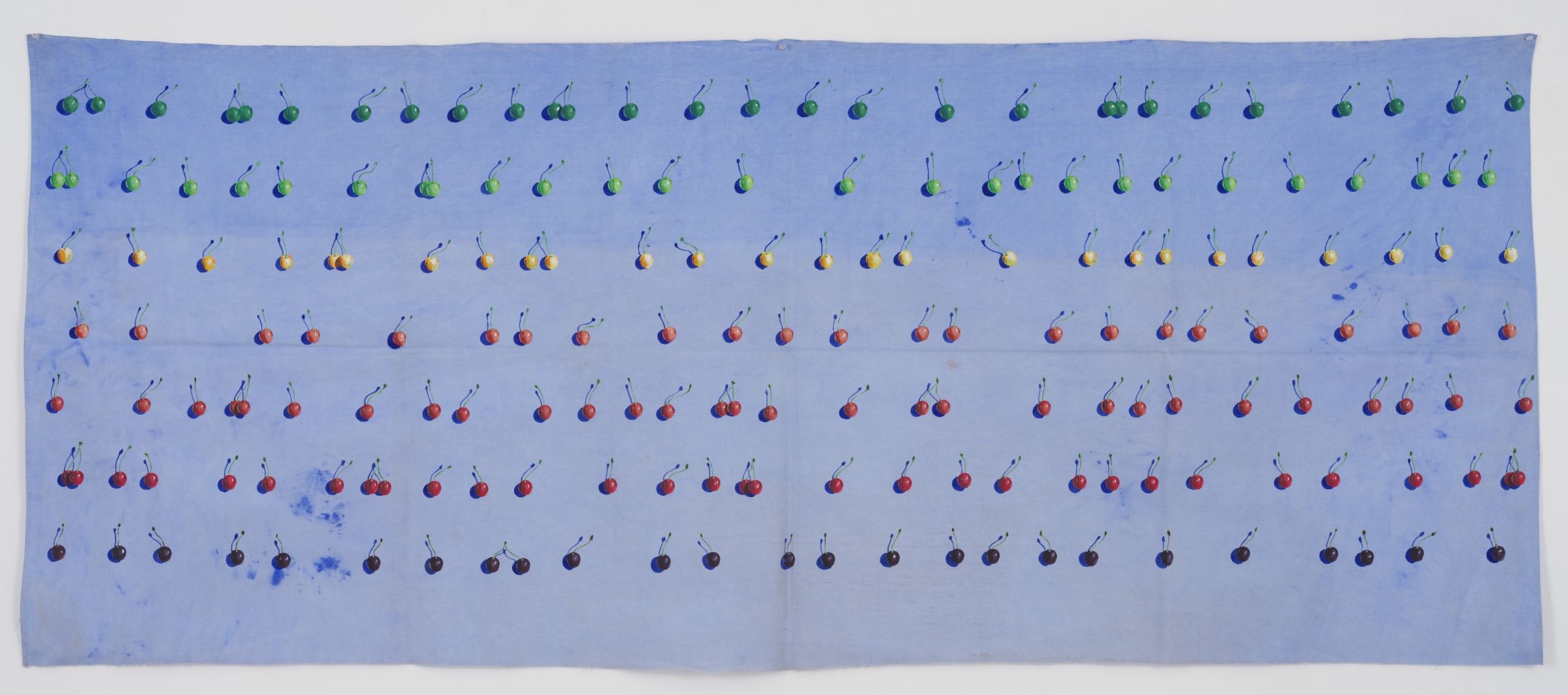
186 cerises (murissage), 1975
Acrylique sur toile souple
102,5 x 246 cm
Photographie François Lauginie
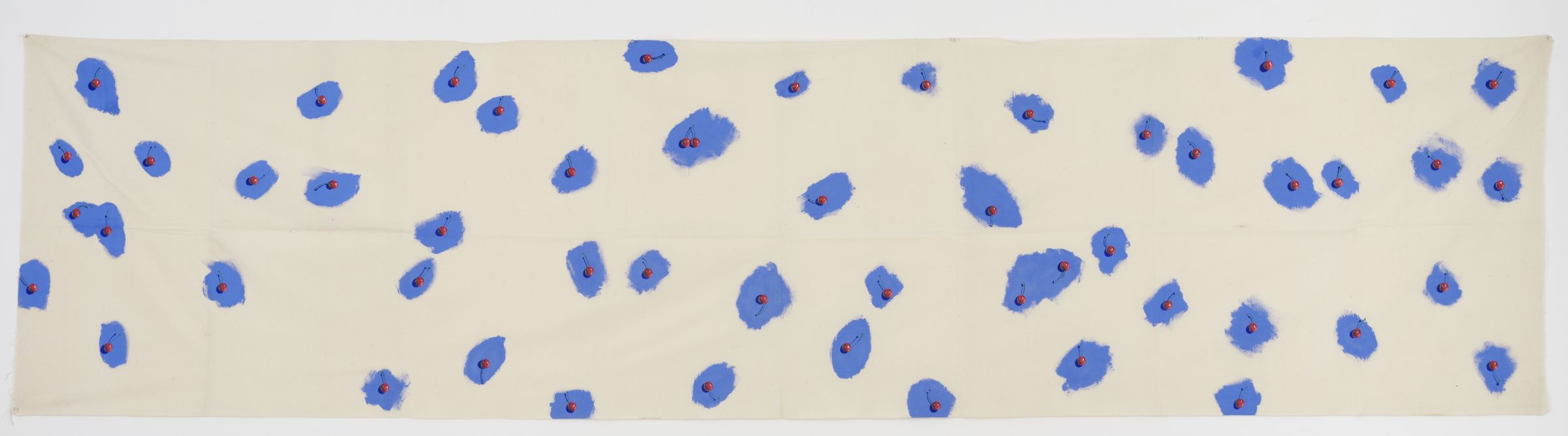
Souple, 1975
Acrylique sur toile souple
95 x 382 cm
Photographie François Lauginie
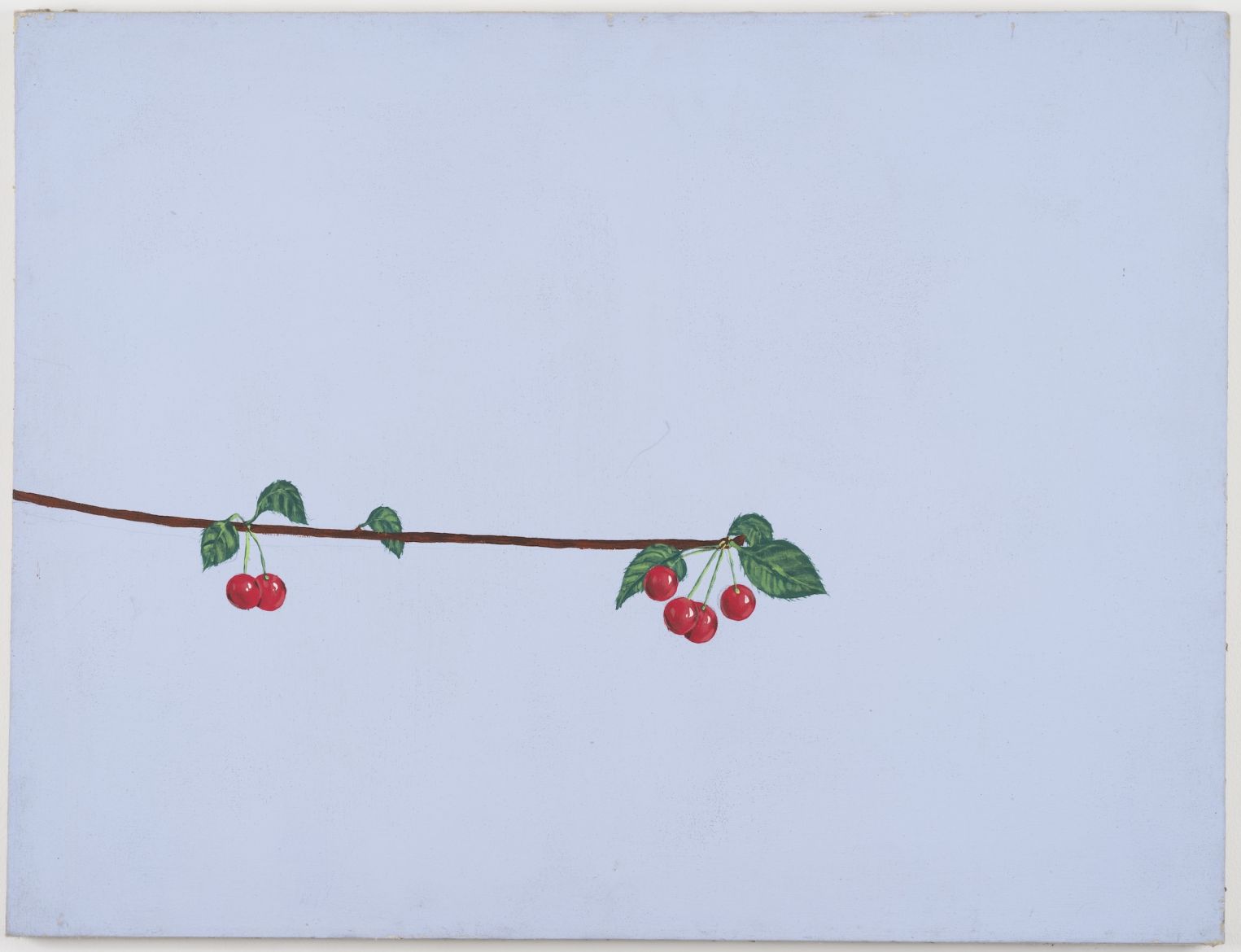
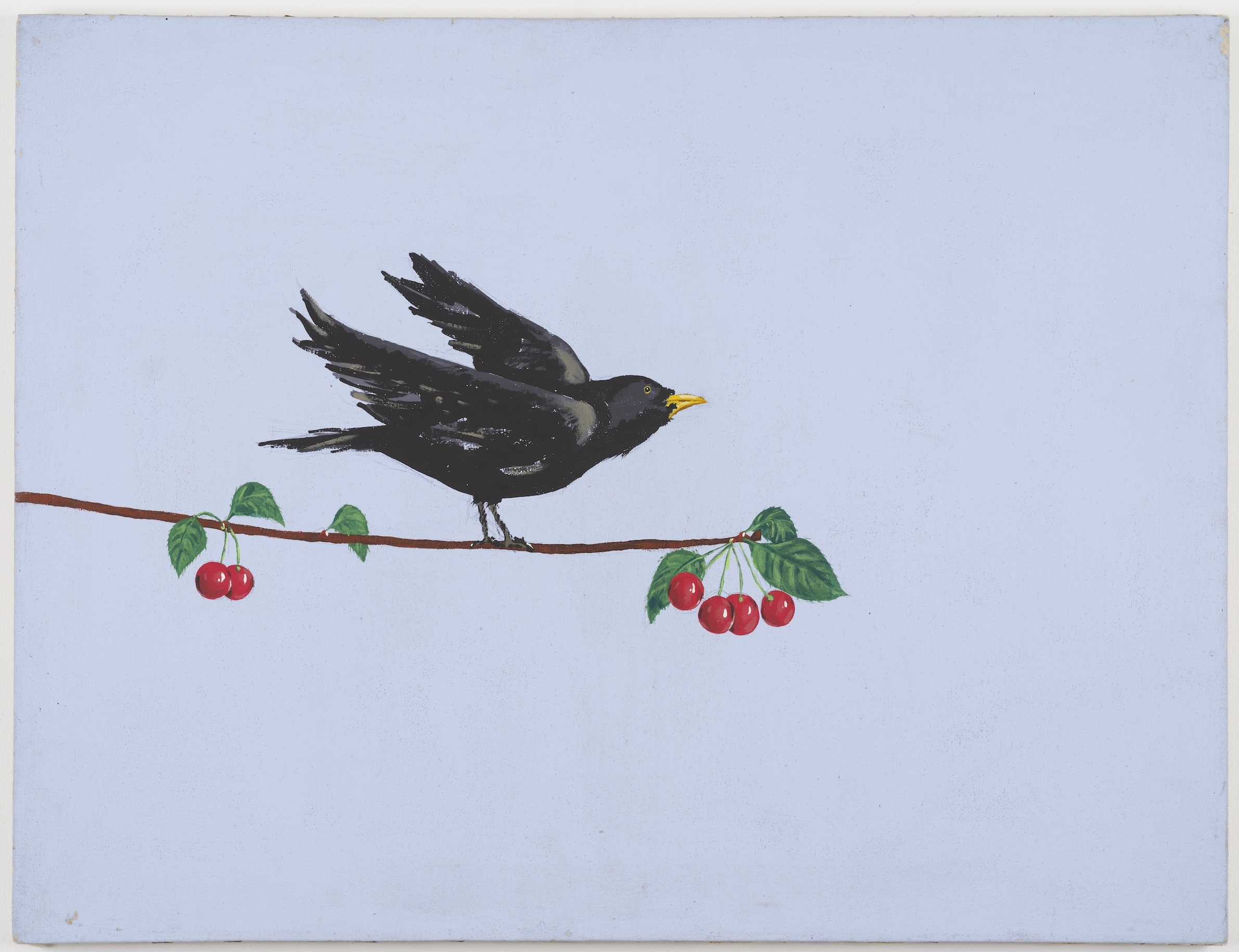
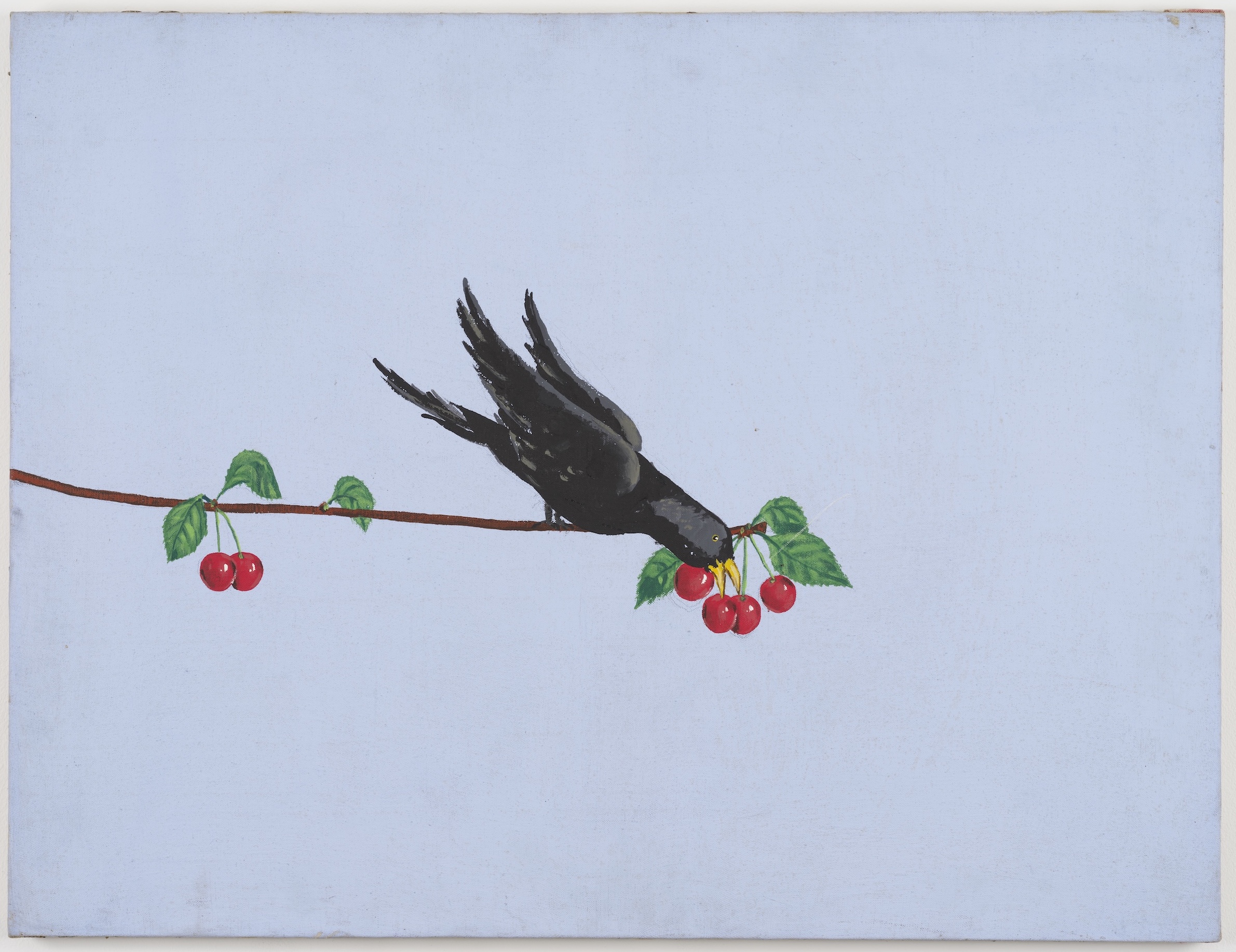
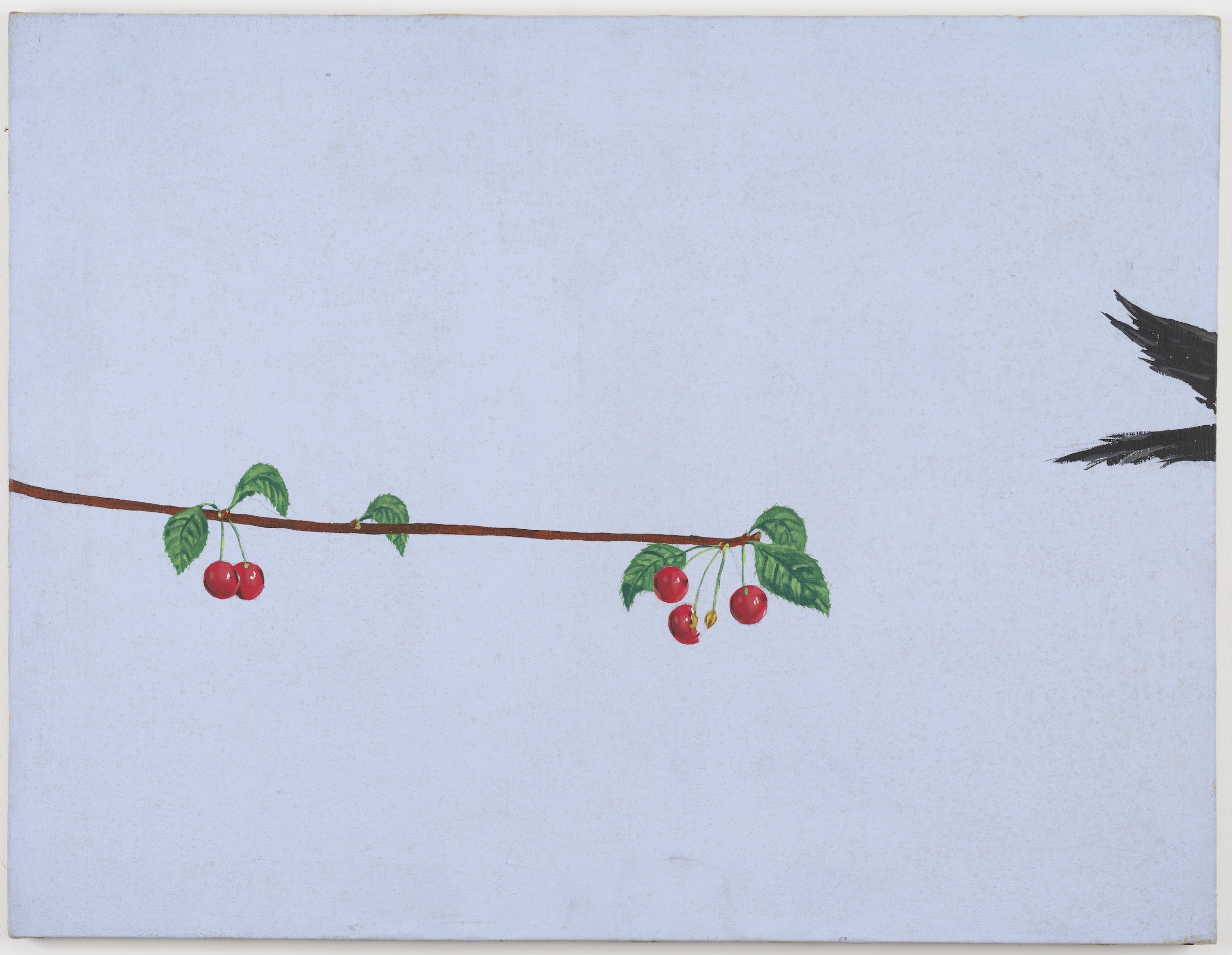
Le merle moqueur, 1975
Acrylique sur toile
50 x 65,5 cm (chaque)
Photographie François Lauginie
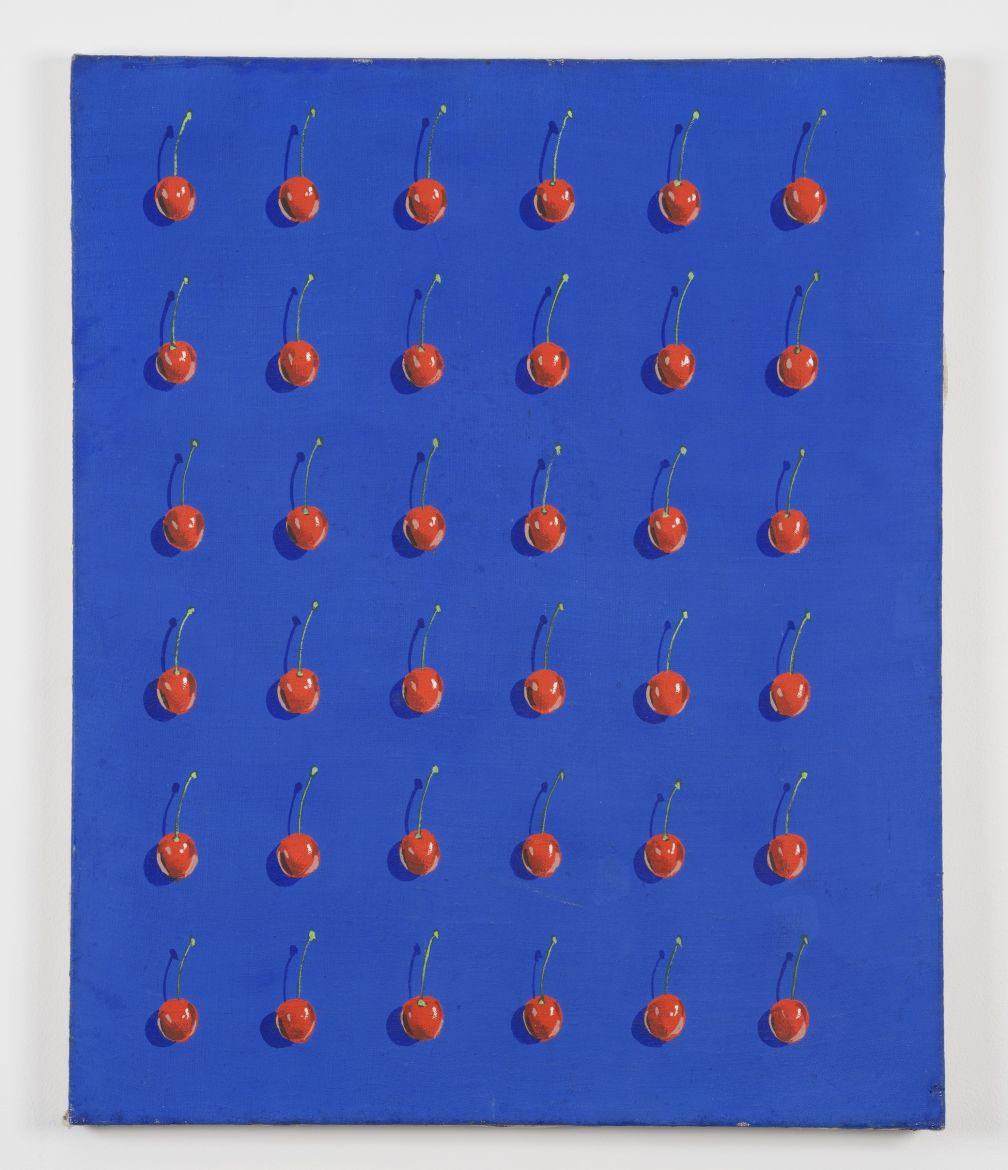
Alignement, 1975
Acrylique sur toile
62 x 51 cm
Photographie François Lauginie
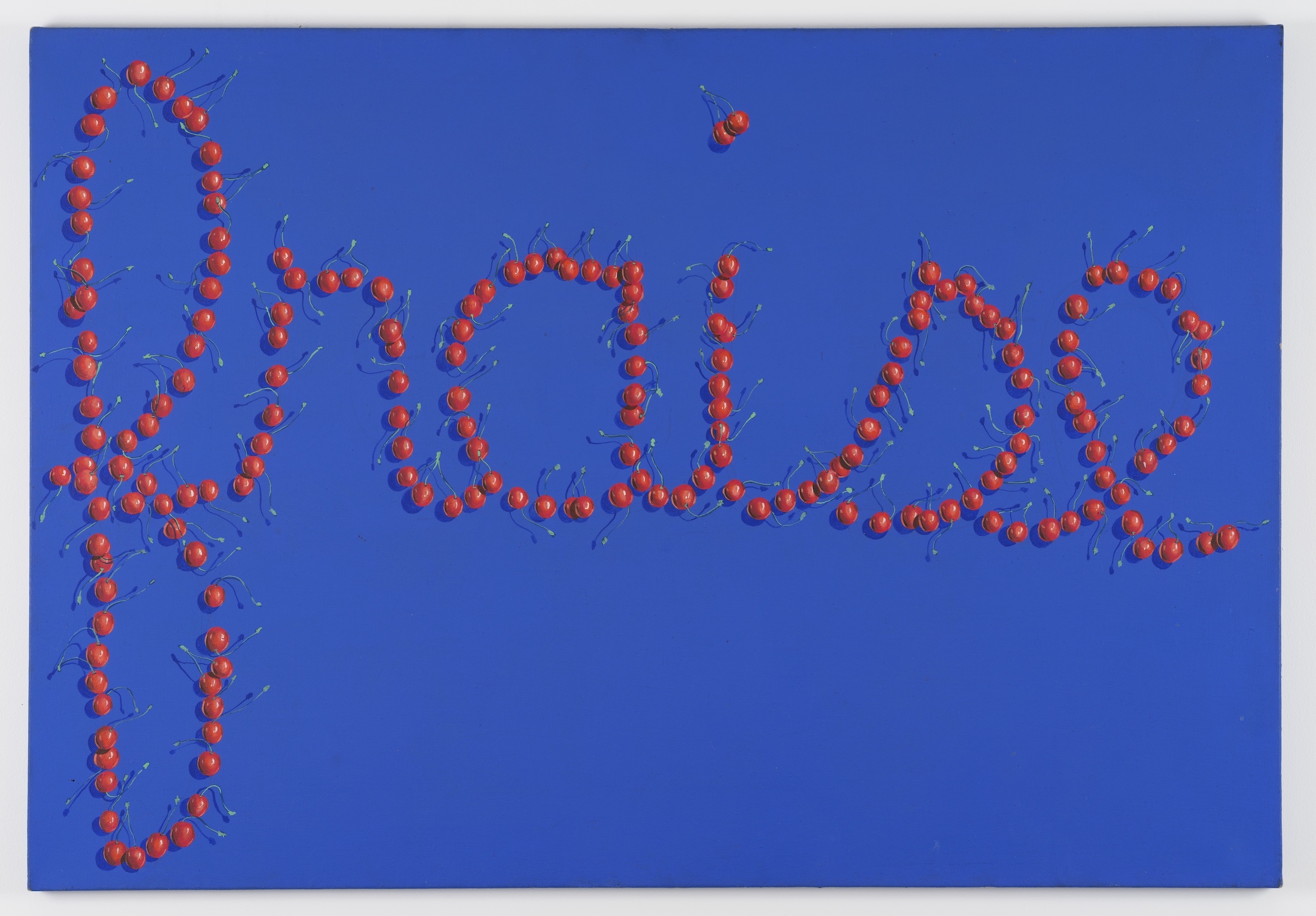
Fraise, 1975
Acrylique sur toile
89 x 130 cm
Photographie François Lauginie
Jacques Halbert performing at the opening of his exhibition
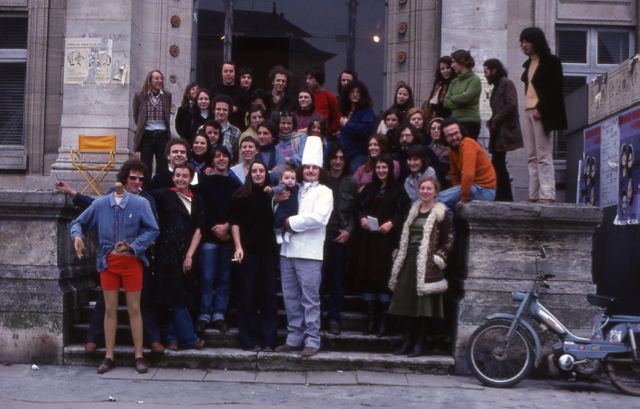
ENSA, Bourges, fin 1975
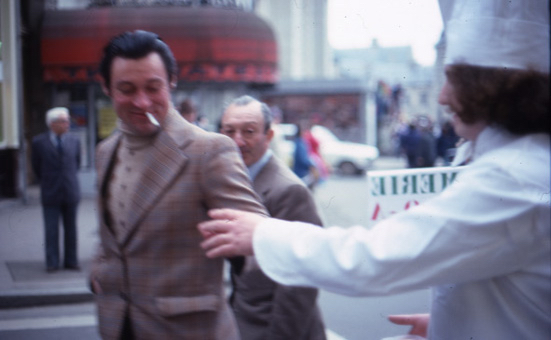
At the opening of his exhibition, dressed as a chef, Jacques Halbert prepared and offered cherry tartlets to the audience. At the same time, a demonstration was making its way through the city. Still wearing his chef’s outfit, Halbert distributed his pastries to the demonstrators, discreetly evoking Le Temps des cerises.
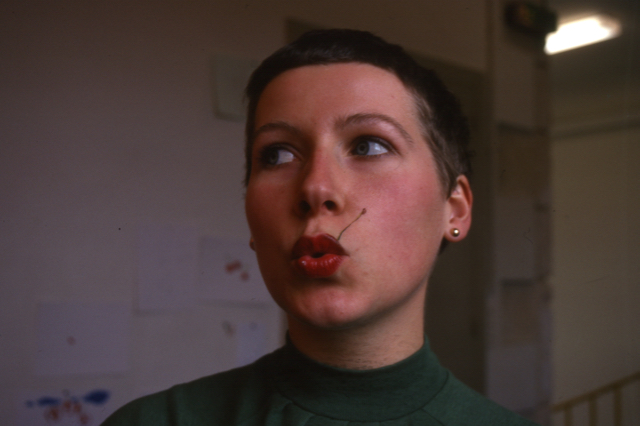
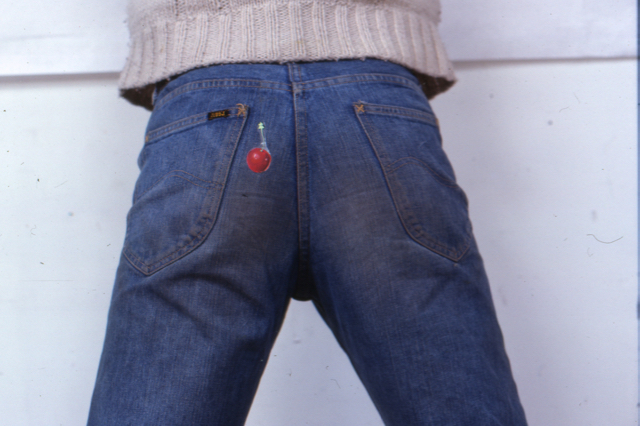
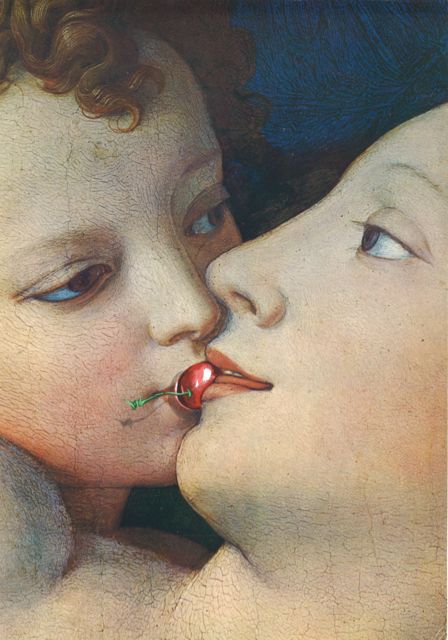
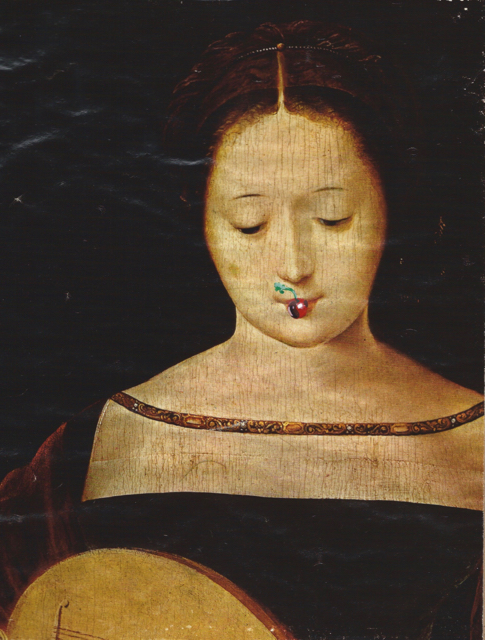
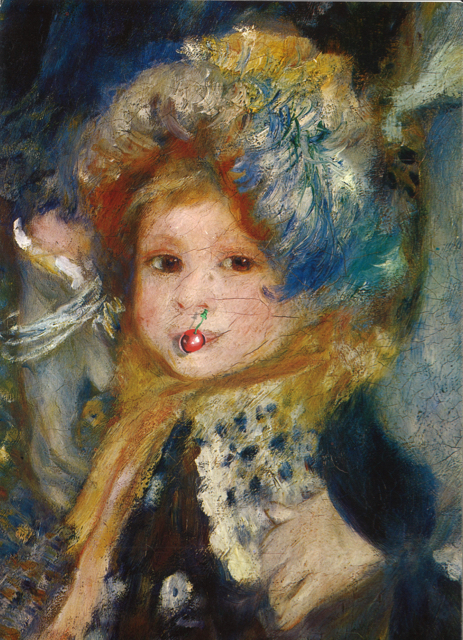
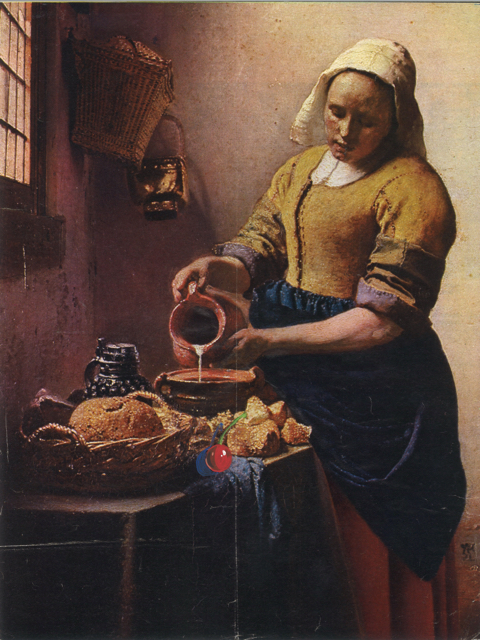
As a child, Jacques Halbert discovered the history of art through La Vie Catholique, a magazine to which his parents subscribed and which regularly reproduced major masterpieces of classical painting across double-page spreads. In 1975, he decided to appropriate these images, which he had carefully kept since the age of twelve.
Cerise en tout genre, 1975
Acrylic on reproductions
Variable dimensions
Ma main, 1975