Gibellina
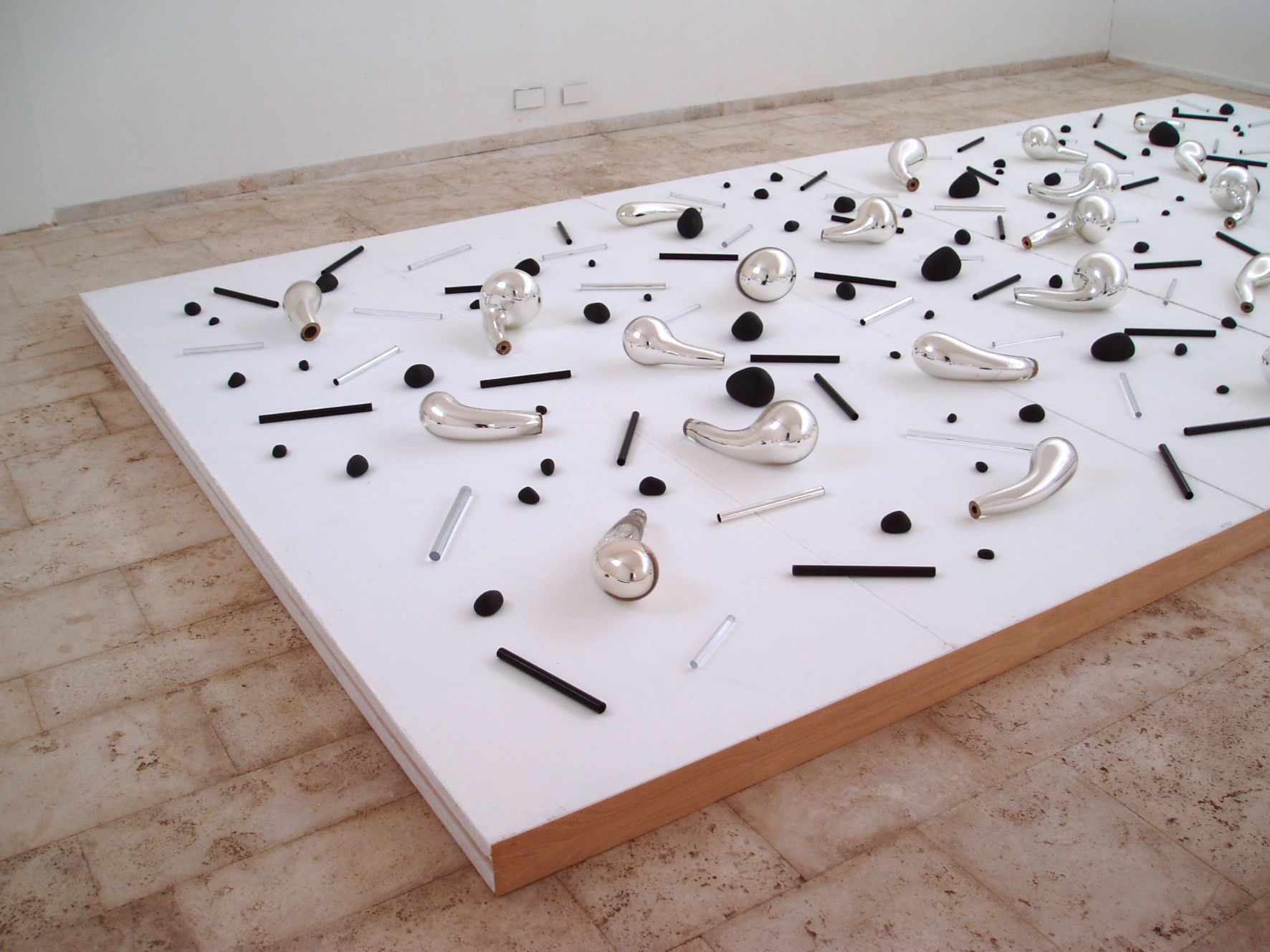
Acier émaillé, tube de verre argenté, faux galets et verre soufflé argenté, 2002-2003.
« Over the years Peter Briggs has dedicated his work to the study of the reciprocal relationship between the material and the processes of manual fabrication. The result of this is that he generates a strong tie between a scientific-theoretical basis of his work and a sensorial capacity for exploring the fragments, the traces, the particles of what reconquers his visible entity only within the context of total remembrance.
In the small forms to which the artist made at the beginning of the Nineties, the manual gesture is everywhere present. The traces left by his modelling inform us about the mental destructuring process which is followed by the material re-composition provoking an equivalent process in memory. The large number of objects, sculptures en miniature, the walldrawings, glass pieces and silvered stones bear witness to the craft production of former times and of lost techniques which are given new importance by their transposition from the pre-esthetical level to that of sculpture. The menagerie of these splendid objects where cuts, broken margins and fragmentation are destined to interrupt and diffract the light which will become matter itself, once the art work has lost its visible shape in our eyes.
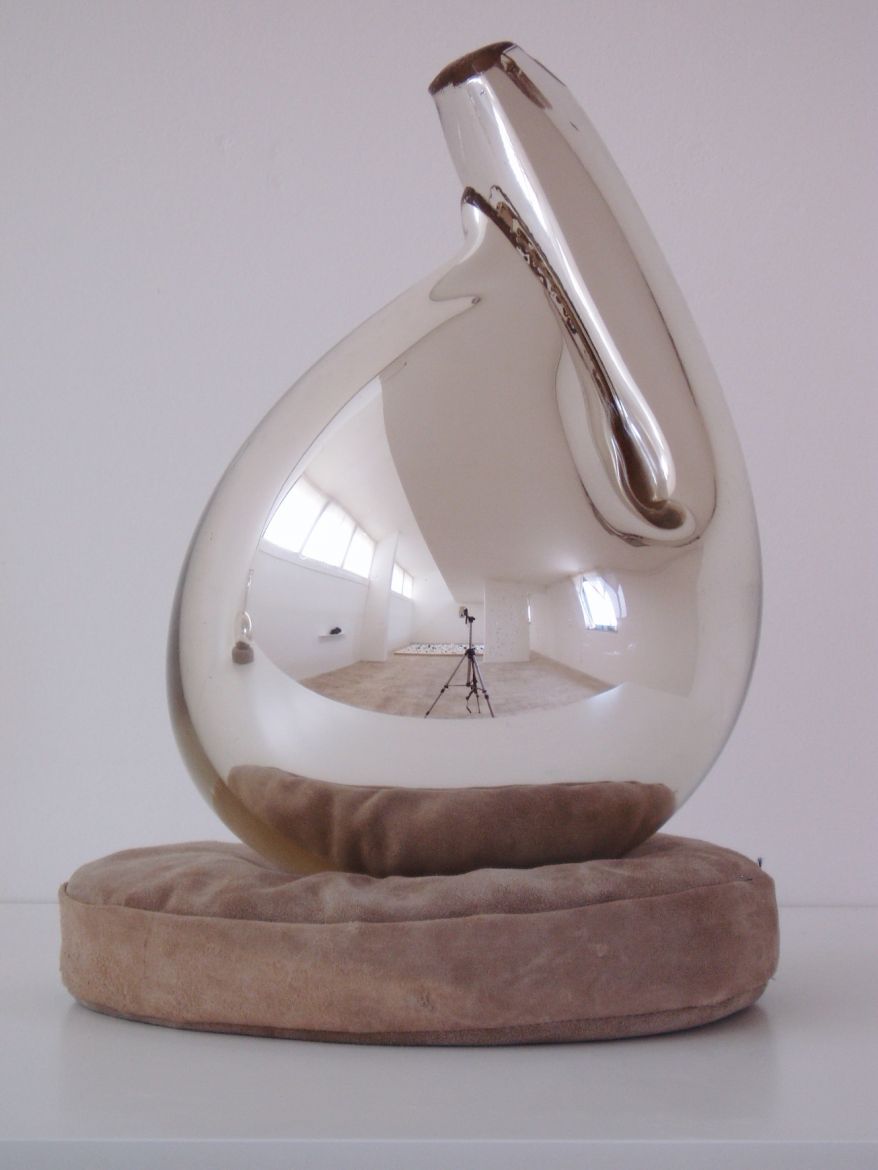
One-off Ferozabad I, verre soufflé et argenté et sac en cuir rempli de sable, 2002-2003.
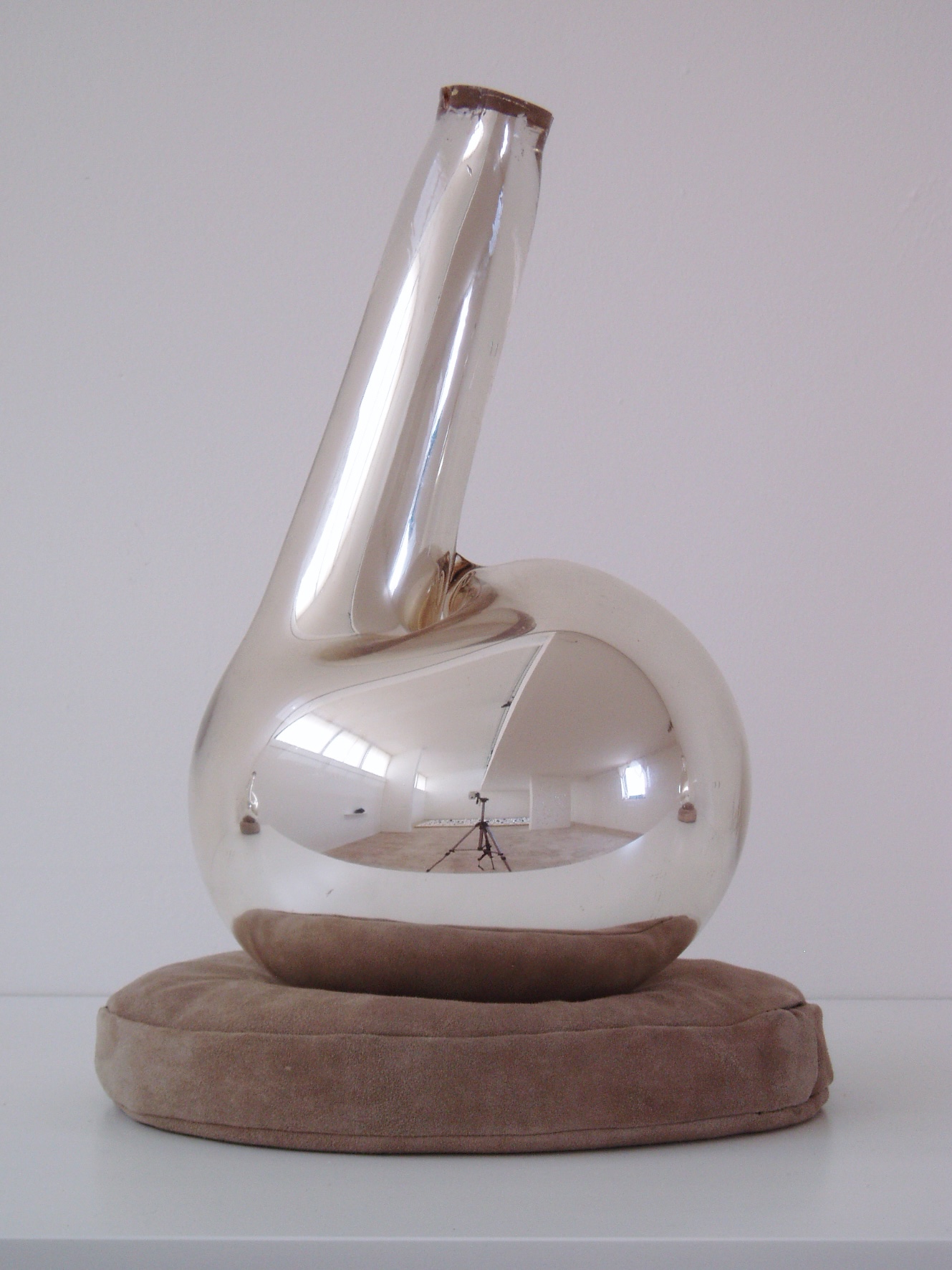
One-off Ferozabad II, verre soufflé et argenté et sac en cuir rempli de sable, 2002-2003.
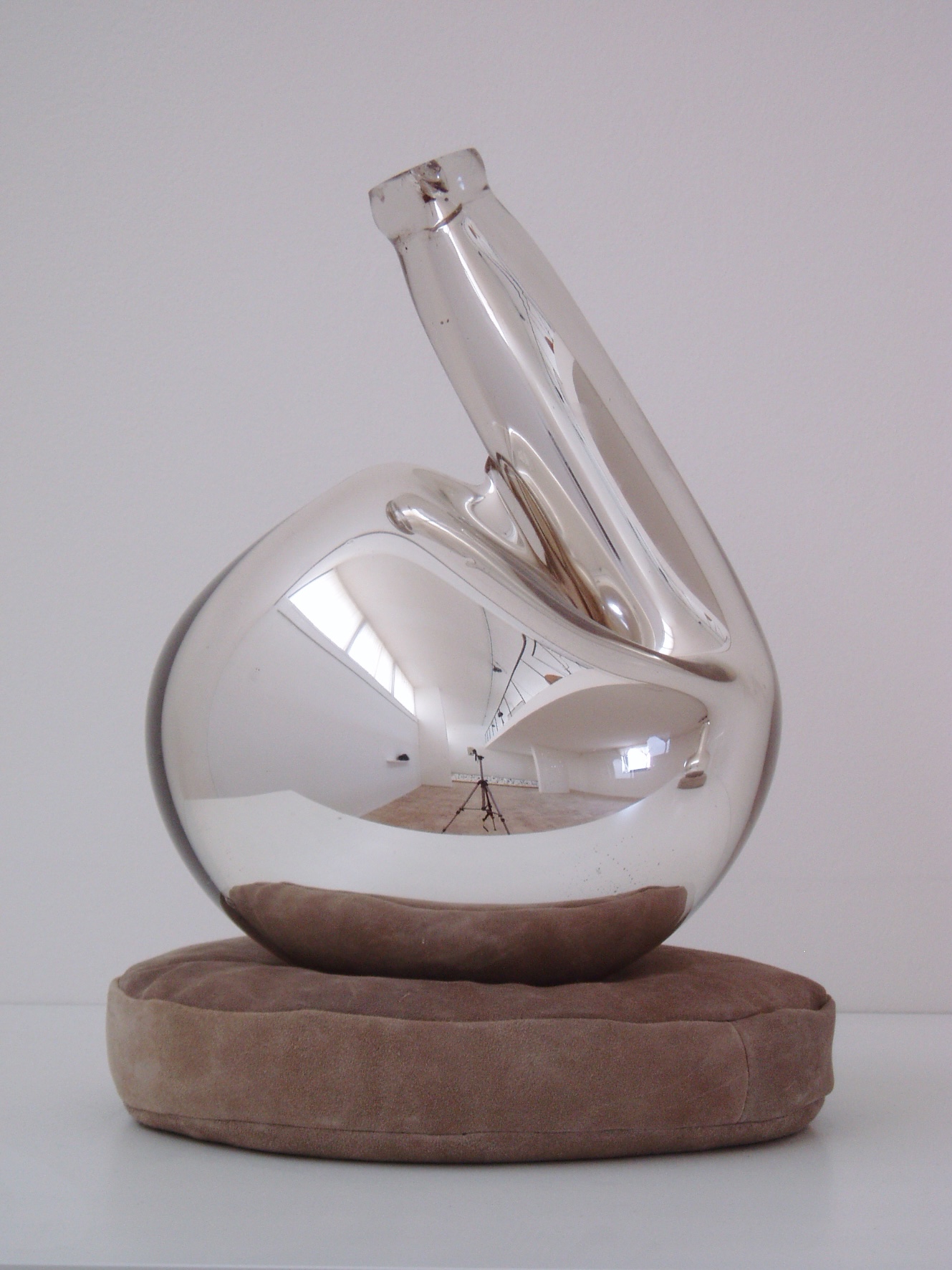
One-off Ferozabad III, verre soufflé et argenté et sac en cuir rempli de sable, 2002-2003.
Nevertheless Peter Briggs’ work is not only orientated towards an artistic-esthetical register but also towards a pedagogic criteria of reception: as the artist practises the visual memory of a fragmented element during the elaboration of a work, the spectator is invited to exercise his gaze in order to explore and rediscover the invisible consoling universe of what does not exist any more, and to complete it, in the sense of an opera aperta, according to Umberto Eco’s definition, in which he indicates infinite interpretive potential.
From 2000 the artist refines his complex analysis of the concept of sculpture and his relationship with the space. His many working trips to India reveal new aspects of his artistic consciousness. Peter Briggs starts again from the first tenets of the art of surfaces, by rereading the important lessons of Rodin, Medardo Rosso, Brancusi, to Moore, Wotruba, Guerrini, facing however new challenges which are increasingly connected with a vision of space. History, the landscape and his experimentation with materials which are functionally innovative, are the premises that generate these sculpted landscapes evolving from the architect’s view, from the historian’s vision and from the landscape architect’s plans. Spaces becomes for Briggs a physical reality and therefore a determining factor of realisation. »
Extrait de Beyond the Mirror de Elizabeth Sarah Gluckstein, 2003
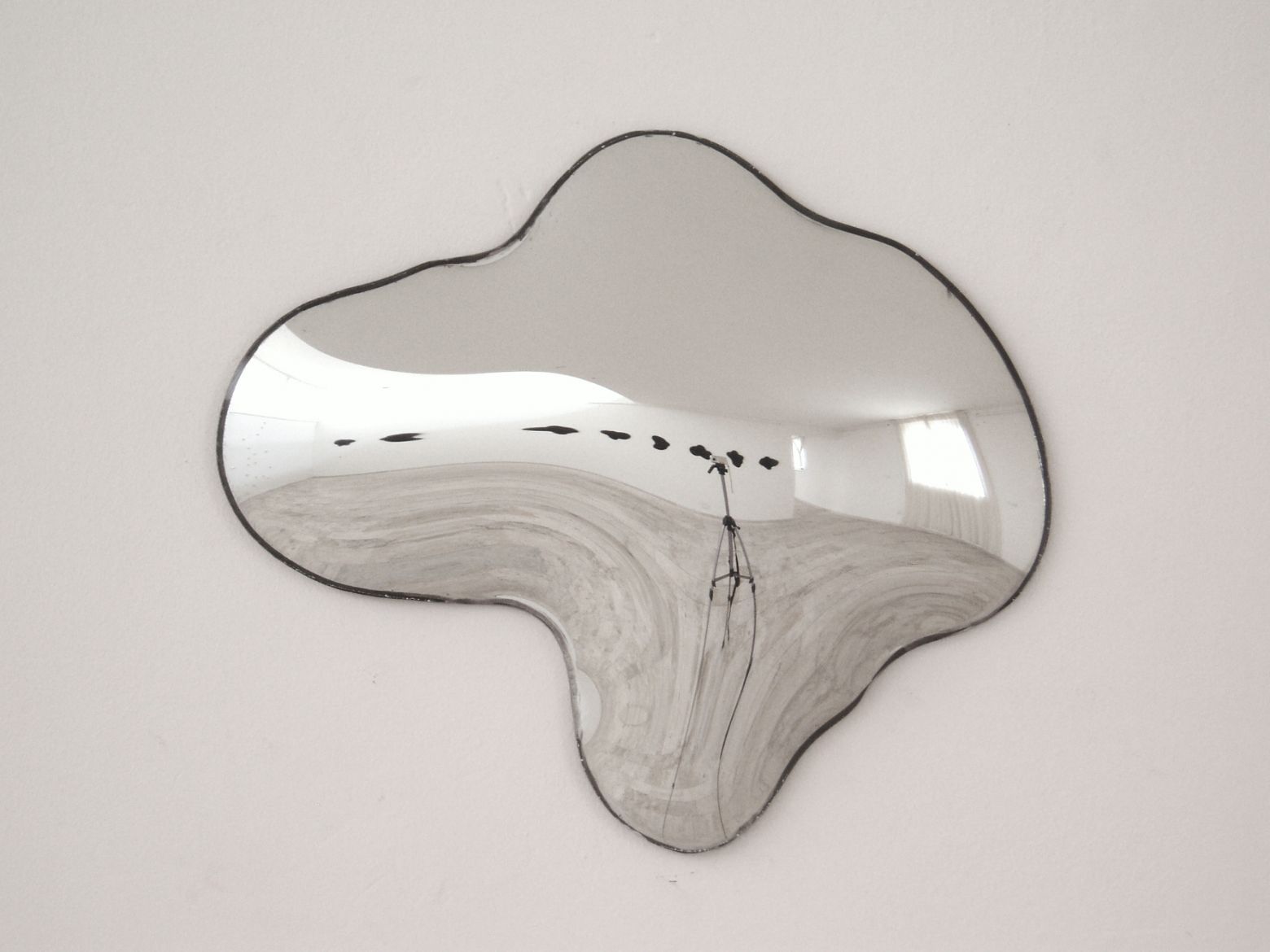
Shield, acier émaillé et verre thermoformé argenté, 2001-2003.
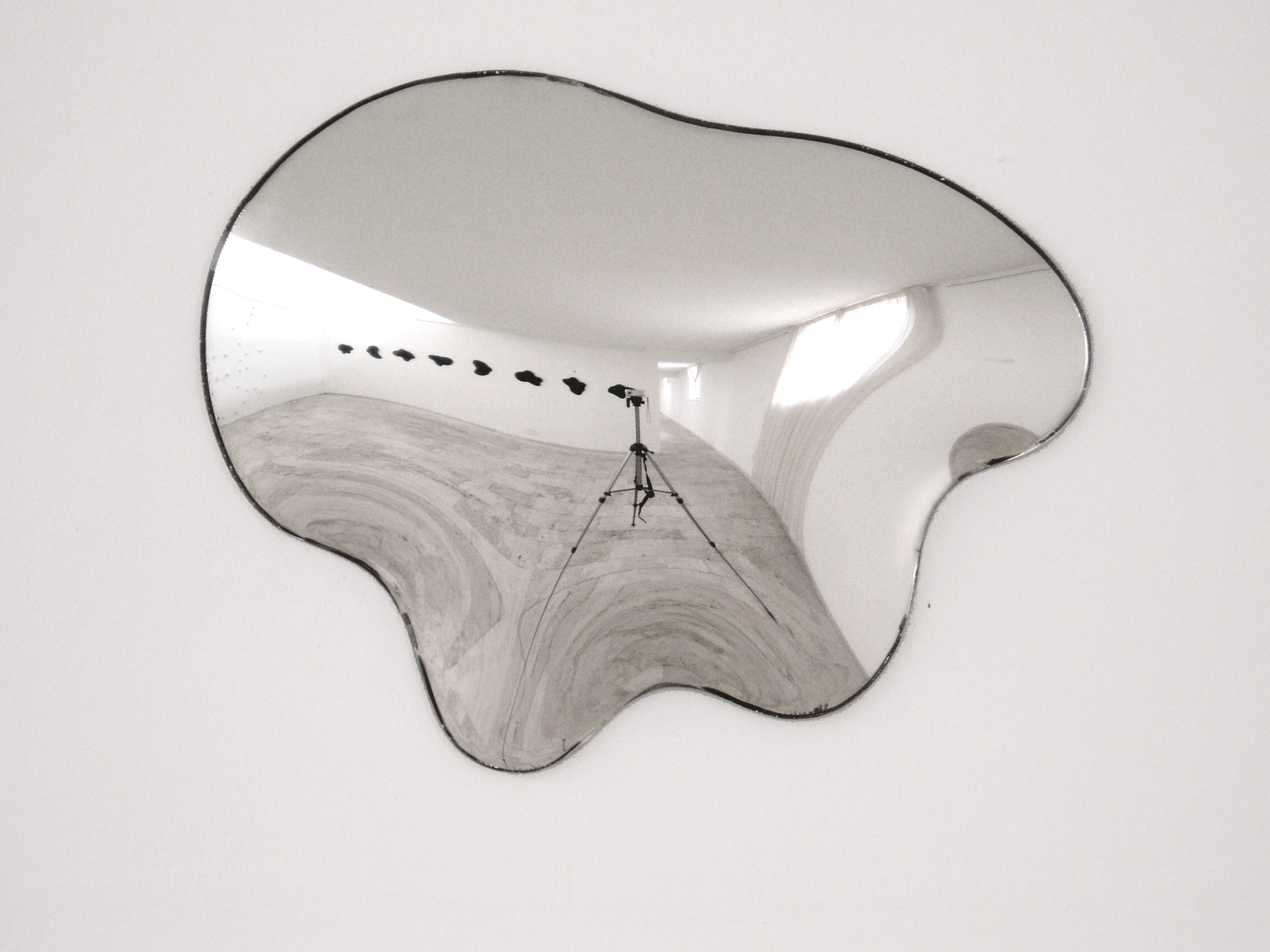
Shield, acier émaillé et verre thermoformé argenté, 2001-2003.

Acier émaillé, tube de verre argenté, faux galets et verre soufflé argenté, 2002-2003.
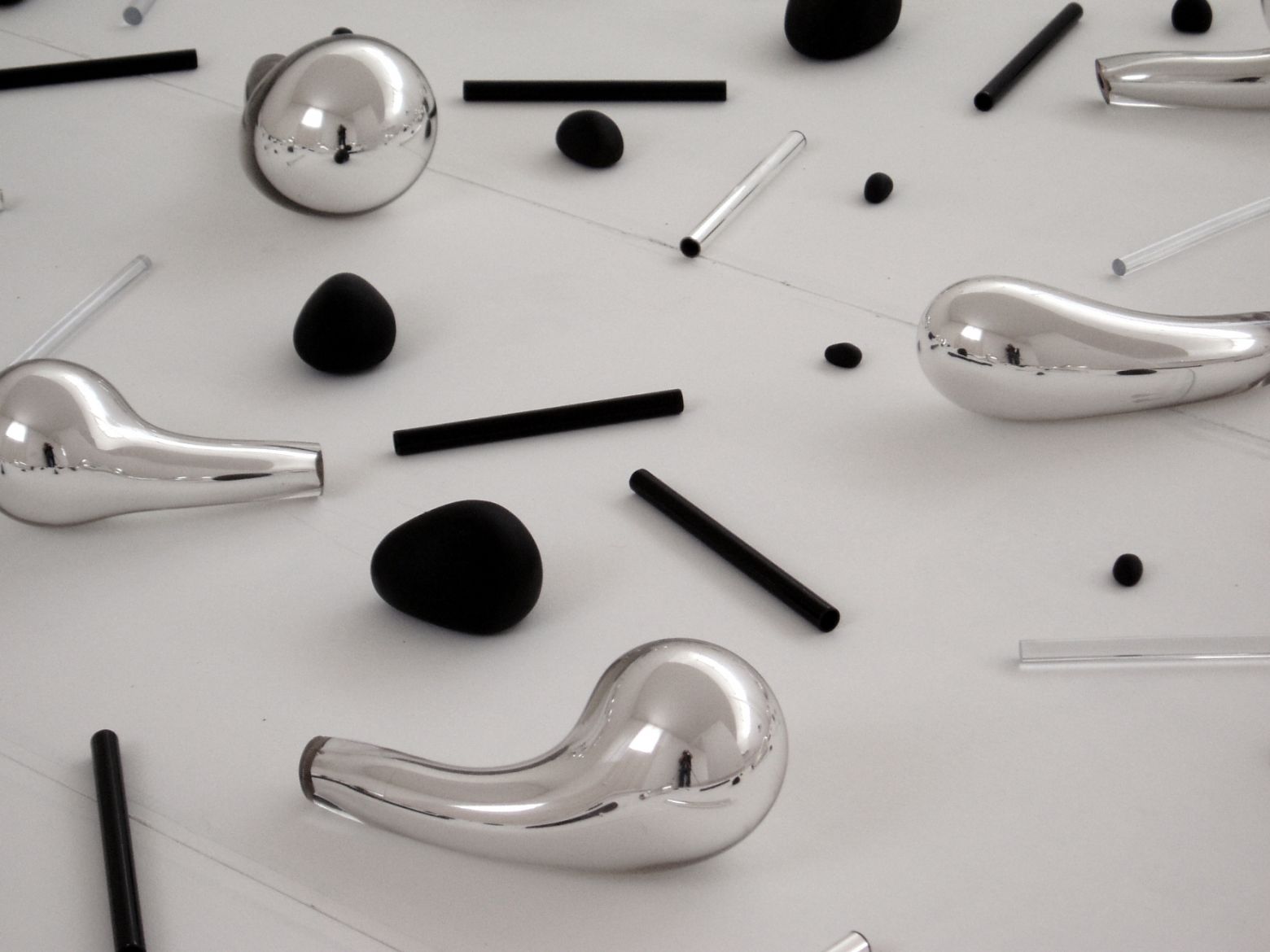
Acier émaillé, tube de verre argenté, faux galets et verre soufflé argenté, 2002-2003.

Série One-off Ferozabad, verre soufflé et argenté et sac en cuir rempli de sable, 2002-2003.

Ossidiana e Occhiali, obsidienne de Lipari et verres optiques de récupération retaillés et argentés, 2003-2004.
© Collection Fonds National d'Art Contemporain

Constellation détails, verre soufflé argenté, 2002-2003.

Constellation détails, verre soufflé argenté, 2002-2003.

Shield, acier émaillé, dimensions variables, 2002-2003.

Shield, acier émaillé et verre thermoformé argenté, 2001-2003.


Shield, acier émaillé et verre thermoformé argenté, 2001-2003.

Verres optiques de récupération retaillés et argentés, 2003-2004.
© Collection Fondation Orestiadi

Verres optiques de récupération retaillés et argentés, 2003-2004.
© Collection Fondation Orestiadi
Vues de l'exposition à la Fondation Orestiadi, Gibellina, Italie, du 20 octobre au 20 novembre 2004, commissariat Elizabeth Sarah Gluckstein. Photographies de © Peter Briggs.